
Air Fryer Baking Pan Substitutes and Compatibility
An air fryer baking pan substitute is a pan, baking dish, or baking tin used when a dedicated air fryer pan is not available. A substitute pan can be suitable only when its oven-safe material, heat rating, size, clearance, coating condition, and airflow impact match the specific air fryer.
A small oven-safe dish may look usable, but the basket shape, drawer movement, handle position, and food-contact surface can change the decision. A substitute pan is bakeware placed inside the appliance; it is not the same as a basket, crisper plate, or tray replacement when an appliance part is missing or damaged.
You can use an air fryer pan alternative when it fits the appliance, leaves clearance for airflow, and follows manufacturer guidance for the material and coating. The sections below define what counts as a substitute, compare it with tray replacement confusion, and explain the main compatibility checks before use.
What Counts as an Air Fryer Baking Pan Substitute
An air fryer baking pan substitute is an oven-safe container used for a baking task when a dedicated air fryer baking pan is not available. The air fryer baking pan substitute is a baking container, not an appliance component. A suitable container must be oven-safe and fit the specific air fryer.
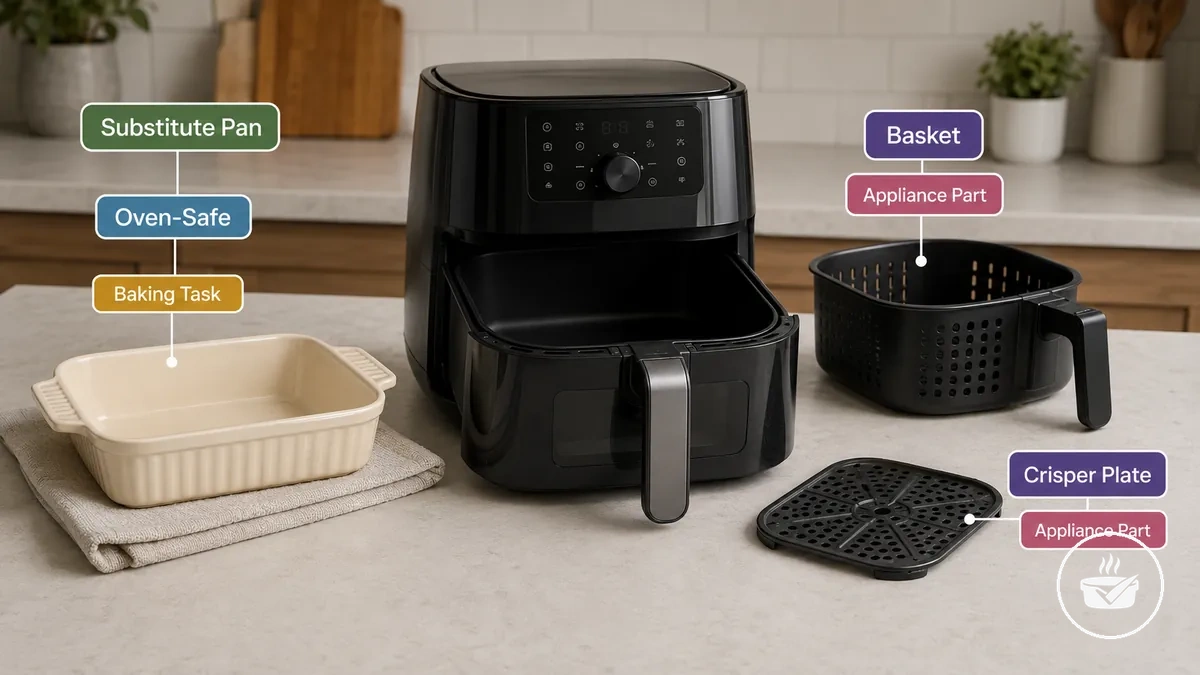
What Counts as an Air Fryer Baking Pan Substitute is the distinction between bakeware used inside the appliance and the parts that make up the appliance itself. A substitute pan, baking dish, or baking tin is intended for a baking task, while a basket, crisper plate, or tray serves as an appliance part. If you are deciding what bakeware can be used, that question is different from replacing a missing or damaged air fryer component.
When comparing possible options, focus first on whether the item is functioning as a baking container rather than as part of the air fryer. An oven-safe container may qualify as a pan alternative when it is suitable for the appliance, while a basket, crisper plate, or tray does not because it performs a different role. The following sections compare these categories in greater detail.
Baking Pan Substitutes vs Air Fryer Tray or Basket Replacements
A baking pan substitute and an air fryer tray or basket replacement serve different purposes. A baking pan substitute is a temporary baking vessel for holding food, while a basket, crisper plate, rack, or drip tray is an appliance component designed for the air fryer's operation. The key difference is function rather than appearance.
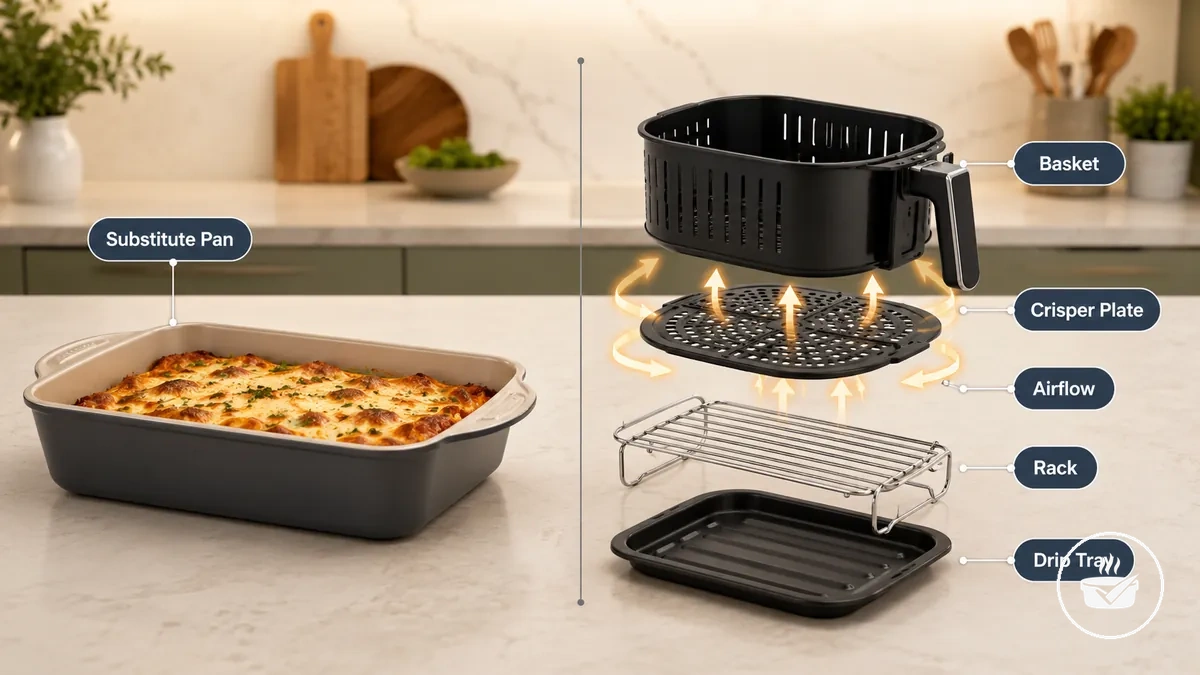
| Item type | Main function | Replacement risk | Safe next step |
|---|---|---|---|
| Substitute pan | Temporary baking vessel for a baking task | May not suit every air fryer | Check that it is oven-safe and suitable for the appliance |
| Crisper plate | Supports airflow design inside the basket | Requires manufacturer-specific matching | Use a compatible replacement part when needed |
| Basket | Holds food and supports appliance function | Depends on manufacturer-specific design | Replace with a matching basket for the model |
| Rack | Provides an additional cooking level | Varies by appliance design | Confirm compatibility before use |
| Drip tray | Collects drippings beneath the cooking area | May require a model-specific replacement | Use the appropriate replacement tray if missing or damaged |
If you searched for a pan alternative because an air fryer part is missing or damaged, the solution may be different. A household pan does not replace a basket or crisper plate because those parts contribute to airflow design and load-bearing role. Replacement parts may need manufacturer-specific matching.
A regular pan can help with food containment, but it should not be treated as a structural air fryer component. This comparison is different from air fryer bakeware vs regular bakeware, which compares cooking containers rather than appliance components.
A baking pan substitute is appropriate when you need a temporary baking vessel. If the missing item is a basket, crisper plate, rack, or drip tray, choose a replacement intended for that appliance model rather than treating a household pan as a component replacement.
Safe Substitute Options for Air Fryer Baking
Safe substitute options for air fryer baking depend on material, shape, heat tolerance, and fit conditions. Common substitute families may work when they are intended for oven use, fit the appliance, and suit the baking task. The right choice depends on these conditions rather than on a single type of pan.
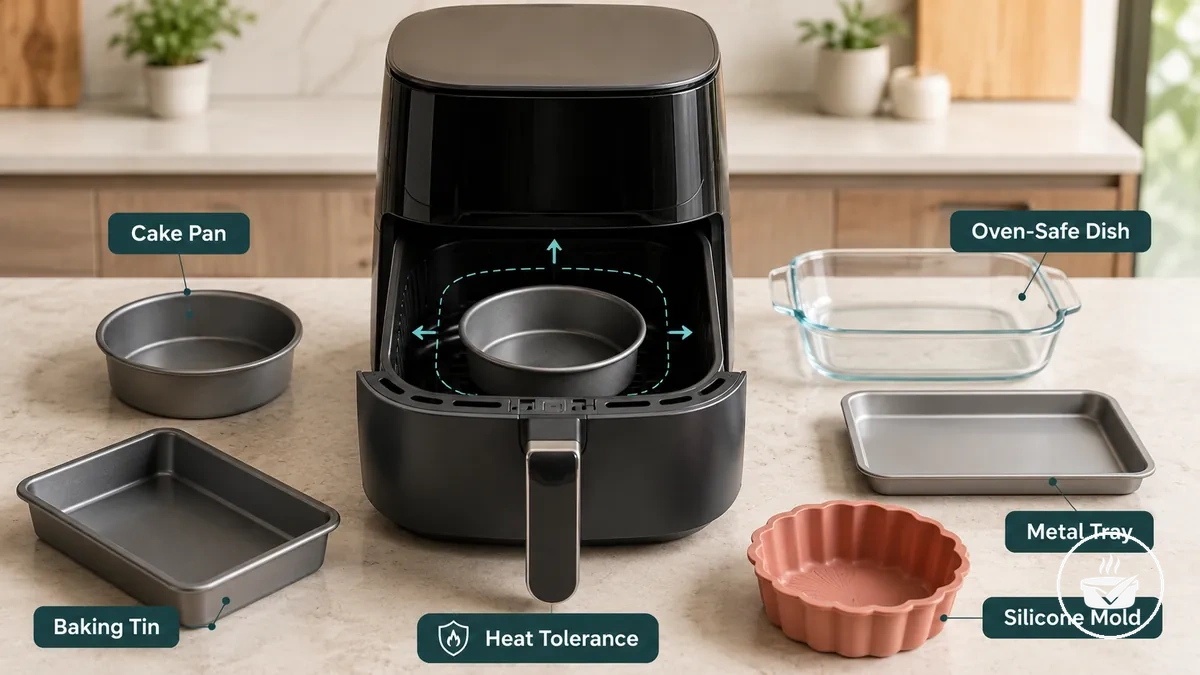
| Substitute option | Works when | Main limitation | Common baking use |
|---|---|---|---|
| Cake pan | Fits the basket and is oven-safe | Size and clearance may affect airflow | Cakes and small bakes |
| Baking tin | Meets fit conditions and heat tolerance | Deep sides may reduce available space | Brownies and loaf-style bakes |
| Oven-safe dish | Glass or ceramic is intended for oven use | Thermal shock should be avoided | Sauced dishes and baked desserts |
| Metal pan or heat-safe tray | Leaves enough clearance inside the appliance | Shape and rim height vary | General baking tasks |
| Silicone mold | Has adequate support and fits the appliance | Flexibility may require extra support | Muffins and small cakes |
Safe substitute options can be grouped by material safety, physical fit, and baking task. A cake pan, baking tin, oven-safe dish, metal pan, heat-safe tray, or silicone mold may be suitable when it is intended for oven use and meets fit conditions. Each option family has practical trade-offs instead of a universal advantage.
If you are baking brownies, a small baking tin may be appropriate. For a sauced dish, an oven-safe dish can be a practical choice. Check fit conditions and heat tolerance before baking.
Safe substitute options should be selected according to the baking task and the appliance rather than by category alone. For broader guidance on compatible containers and materials, see air fryer bakeware. No substitute family is suitable for every appliance or every baking task.
Regular Oven-Safe Cake Pans and Baking Tins
An oven-safe cake pan or baking tin may be suitable for air fryer baking when it fits the basket, has an appropriate oven-safe rating, and leaves enough clearance around the sides. Regular Oven-Safe Cake Pans and Baking Tins should be judged by local fit rather than by pan type alone. Suitability depends on diameter, wall height, and basket clearance.
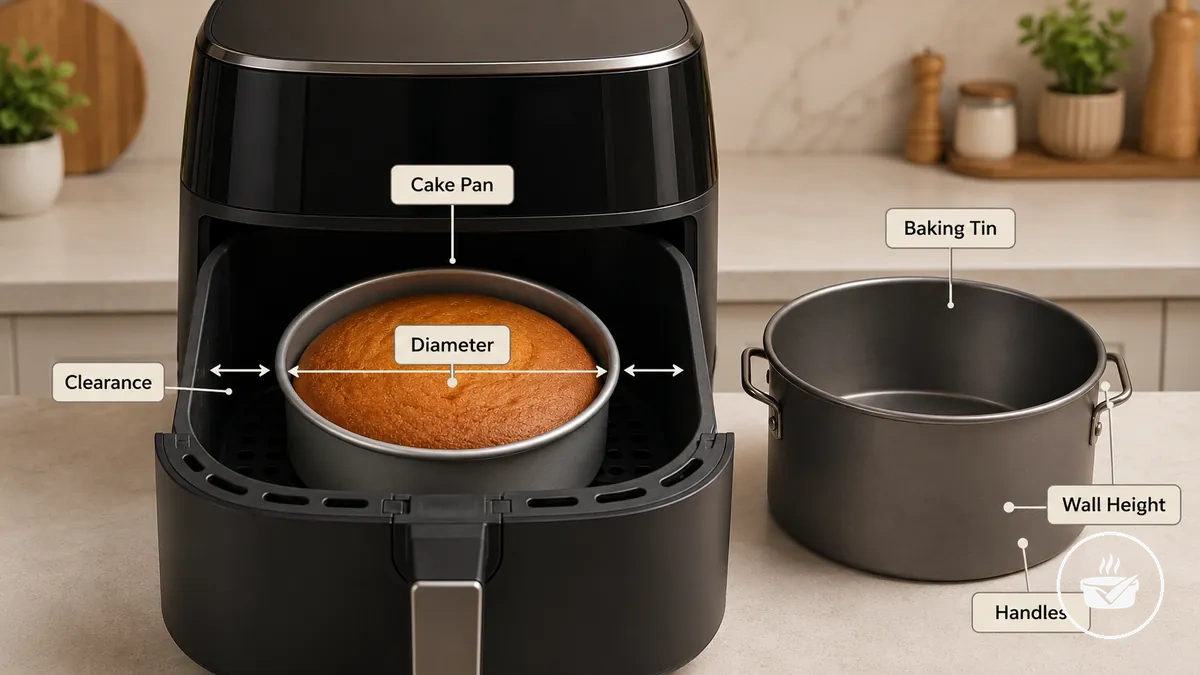
- Check that the pan diameter leaves clearance inside the basket.
- Compare the wall height with the available cooking space.
- Make sure handles do not interfere with basket clearance.
- Use a baking tin with an intact coating and an appropriate oven-safe rating.
- Keep food volume suitable for the pan and available cooking space.
A small round tin may fit comfortably inside an air fryer basket, while a taller baking tin or a cake tin with projecting handles may not leave enough clearance. Even when the pan appears suitable, check diameter, wall height, coating condition, handle clearance, and food volume before use.
Oven-Safe Glass, Ceramic, and Stoneware Dishes
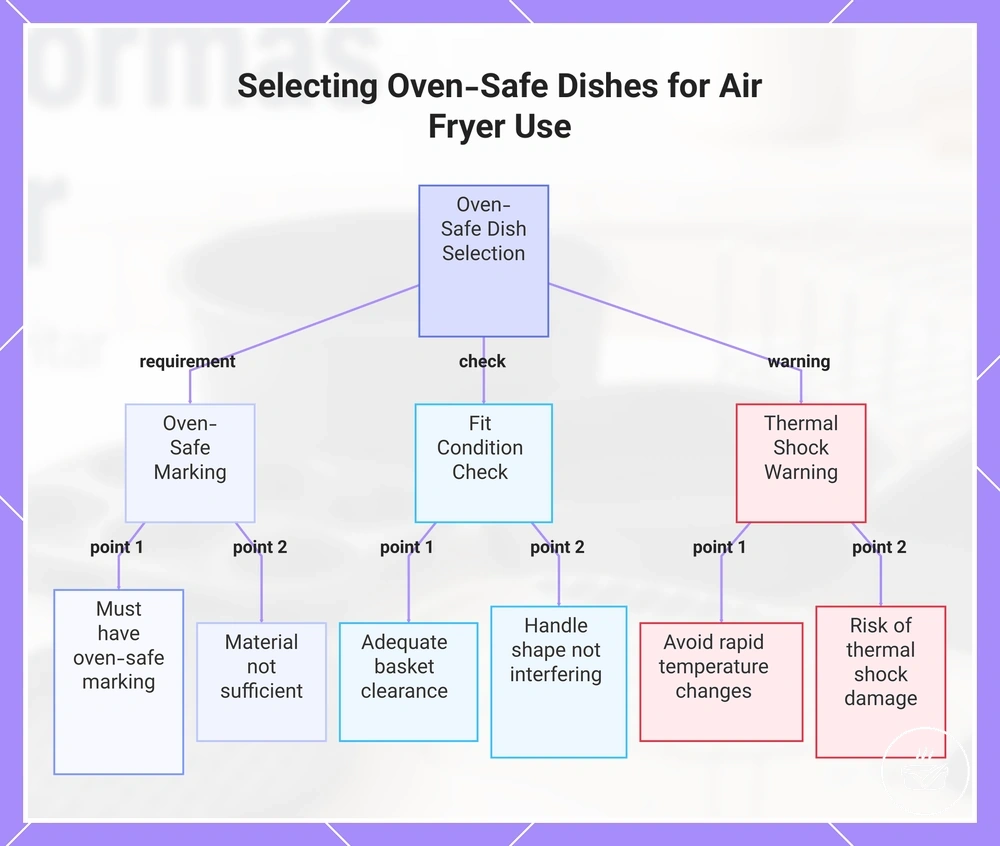
Oven-safe glass, ceramic dish, and stoneware dish options may work for air fryer baking when they fit the appliance and have a clear oven-safe marking. Material alone does not determine suitability because thickness, handle shape, and fit condition can vary. Check the oven-safe marking before using any of these materials.
Caution: Use only a dish with an oven-safe marking, avoid rapid temperature changes, and do not use a dish with a poor fit inside the basket.
If a cold dish is placed into a preheated appliance, thermal shock may increase the risk of damage. Check that the ceramic dish, stoneware dish, or oven-safe glass baking dish leaves enough clearance around the basket and that the handle shape does not interfere with the fit condition. Even with an oven-safe marking, avoid rapid temperature changes to reduce the risk of thermal shock.
This chart explains the key conditions, fit checks, and thermal shock warnings for using oven-safe glass, ceramic, or stoneware dishes in an air fryer.
Metal Pans, Sheet Pans, and Heat-Safe Trays
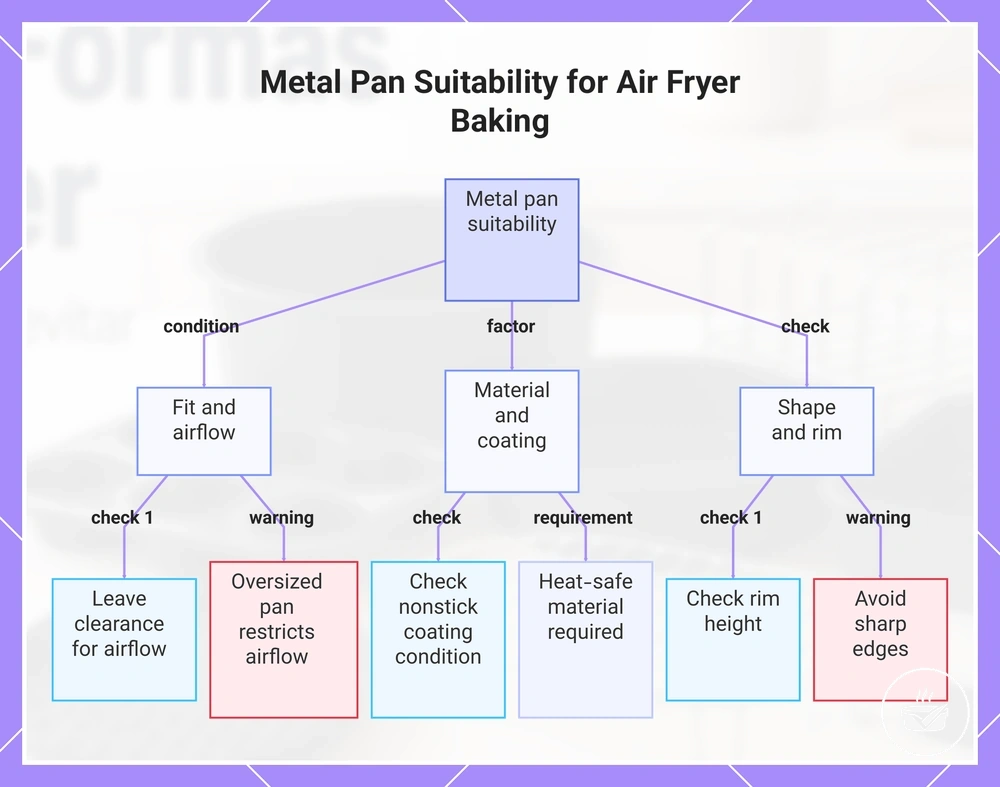
A metal pan, sheet pan, or heat-safe tray may be suitable for air fryer baking when it fits the basket and leaves enough space for airflow. Aluminium, stainless steel, and carbon steel can perform differently, while pan shape and condition also affect suitability. A smaller metal pan may support efficient heat transfer when the fit is appropriate.
- Check that the nonstick coating is in good condition and suitable for the intended heat exposure.
- Choose a rim height and edge shape without sharp edges that reduce usable basket space.
- Leave enough clearance around the pan to reduce airflow obstruction.
A small metal pan may bake efficiently when it leaves room for air to circulate, but an oversized sheet pan can reduce basket space and restrict airflow. Aluminium, stainless steel, or carbon steel may each be suitable when the heat-safe tray fits the appliance, while nonstick coating condition, rim height, and food depth should also be considered. An oversized sheet pan may increase the risk of airflow obstruction inside the basket.
This chart shows the key factors to check when using a metal pan in an air fryer, including fit, material, and shape considerations.
Silicone Baking Molds and Loaf Pans
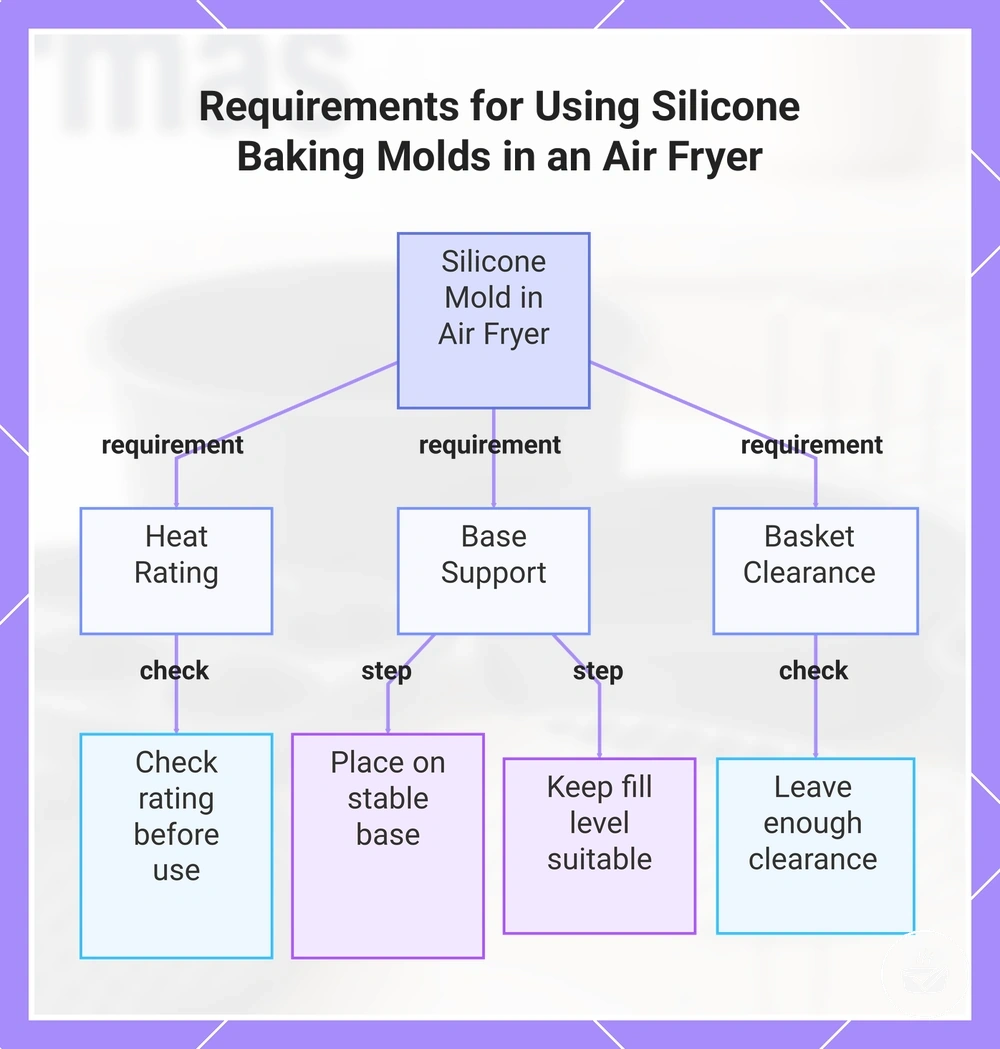
A silicone mold or loaf pan may be suitable for air fryer baking when its heat rating, basket clearance, and base support match the baking task. A silicone baking mold depends on flexibility as well as support, so check the heat rating before use and make sure the mold has adequate base support. Heat rating and support are essential before using either option.
- Check that the silicone mold has an appropriate heat rating.
- Use adequate base support when handling a flexible mold.
- Keep the fill level suitable for the mold to reduce deformation risk.
- Leave enough basket clearance around the silicone mold or loaf pan.
If a flexible silicone mold is filled with batter, placing it on a stable base before moving it into the basket may help reduce deformation risk during handling. A silicone mold is different from a silicone liner because it is designed to hold batter rather than line the basket. Even with an appropriate heat rating, a silicone mold or loaf pan may not hold its shape without adequate base support, which can limit safe handling.
This chart shows the essential conditions to check before using a silicone baking mold or loaf pan in an air fryer, including heat rating, basket clearance, and base support.
Compatibility Checks Before Using a Substitute Pan
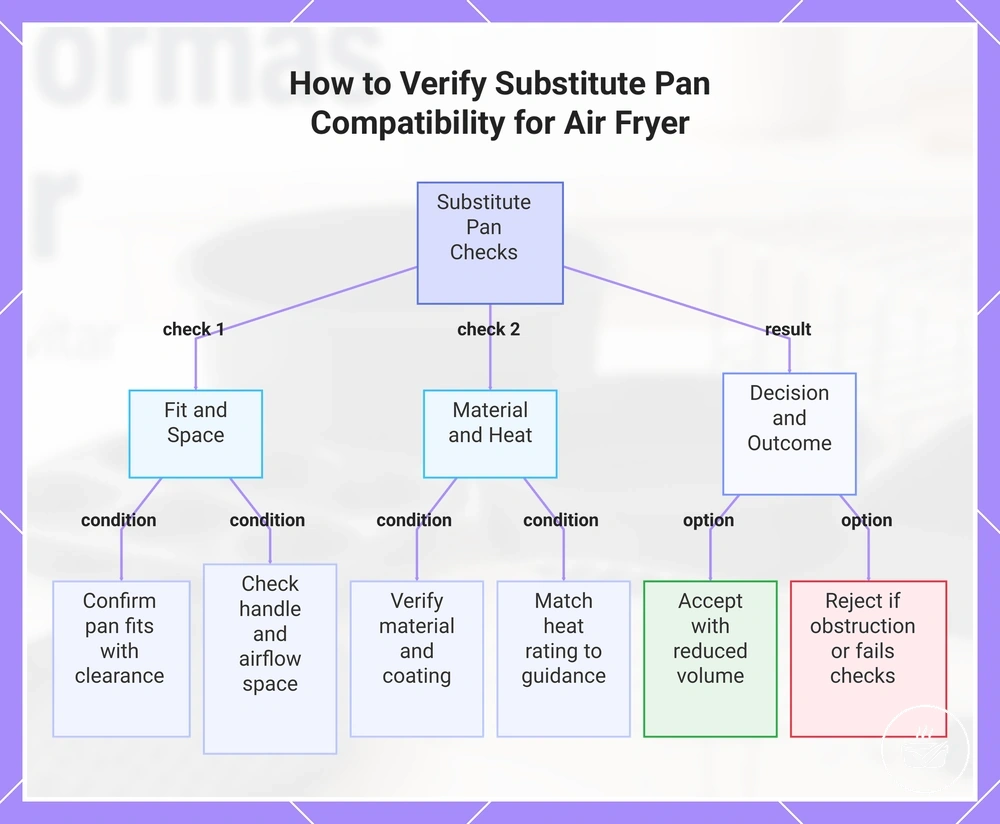
If you want to use a specific substitute pan, compatibility checks should come before placing it in the air fryer. The result depends on the pan, the appliance cavity, and the food being cooked. Check fit before use.
- Confirm the substitute pan fits inside the appliance with adequate clearance.
- Check that the material is suitable for the intended heat exposure.
- Inspect the coating condition before use.
- Match the heat rating with manufacturer guidance.
- Make sure the handle shape does not obstruct basket space or drawer movement.
- Leave enough airflow space around the pan.
- Consider food volume if the pan leaves limited clearance.
If the fit check shows limited basket space, review the pan before using it rather than assuming it is suitable. Material, coating, heat rating, handle shape, and airflow space should be checked together because one issue can change the use decision. Finish the verification with material and coating checks.
If the substitute pan passes the local fit checks, use sizing as the next decision point. For a more detailed evaluation of dimensions and clearance, see the size and fit checklist. These criteria help determine whether the pan is likely to suit the available space.
Accept the substitute pan when fit, clearance, material, coating, heat rating, airflow space, and manufacturer guidance support the intended use. Reduce food volume if space is limited but the basic fit remains suitable. Reject the pan if it obstructs airflow, interferes with drawer movement, or fails the required fit or material checks.
This chart shows the key compatibility checks and decision outcomes when using a substitute pan in an air fryer.
Fit, Clearance, and Basket Space
Fit depends on whether the substitute pan leaves enough physical space inside the basket or oven-style cavity for normal use. Check the pan footprint, wall height, basket space, and clearance before use because the available space varies by appliance. The pan should meet the physical fit threshold before you continue.
- Check that the pan footprint fits the basket base or cavity space.
- Confirm the wall height leaves enough height clearance, including basket lip or lid clearance where applicable.
- Make sure handle projection does not create an obstruction.
- Verify that drawer movement remains unobstructed when the pan is in place.
- Leave side airflow room around the pan and consider rack spacing in oven-style cavities.
A pan may fit physically inside the basket but still leave too little airflow room around its sides. For example, a pan with a suitable pan footprint may still restrict circulation if the wall height or handle projection reduces side clearance or interferes with drawer movement. Treat physical fit and airflow room as separate checks, with airflow room serving as the final local test.
Material, Coating, and Heat Rating
Material, coating, and heat rating decide whether a substitute pan should be used. Check the oven-safe mark, temperature limit, nonstick condition, and food-contact surface before placing it in the air fryer. The pan should have clear label support and sound coating condition.
- Look for an oven-safe mark on the pan or manufacturer label.
- Check the stated temperature limit against the planned cooking heat.
- Reject coating damage, peeling nonstick surfaces, or exposed unknown layers.
- Avoid decorative surfaces, adhesives, or finishes that are not meant for food-contact heat exposure.
- Treat an unlabeled item or unknown material as unsuitable.
If the label is missing, the coating is damaged, or the surface is decorative, do not test it experimentally. A labeled item may be suitable only when its material, coating, heat rating, and food-contact condition match the appliance use. Reject uncertain, damaged, or unlabeled items rather than treating them as safe by default.
How Substitute Pans Affect Airflow and Baking Results
A substitute pan can change airflow and baking results because it changes airflow exposure around the food. Browning, moisture retention, cooking time, and texture may vary when circulation, surface exposure, or spacing changes. Airflow exposure is the main mechanism behind these differences.
| Pan trait | Likely effect | What to watch |
|---|---|---|
| Pan depth | May increase moisture retention and alter texture | Food depth and airflow |
| Side height | May reduce surface exposure | Browning and crisping |
| Material conductivity | May change heat transfer and cooking time | Material behavior and bake result |
| Food mass | May slow overall heating | Texture and moisture retention |
| Spacing | May improve or reduce basket air movement | Airflow and crisping |
If a substitute pan has greater pan depth or taller sides, less air may reach the food surface. Material conductivity, food mass, preheating, and spacing can also influence heat transfer, so cooking time and browning may differ. The final baking results depend on material behavior and food depth.
For cakes, a substitute pan may improve batter containment while changing surface exposure. Brownies may retain more moisture when baked in a deeper pan, while sauced bakes can benefit from better containment but may develop less crisping on exposed surfaces. These outcomes depend on airflow, pan depth, and food mass.
Choose a substitute pan that balances containment with airflow rather than focusing on one result alone. If spacing around the pan remains adequate and the food depth suits the container, baking results may stay closer to the intended outcome even though browning, cooking time, and texture can still vary. Use these conditions to guide the final decision.
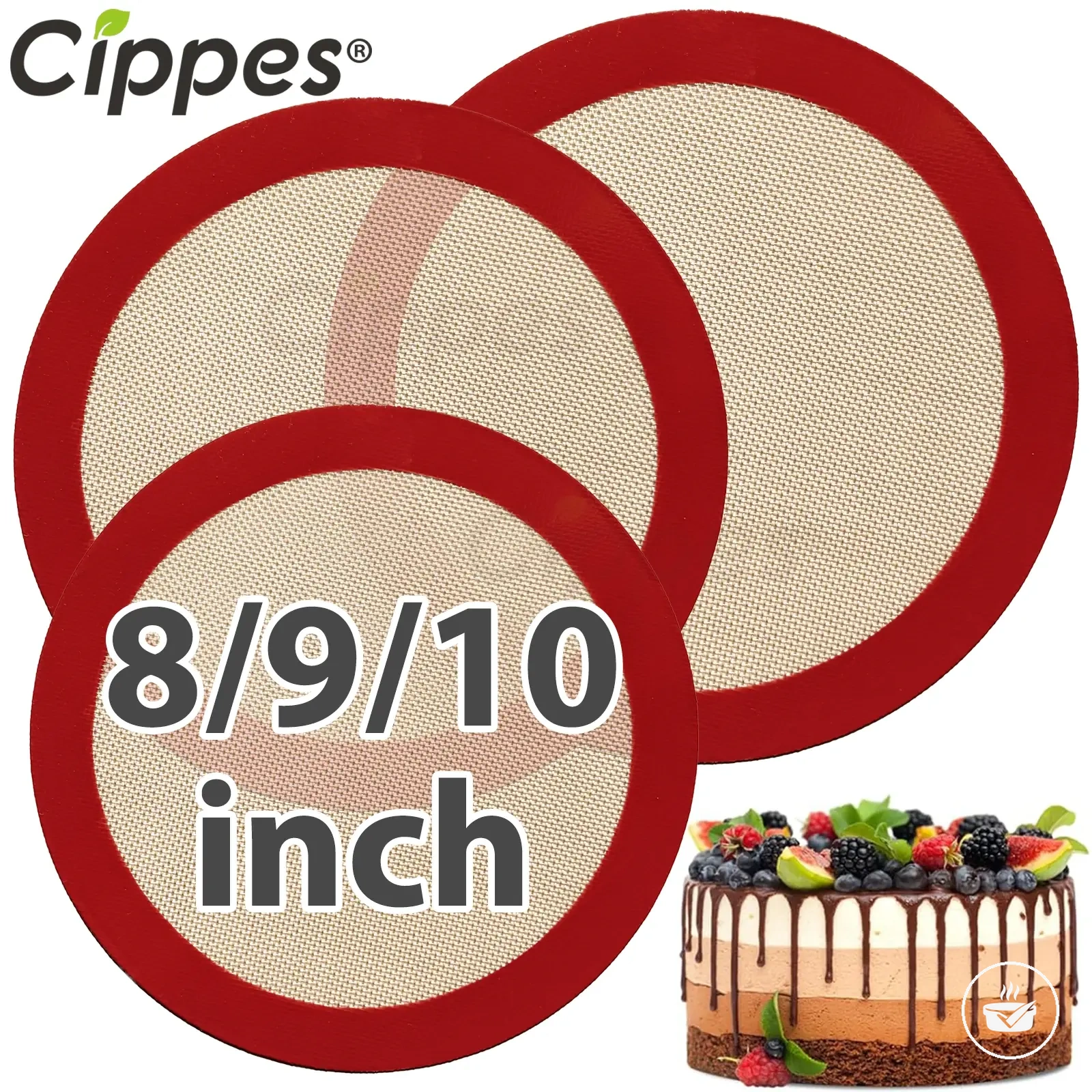
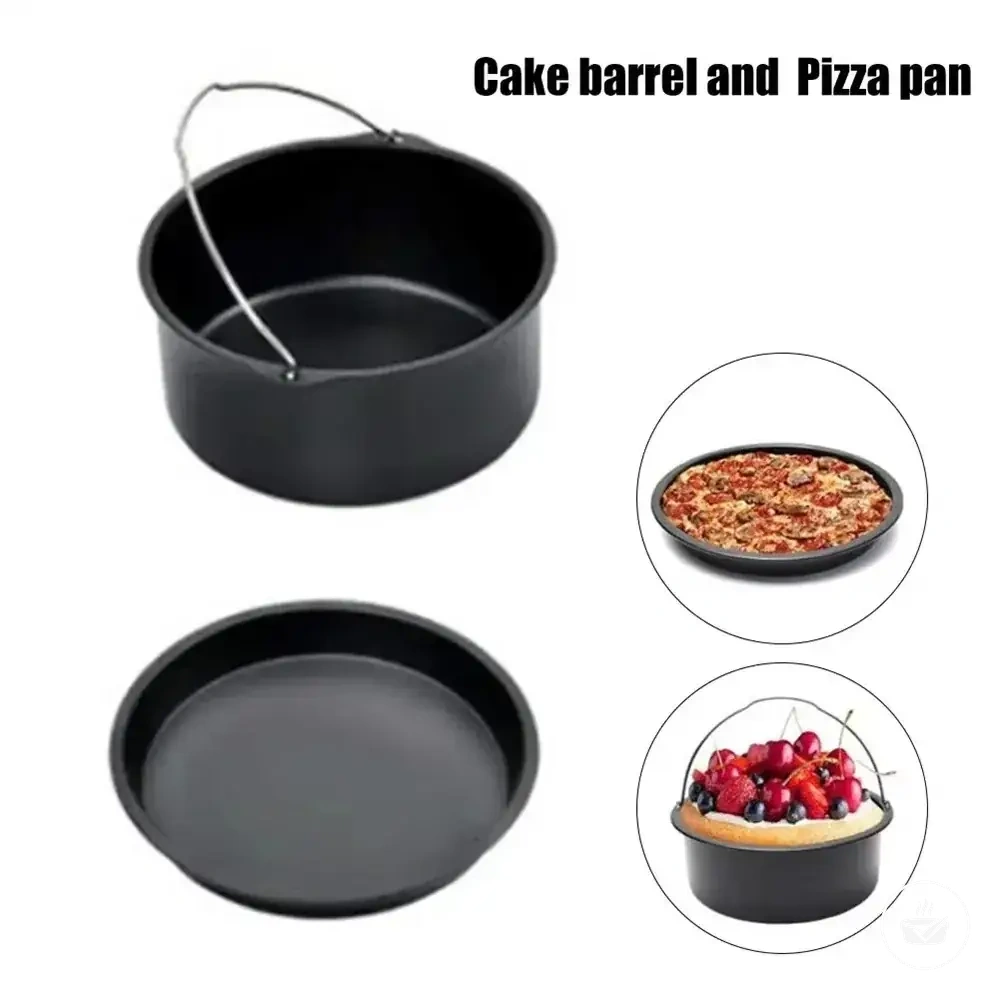
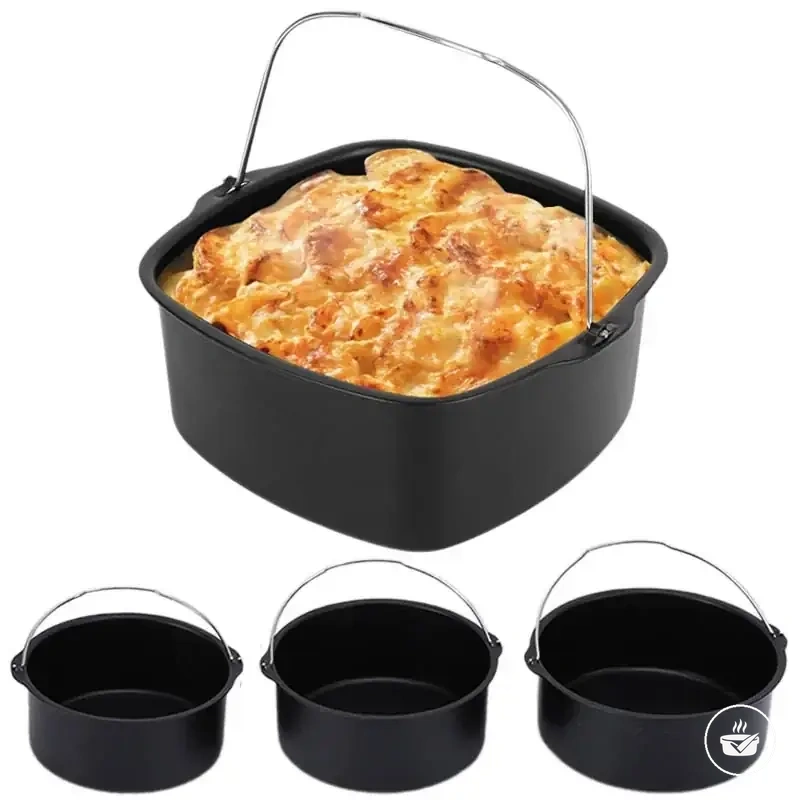
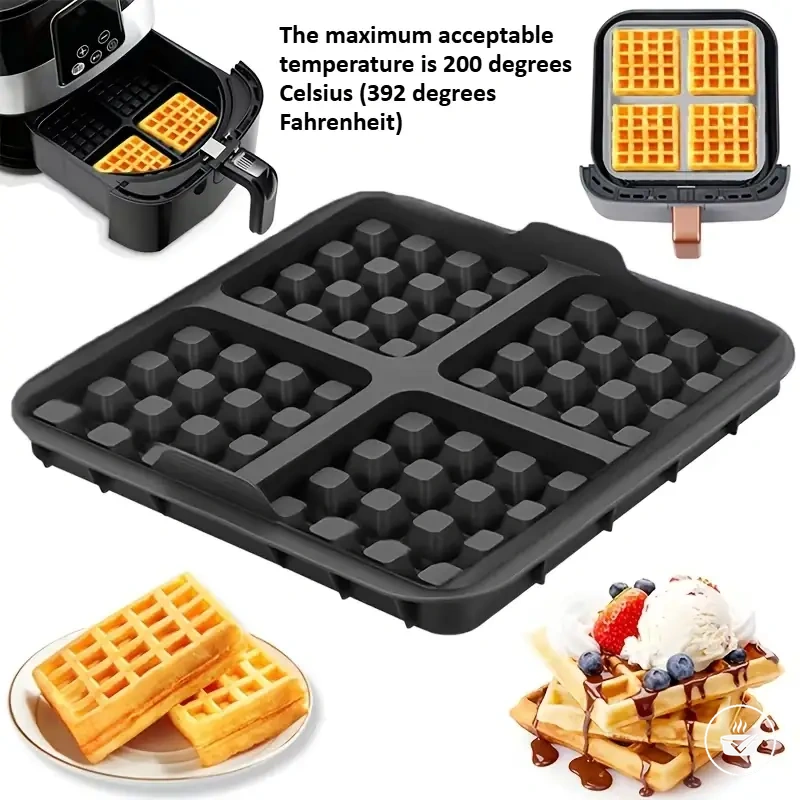
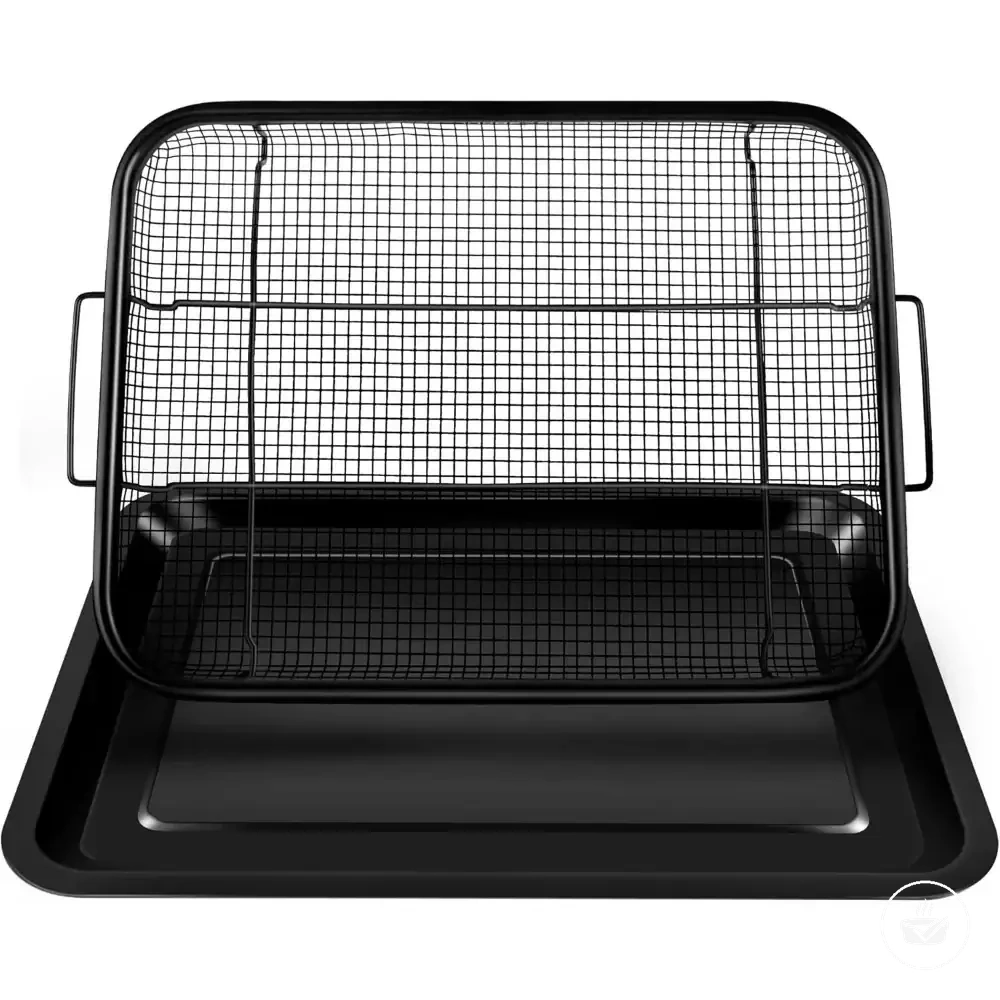
Here are product examples that may make comparison easier. Before buying, always review the compatibility criteria, essential features, and product details.
When a Substitute Pan Should Not Be Used
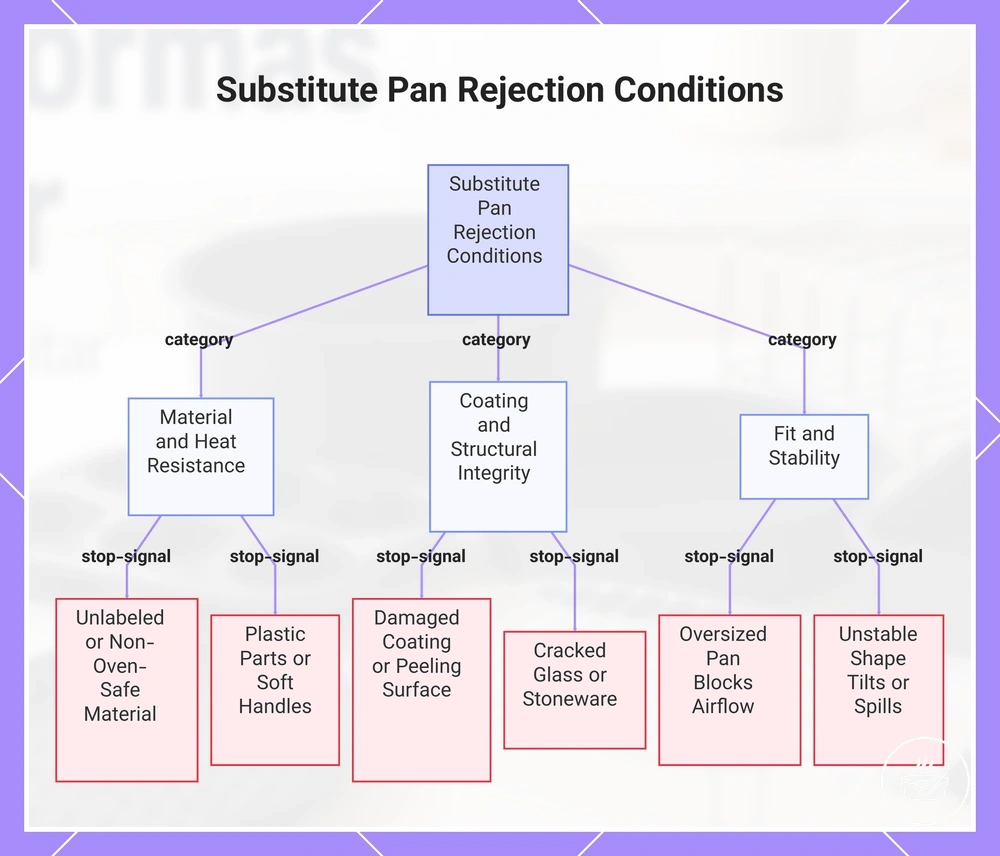
A substitute pan should not be used when it is unsafe, unsuitable, or uncertain for air fryer heat exposure. Reject the pan if the material is unclear, the fit is poor, the coating is damaged, or airflow may be blocked. These are rejection conditions, not minor preferences.
Warning: Avoid using a substitute pan when any stop-signal below applies.
- Unlabeled material with unknown heat exposure limits.
- Non-oven-safe container or missing oven-safe marking.
- Cracked glass, ceramic, or stoneware dish.
- Damaged coating, loose coating, or peeling food-contact surface.
- Plastic parts, soft handles, or trim that may not suit heat exposure.
- Oversized pan that may cause airflow obstruction.
- Unstable shape that may tilt, spill, or shift inside the basket.
- Manufacturer restrictions that rule out the material or pan type.
Unlabeled material, damaged coating, cracked glass, plastic parts, and manufacturer restrictions are material and fit stop-signals because the heat response, food-contact condition, or appliance guidance is not reliable enough for use. An oversized pan or unstable shape may also be unsuitable when it blocks airflow or does not sit securely.
Dedicated compatible bakeware may be safer than improvising when the substitute pan fails these checks. For broader guidance on non-use boundaries, see air fryer bakeware safety. Use the substitute only when the rejection signals are absent and the pan remains compatible with the appliance.
This chart categorizes the stop-signals that indicate a substitute pan should not be used in an air fryer, including material, coating, and fit issues.
Foil, Parchment, and Liners as Limited Pan Substitutes
Foil, parchment, and liners are a limited pan substitute because they serve as a containment aid rather than a baking vessel. They may help with cleanup or holding food under suitable conditions, but they do not provide the support or shape of a pan. Liners are not structural pan replacements.
- Keep the anchoring condition secure by using enough food weight to reduce movement.
- Use perforation only when it matches appliance guidance and does not unnecessarily affect airflow.
- Check the heat tolerance of foil, parchment, or another flexible liner before use.
- Leave enough space for airflow because a flexible liner may move or change the airflow effect if not properly anchored.
- Follow appliance guidance to reduce the chance of contact with heating elements where applicable.
Foil, parchment, and liners may help with containment or cleanup, but they do not solve shape, support, or heat-distribution needs like a baking pan. For example, a parchment liner may make cleanup easier for a cake or similar bake, yet it still depends on anchoring condition, food weight, heat tolerance, and airflow effect. Use these materials only as limited aids, with attention to anchoring, heat tolerance, and airflow caution.