Air Fryer Bakeware Selection Checklist
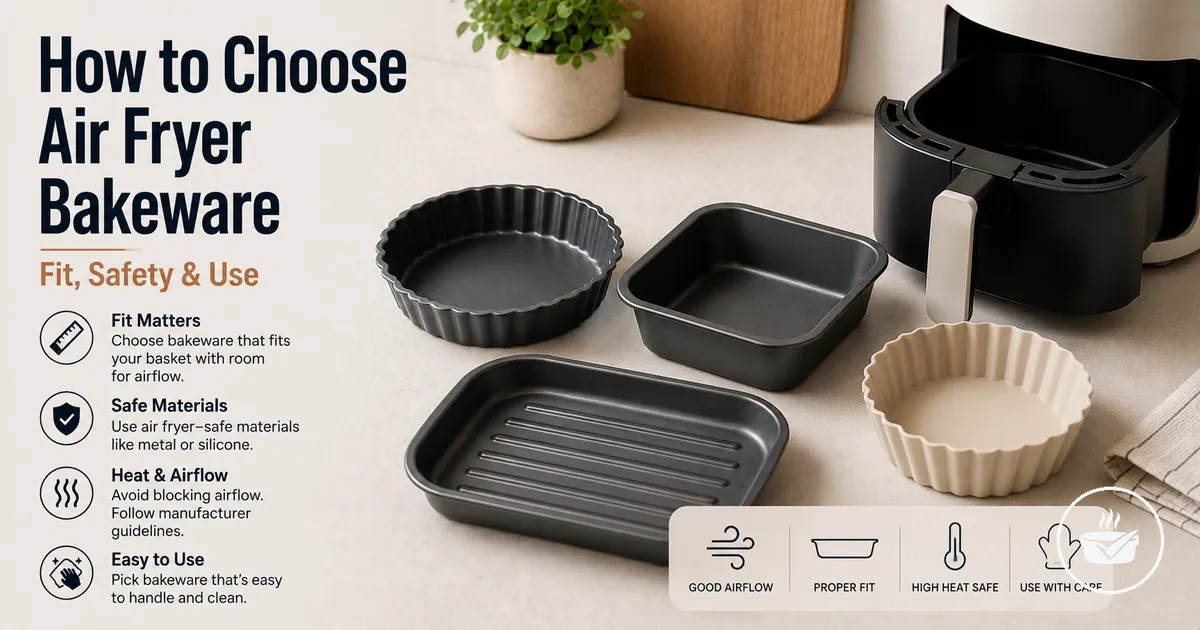
Air fryer bakeware selection depends on fit, oven-safe status, food-contact suitability, airflow space, material behavior, task match, and practical value. A pan, tray, mold, set, or accessory should first suit the usable cooking space and the food being baked before material preference or set size becomes useful.
This checklist is for choosing air fryer bakeware, not for choosing the air fryer appliance itself. Appliance size, basket shape, oven-style cavity layout, coating condition, handle design, and removal method can change whether a piece is suitable.
Start with the non-negotiable checks: verify that the item fits inside the usable cooking area, carries clear oven-safe or heat-use guidance, has food-contact surfaces in acceptable condition, and does not block airflow around the food. After those checks, compare materials and pieces by the baking task: contained batters usually need a pan or mold, while foods that benefit from surface exposure may need a shallower tray or rack-style piece.
Air fryer bakeware value depends on repeated use rather than the number of pieces included. A single well-matched pan can be more useful than a large set if the extra accessories do not fit, duplicate pieces already owned, or support tasks that are rarely baked in the air fryer.
Air fryer-safe bakeware scope before selection
Air fryer-safe bakeware refers to pans, trays, molds, dishes, cups, and similar accessories that belong in the selection pool only when they fit the appliance, carry clear oven-use guidance, have suitable food-contact surfaces, and leave enough space for airflow. These qualification checks define the scope before comparing materials, shapes, or overall value.
Regular oven-safe cookware may also belong in this selection pool when it fits the available cooking space, matches the appliance instructions, and remains in good condition. For broader context beyond this scope, see the air fryer bakeware guide, which separates bakeware selection from general cookware or air fryer appliance buying.
Air fryer-safe bakeware scope before selection is illustrated in the image below. It highlights the main fit, food-contact surface, airflow, and condition cues that determine whether an item is appropriate to evaluate further.
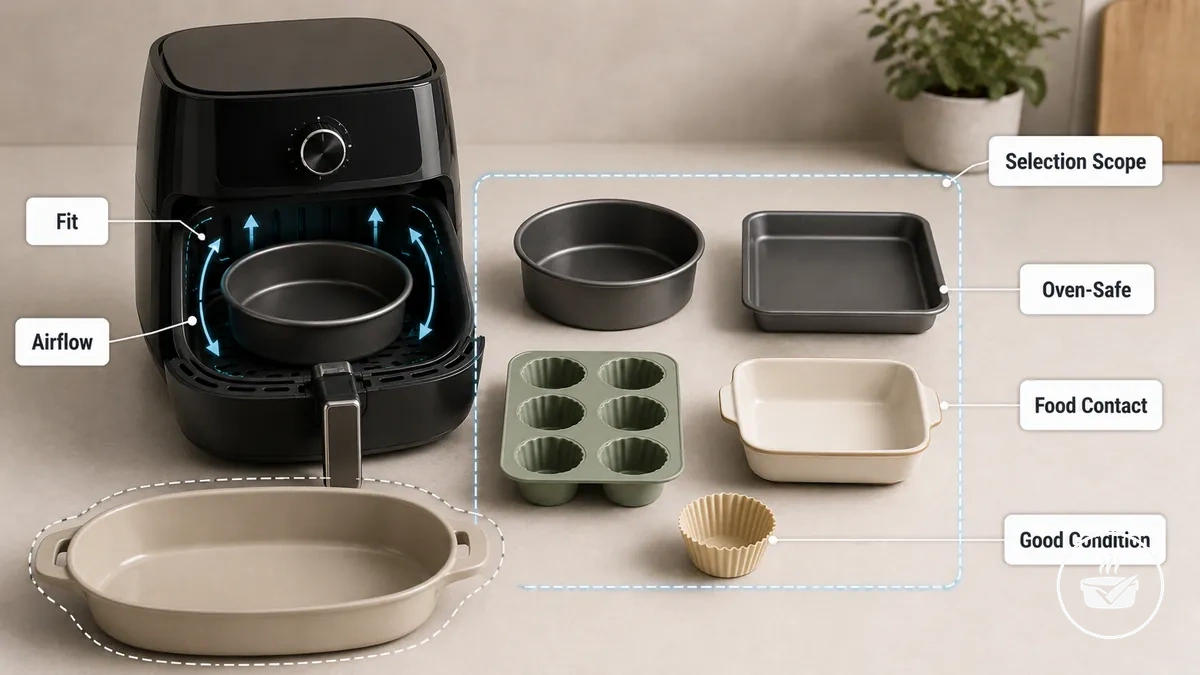
Items with unclear heat guidance, unsuitable food-contact surfaces, poor condition, or shapes that may restrict airflow should remain outside the initial selection set until those concerns are resolved. This keeps later comparisons focused only on bakeware that qualifies for further evaluation.
Fit and airflow checks for the fryer basket or oven cavity
The fryer basket or oven cavity must provide enough usable space for the bakeware to fit while preserving airflow around it. Measure the usable interior, confirm that the bakeware can be placed and removed comfortably, and reject pieces that crowd the cooking area or restrict air circulation.
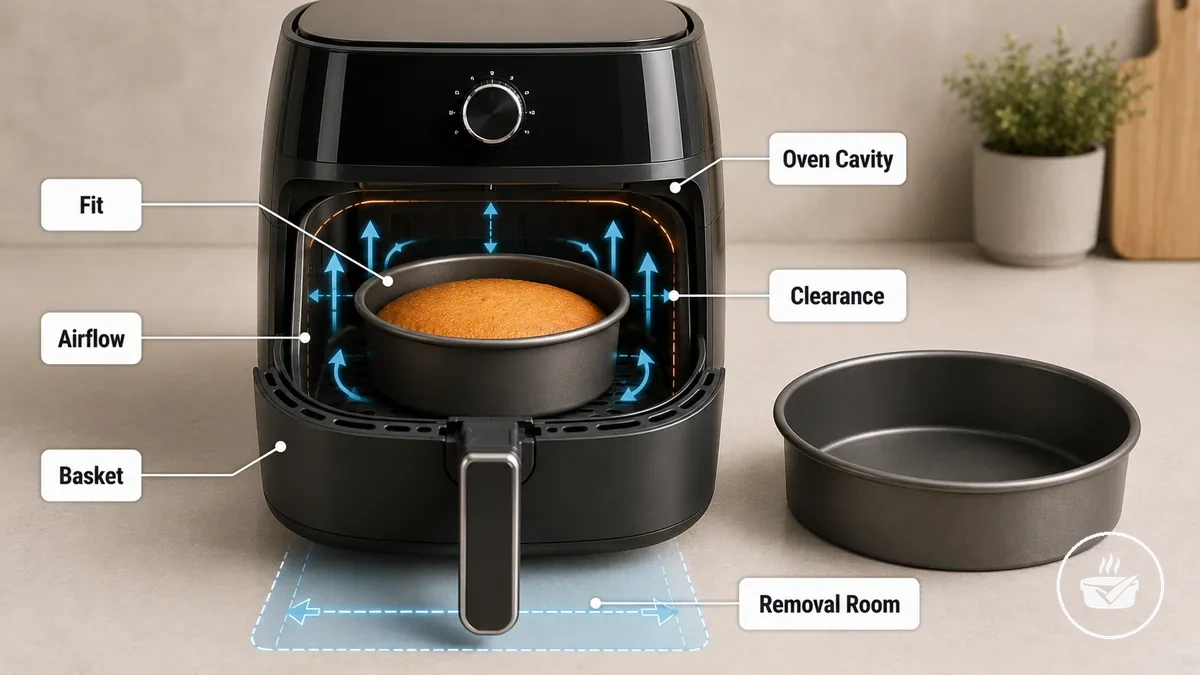
Airflow depends on open space around the bakeware rather than on the bakeware simply fitting inside the appliance. Basket-style and oven-style air fryers may require different layouts, so a pan or tray that fits one design may still need verification in another. Browning and handling can also vary with the appliance design and the shape of the bakeware.
Check that the bakeware can be inserted, positioned, and removed without catching on the basket walls, oven rails, or nearby heating components. Handles, raised edges, and oversized rims may reduce the usable space even when the main body of the bakeware appears to fit.
Fit and airflow checks for the fryer basket or oven cavity are illustrated in the image above, showing clearance, airflow paths, and removal room. For a more detailed evaluation of dimensions and compatibility, see air fryer bakeware fit.
Measured cooking space, clearance, and removal room
Measured cooking space, clearance, and removal room should be checked inside the usable cooking area rather than from the appliance's external dimensions. Measure the interior width, length, and height first, then confirm that the bakeware can be placed, used, and removed without obstruction.
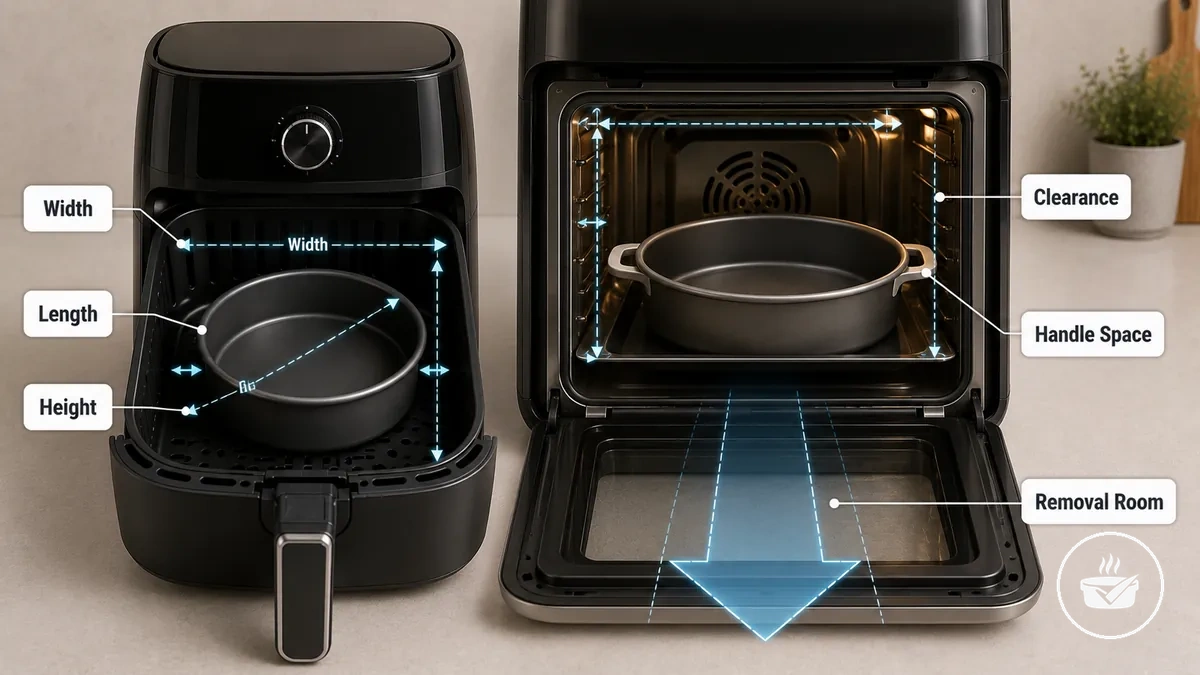
Measured cooking space, clearance, and removal room are illustrated in the diagram above. The labels identify the measurements to verify before deciding whether a piece of bakeware is suitable.
- Measure the usable interior width, length, and height instead of the appliance's exterior dimensions.
- Check whether handles, rims, or raised edges reduce the available cooking space.
- Confirm there is enough clearance to place and remove the bakeware comfortably.
- Verify that the removal angle remains practical if the basket curves inward or the oven cavity includes rails or other internal features.
- Reject pieces that fit one dimension but cannot be positioned or removed without obstruction.
Pan shape, depth, and airflow exposure
Pan shape, depth, and airflow exposure depend on how much of the food remains open to circulating air. Shallow trays and lower-sided pans usually expose more of the food surface, while deeper or more enclosed pans reduce airflow exposure. Browning, steaming, and handling can vary with the food, pan depth, and the air fryer's airflow pattern.
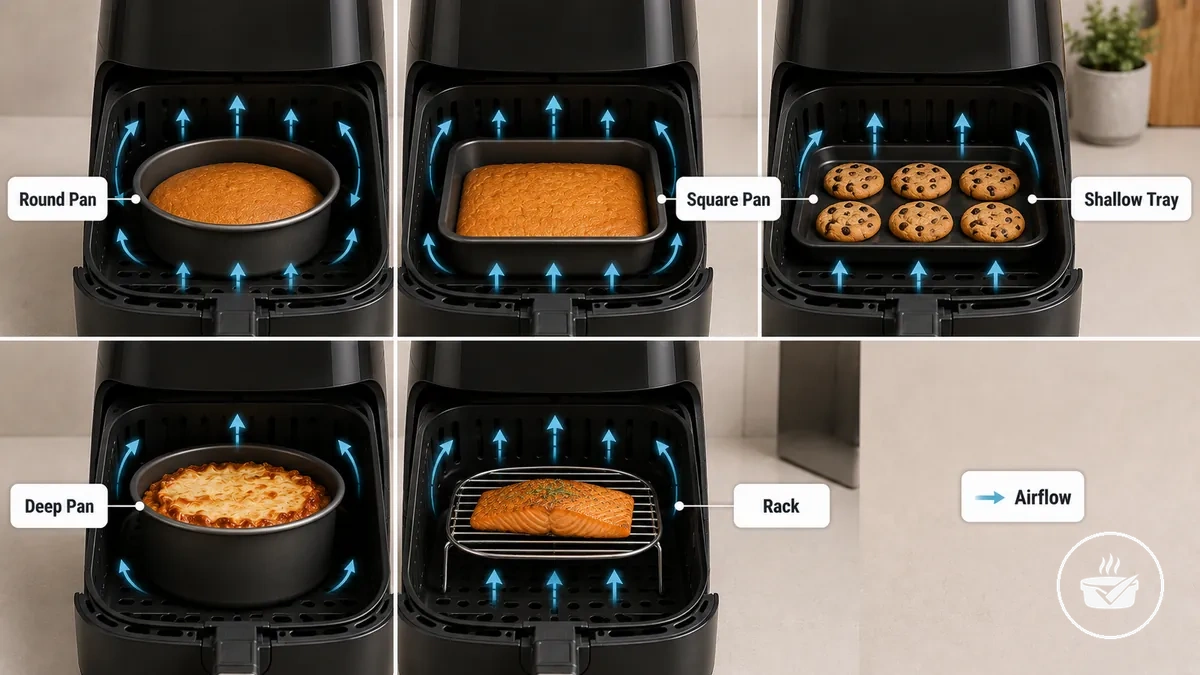
Pan shape, depth, and airflow exposure are compared in the illustration above. The comparison graphic shows how different pan forms influence exposed cooking surfaces and airflow around the bakeware.
- Round pans can suit circular cooking areas when they match the usable interior.
- Square pans may provide more cooking surface if they fit the available cooking space.
- Shallow trays typically leave more of the food exposed to circulating air.
- Deep pans provide greater containment but can reduce airflow exposure around the food.
- Racks or raised accessories may increase airflow exposure when they fit both the appliance and the food being prepared.
Food-contact and heat-safety checks before buying
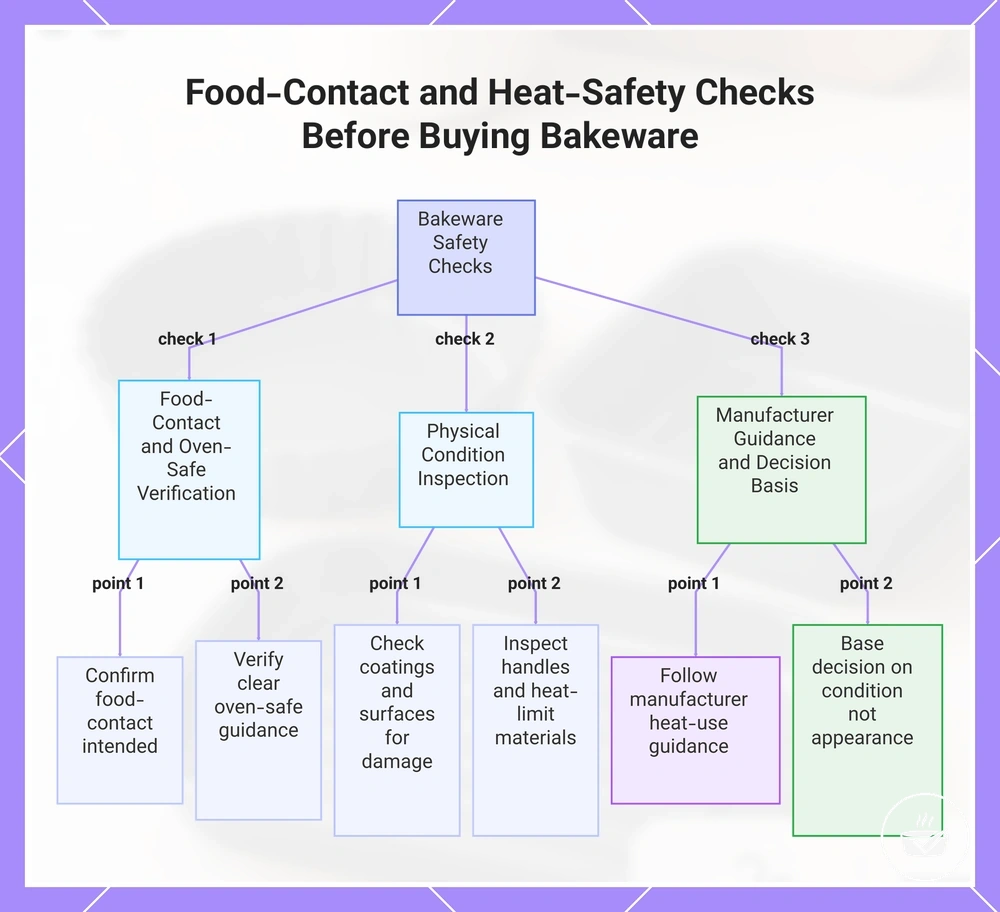
Food-contact and heat-safety checks before buying begin with confirming that the bakeware is intended for food contact, carries clear oven-safe guidance, and matches the manufacturer's heat-use instructions. Before purchasing, inspect the cooking surface, coatings, handles, and attached parts for visible damage, wear, or materials that require additional verification.
Air fryer bakeware surfaces, coatings, parts, and manufacturer limits should be evaluated together rather than separately. Scratched or damaged coatings, loose finishes, or plastic-adjacent parts exposed to heat are conditions that should prompt further verification or consideration of a different item. Manufacturer instructions and the item's condition provide a stronger basis for the decision than appearance alone.
- Confirm the bakeware is intended for food contact.
- Verify that it includes clear oven-safe or heat-use guidance.
- Check coatings and cooking surfaces for visible damage or excessive wear.
- Inspect handles, grips, lids, and other attached parts for materials that may have different heat limits.
- Follow the manufacturer's heat-use guidance whenever it is provided for the specific item.
These checks provide a practical purchase-before-use safety filter without replacing the manufacturer's instructions. For broader guidance on safe use and maintenance, see air fryer bakeware safety.
This chart shows the three essential categories of safety checks to perform before purchasing air fryer bakeware: verifying food-contact and oven-safe guidance, inspecting physical condition, and applying manufacturer instructions.
Oven-safe rating and maximum temperature tolerance
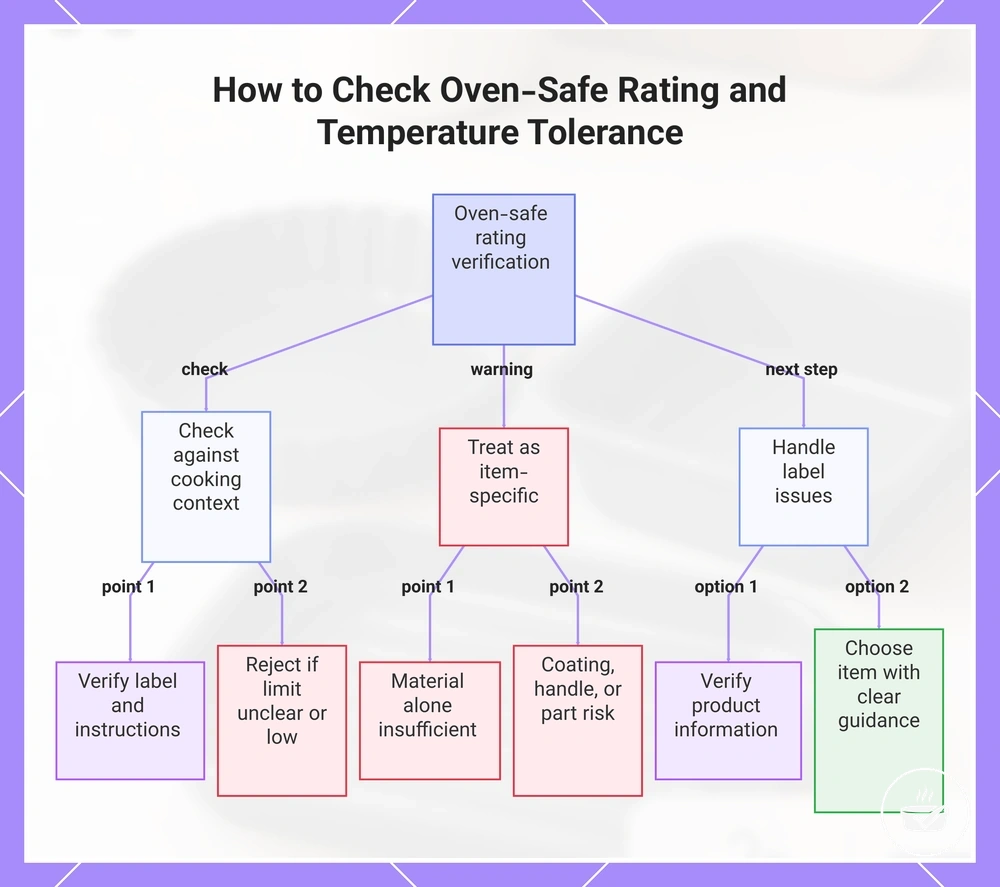
Oven-safe rating and maximum temperature tolerance should be checked against the cooking context before a pan, mold, cup, handle, or coating is used. Verify the item label and manufacturer instructions, then reject or pause on any bakeware where the heat limit is unclear or lower than the intended use.
A material category alone does not confirm suitability because a specific item can fail the check through its coating, handle, attached part, or stated limit. A metal pan, silicone mold, ceramic dish, or coated cup should still be treated as item-specific until the rating and instructions are clear.
Use the rating as a boundary, not as a general promise. If the label is missing, hard to read, contradicted by the appliance instructions, or limited to parts of the item only, verify the product information or choose another piece with clearer heat-use guidance.
This chart shows the key steps to verify an item's oven-safe rating, including checking against the cooking context, avoiding material-based assumptions, and handling unclear labels.
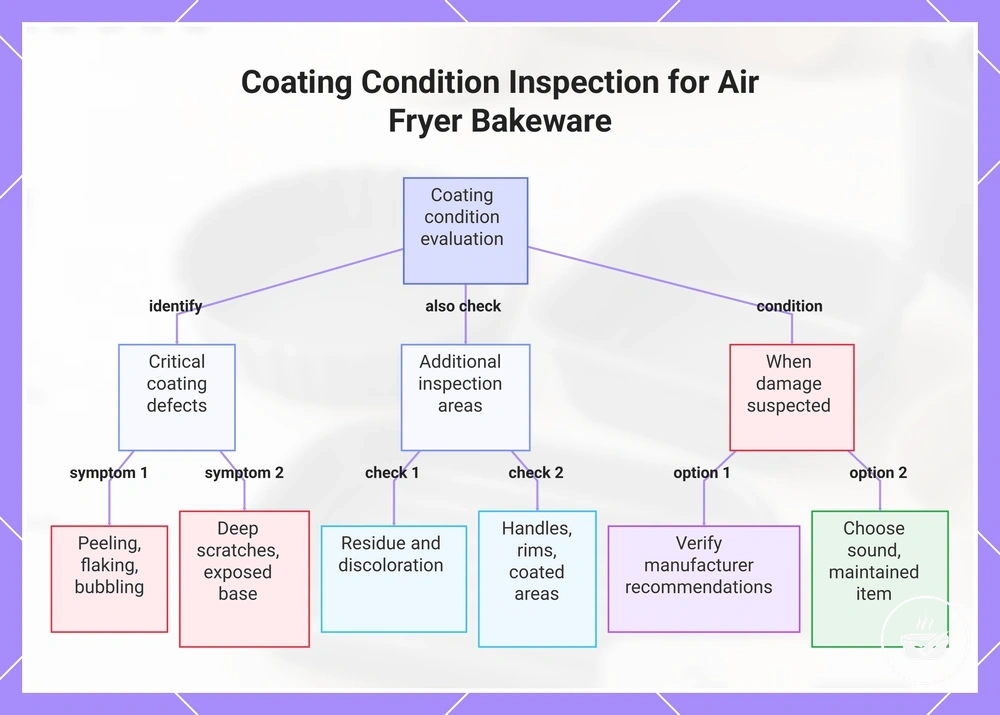
Coating condition and high-heat contact surfaces
Coating condition and high-heat contact surfaces should be checked visually before selecting or using air fryer bakeware. Reject or question items with peeling coatings, deep scratches, exposed base material, loose surface layers, or residue that cannot be identified, because visible wear can change whether the cooking surface remains suitable for continued use.
Nonstick, ceramic, stainless steel, silicone, and other cooking surfaces should be evaluated by their individual condition rather than by their material category alone. Marketing descriptions such as non-toxic, eco, or PFOA-free may require verification from the manufacturer's information and should not replace an inspection of the actual cooking surface.
- Look for peeling, flaking, or bubbling coatings.
- Check for deep scratches or exposed underlying material on food-contact surfaces.
- Inspect for residue, discoloration, or other visible surface damage that may require further evaluation.
- Verify that handles, rims, and coated contact areas remain intact and consistent with the manufacturer's guidance.
When coating condition is unclear or visible damage is present, verify the manufacturer's recommendations or choose another item with a sound, clearly maintained cooking surface.
This chart shows the key defects to check, additional inspection areas, and the decision process when evaluating the coating condition of air fryer bakeware.
Material tradeoffs for air fryer baking results
Material tradeoffs for air fryer baking results depend on the baking goal rather than on finding one universally better material. Metal, silicone, glass, ceramic, and nonstick bakeware differ in heat response, handling, cleaning, and food release, while browning and texture can vary with the recipe, pan shape, and appliance airflow.
Each material offers different tendencies instead of guaranteed outcomes. Metal may respond to heat more quickly, silicone can provide flexible release, glass and ceramic may behave differently as they heat, and nonstick surfaces may reduce sticking while the coating remains in good condition. Cleaning effort, durability, and release also vary with the bakeware design and how it is used.
| Material | Heat response | Food release | Cleaning | Typical tradeoff |
|---|---|---|---|---|
| Metal | Often responds quickly to heat | Depends on surface finish | Varies by coating and residue | May encourage browning depending on recipe and airflow |
| Silicone | Can heat differently from metal | Often releases flexible baked items more easily | Usually straightforward when cleaned promptly | Results may vary with mold shape and support |
| Glass | Can respond more gradually to heat changes | Depends on preparation and recipe | Varies with baked-on residue | Handling and heat response may differ from metal |
| Ceramic | May heat differently depending on the item | Depends on surface condition | Varies with glaze and residue | Cooking characteristics can differ from metal bakeware |
| Nonstick | Depends on the underlying construction | May assist food release while the coating remains in good condition | Often easier to clean when undamaged | Coating condition remains an important consideration |
Use these comparisons as tendency-based guidance rather than as a ranking of materials. For a broader comparison of construction types and their characteristics, see air fryer bakeware materials.
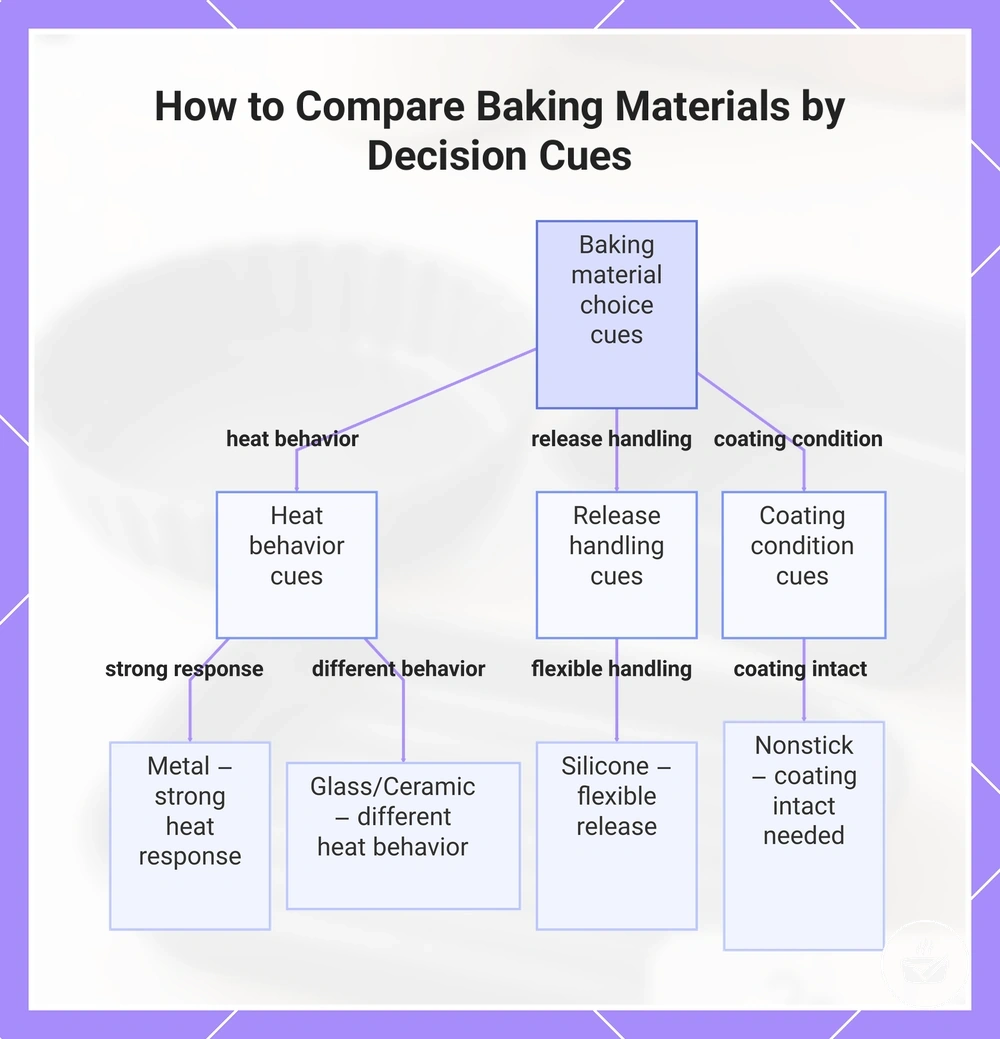
Metal, silicone, glass, ceramic, and nonstick decision cues
Metal, silicone, glass, ceramic, and nonstick decision cues help compare material tendencies without identifying a universal choice. Metal may suit recipes that benefit from quicker heat response, silicone can suit flexible release, glass and ceramic may suit recipes that benefit from different heat behaviour, and nonstick may assist food release while the coating remains in good condition.
- Metal: Strong heat response; browning tendency can vary with the recipe, pan shape, and airflow.
- Silicone: Flexible handling; release may be easier, while support depends on the mold shape.
- Glass: Different heat behaviour from metal; handling and cooking results depend on the recipe and the item.
- Ceramic: Different heat characteristics; release and cleaning can vary with the surface condition.
- Nonstick: May help reduce sticking when the coating remains intact; continued suitability depends on coating condition.
Use these decision cues to compare material tendencies for the intended baking task rather than treating one material family as the preferred choice in every situation.
This chart groups the main decision cues for metal, silicone, glass, ceramic, and nonstick baking materials into three categories: heat behavior, release handling, and coating condition.
Bakeware pieces matched to the baking task
Bakeware pieces matched to the baking task should be selected according to the type of food being baked rather than by appearance or set size. Contained batters benefit from bakeware that provides containment, while foods that benefit from greater surface exposure may suit flatter pieces that leave more room for airflow. Browning, moisture, and texture can vary with the food type, pan depth, and appliance airflow.
| Baking task | Suitable bakeware piece | Primary selection cue |
|---|---|---|
| Contained batters | Cake pan or baking dish | Provides containment and helps maintain shape during baking |
| Individual portions | Muffin cups or baking cups | Keeps portions separate while containing the batter |
| Surface baking | Shallow tray | Leaves more food exposed to circulating air |
| Elevated cooking | Rack or raised accessory | May increase airflow exposure when the appliance layout allows |
| Small contained items | Small cups or molds | Supports compact portions while limiting spreading |
Match the bakeware piece to the baking objective first, then confirm that it fits the available cooking space and supports the intended result without unnecessarily restricting airflow.
Cake pans, muffin cups, trays, racks, and mixed-use accessories
Cake pans, muffin cups, trays, racks, and mixed-use accessories should be selected by recurring baking tasks, not by the number of pieces included. A useful piece matches the task, fits the cooking space, cleans reasonably for repeated use, and supports the result you are trying to achieve.
- Cake pans: Select for contained batters when the pan fits the usable cooking space and allows practical removal.
- Muffin cups: Select for portioned batters when separation and containment matter.
- Trays: Select for flatter foods that benefit from more surface exposure.
- Racks: Select when raised positioning may help airflow exposure and the rack fits securely.
- Mixed-use accessories: Select only when the piece supports tasks you repeat often and does not duplicate bakeware you already use.
A mixed-use accessory adds value only when it solves a real task-fit problem. If the piece is hard to clean, awkward to remove, or rarely matched to your baking routine, it may add clutter rather than practical usefulness.
Single pieces versus air fryer bakeware sets
Choosing between a single bakeware piece and an air fryer bakeware set depends on how often you bake, which tasks you repeat, how consistently the pieces fit your appliance, and how much storage space you have. Value comes from using the included pieces regularly rather than simply owning more accessories.
A single piece can suit replacement buyers, occasional bakers, beginners, or owners of smaller air fryers who only need one specific pan, tray, or mold. This approach may reduce duplicate pieces and makes it easier to match bakeware to a recurring baking task.
A bakeware set may become more practical for frequent bakers who regularly switch between baking tasks, provided the included pieces fit the appliance and are likely to see repeated use. For a broader comparison of included components and selection considerations, see air fryer bakeware sets.
| User situation | Purchase format to consider | Decision cue |
|---|---|---|
| Occasional baking | Single piece | Choose the piece that matches the most common baking task. |
| Replacement purchase | Single piece | Replace only the item that is no longer suitable. |
| Frequent baking | Bakeware set | Consider a set when multiple pieces are likely to be used regularly. |
| Limited storage | Single piece | Avoid storing duplicate or rarely used accessories. |
Before deciding, compare fit, repeated usefulness, storage needs, and task coverage instead of focusing on the number of included pieces. Applying consistent best air fryer bakeware criteria can help determine whether a single piece or a set offers the more practical long-term choice.
Useful set pieces versus low-use accessories
Useful set pieces are components that match repeated baking tasks, fit the appliance reliably, use acceptable materials, store easily, and do not duplicate pieces already owned. Low-use accessories are pieces that may look helpful in a set but rarely match the food, space, or cleaning effort needed for regular use.
Sort each set component by function before treating the set as valuable. A pan, tray, cup, mold, or rack may be worth keeping when it supports a recurring task and fits without awkward handling, while a rarely used insert or duplicate accessory may add storage demand without adding practical usefulness.
| Useful set pieces | Low-use accessories |
|---|---|
| Pieces used for repeated baking tasks | Pieces tied to tasks you rarely prepare |
| Pieces that are likely to fit the basket or oven cavity | Pieces that crowd the cooking space or feel awkward to remove |
| Pieces with acceptable material, surface condition, and cleaning demand | Pieces that duplicate existing bakeware or require too much storage |
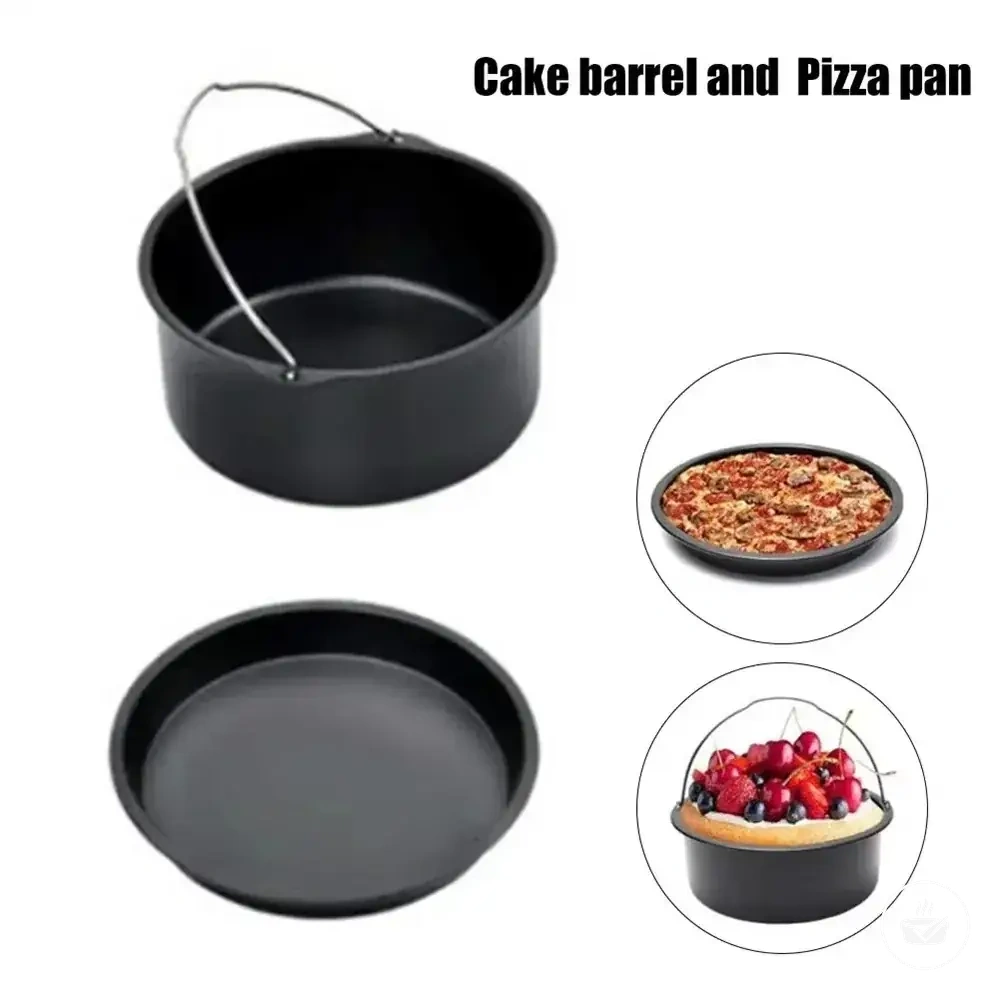
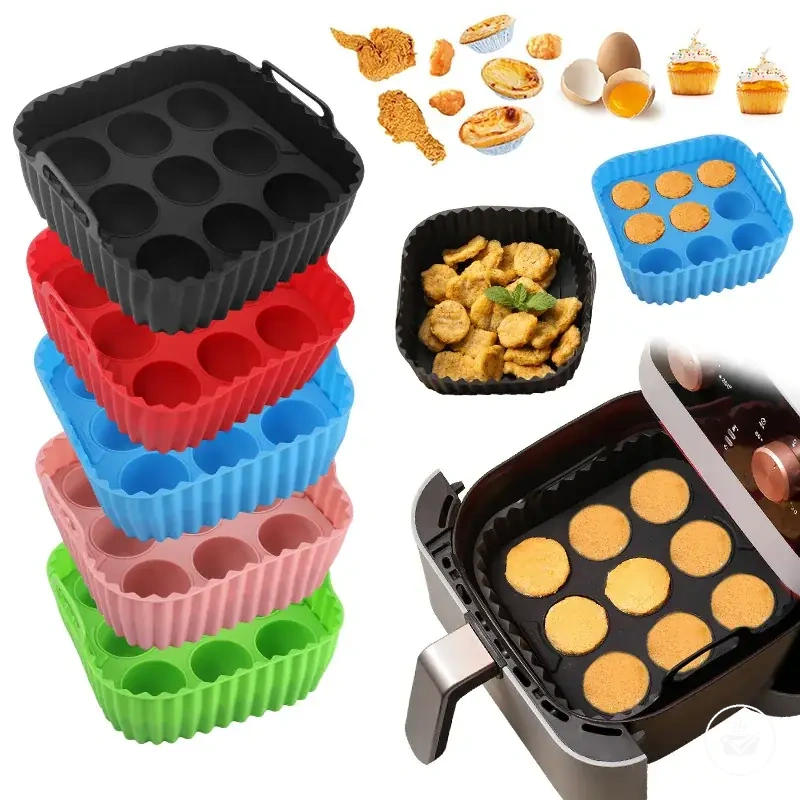
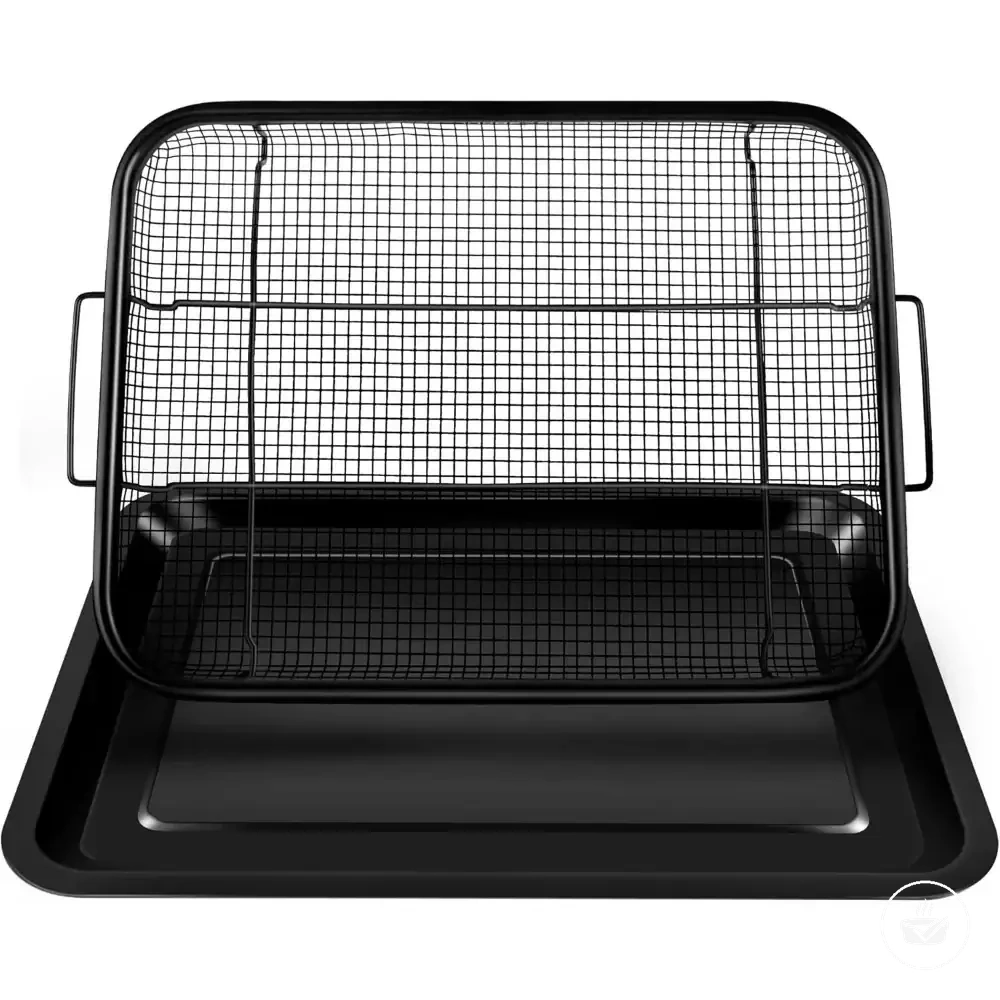
Product examples should be treated as illustrative only after this usefulness filter is complete. A set component may be worth considering when it solves a repeated task-fit problem; otherwise, it can be ignored even if it is included in the set.
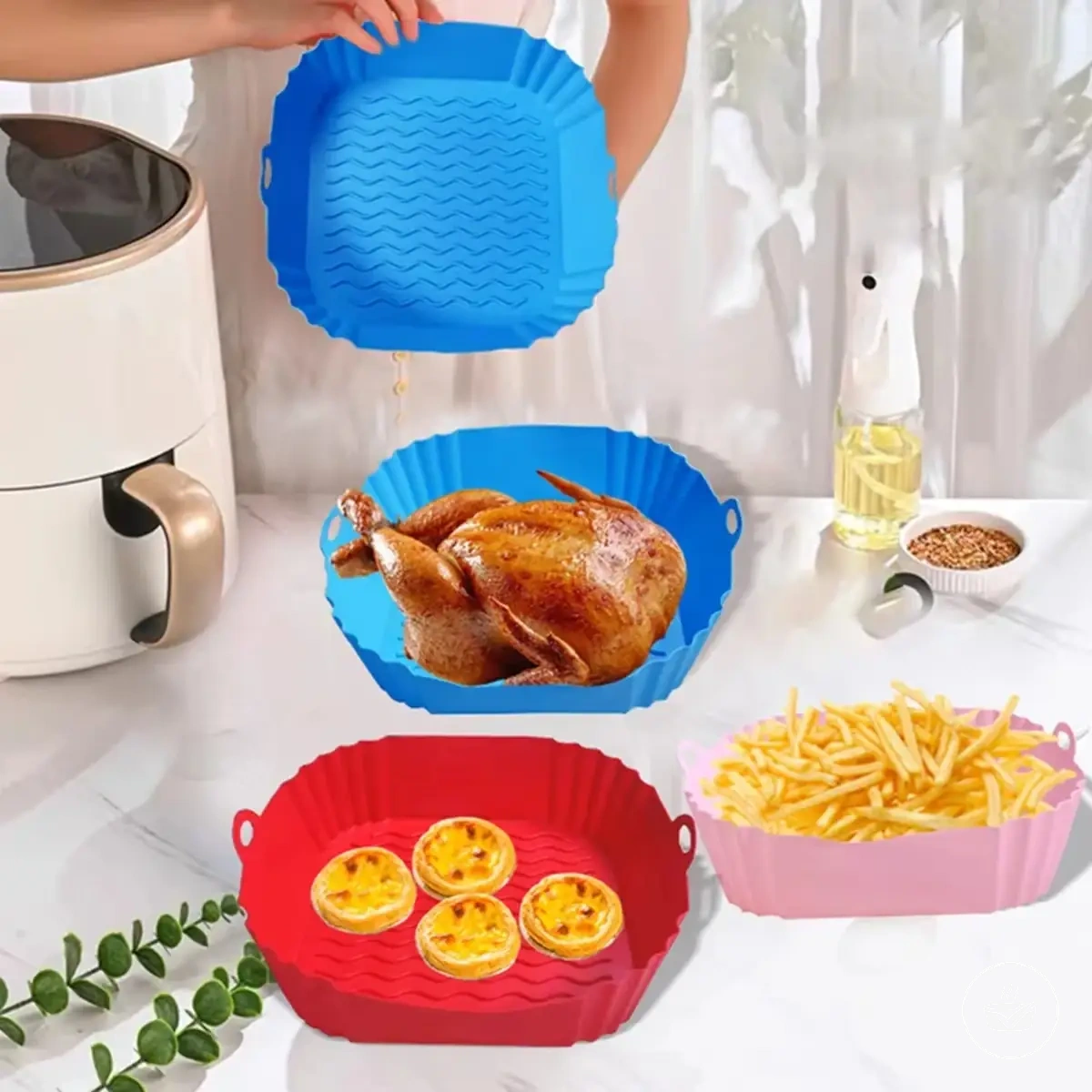
Here are product examples that may make comparison easier. Before buying, always review the compatibility criteria, essential features, and product details.
Selection mistakes that weaken fit, safety, or value
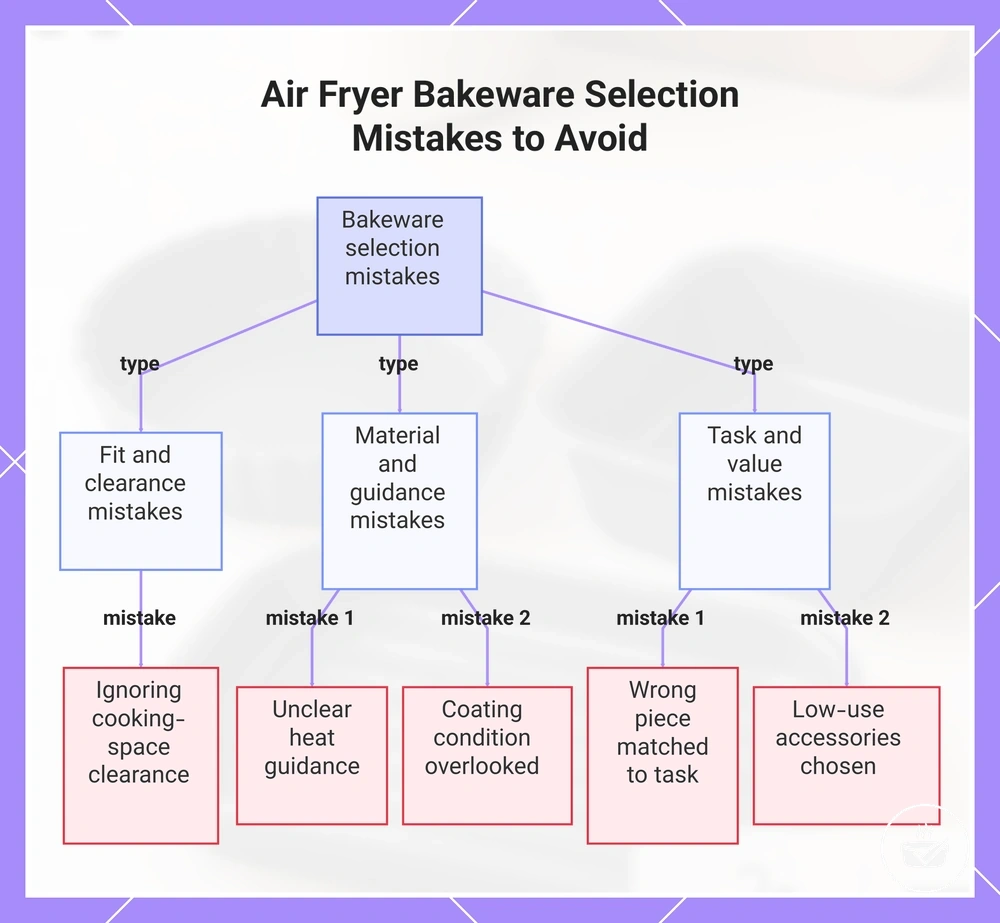
Selection mistakes weaken fit, safety, or value when they overlook the conditions that determine whether bakeware is suitable for repeated use. Before making a final choice, confirm fit, heat-use guidance, material condition, task suitability, and long-term usefulness instead of relying on appearance or package contents alone.
- Ignoring cooking-space clearance: Measure the usable interior and confirm there is enough room for placement, airflow, and removal.
- Choosing bakeware with unclear heat guidance: Select items only when the manufacturer's heat-use information is clear for the intended cooking task.
- Overlooking coating condition: Reject or reconsider bakeware with peeling coatings, deep scratches, exposed base material, or other visible surface damage.
- Matching the wrong piece to the task: Choose bakeware according to the food and cooking objective rather than appearance alone.
- Buying low-use accessories: Give priority to pieces that are likely to fit, support repeated baking tasks, and justify their storage space.
Correcting these selection mistakes can support a more practical purchase decision without assuming that every suitable item performs the same in every air fryer.
Individual results can still depend on appliance design, bakeware condition, and intended use.
Use this checklist as a final review before selecting air fryer bakeware so missed conditions are identified before purchase.
This chart categorizes the common selection mistakes that weaken fit, safety, or value when choosing air fryer bakeware, and lists specific mistakes to avoid.
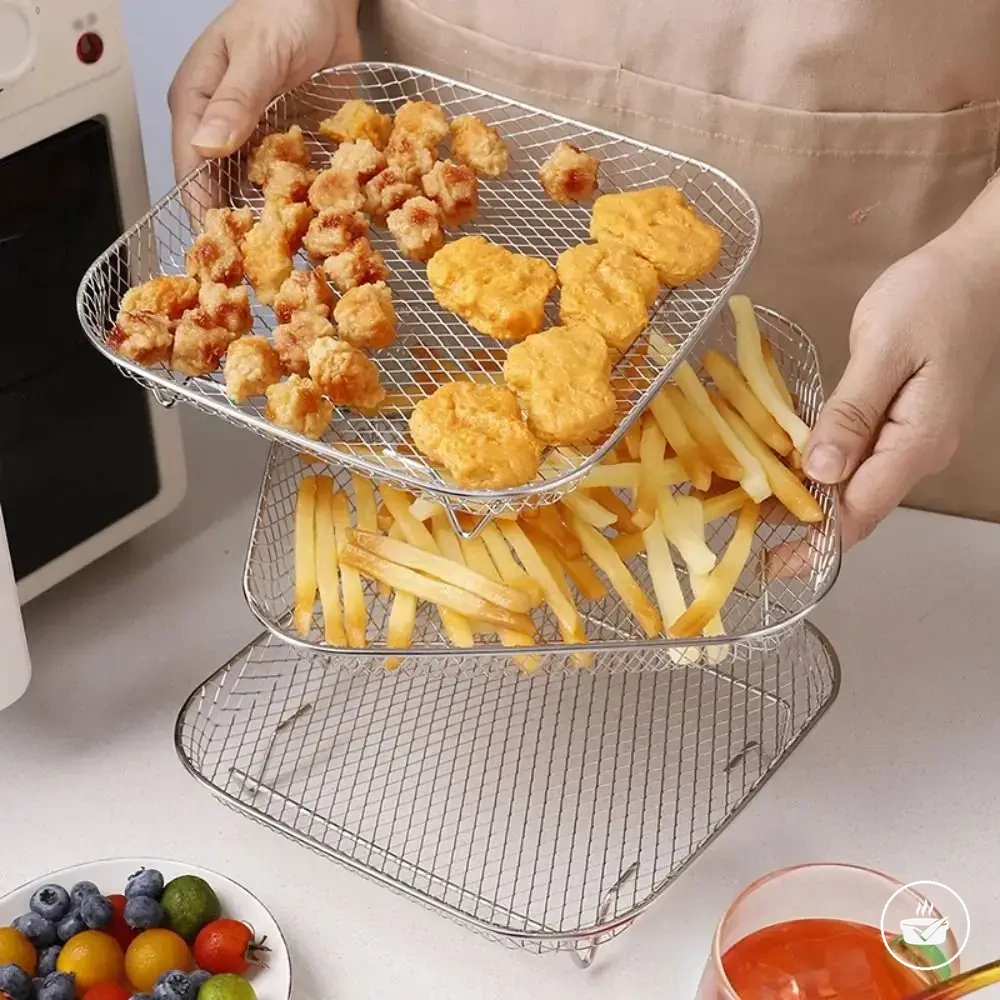
Here are product examples that may make comparison easier. Before buying, always review the compatibility criteria, essential features, and product details.