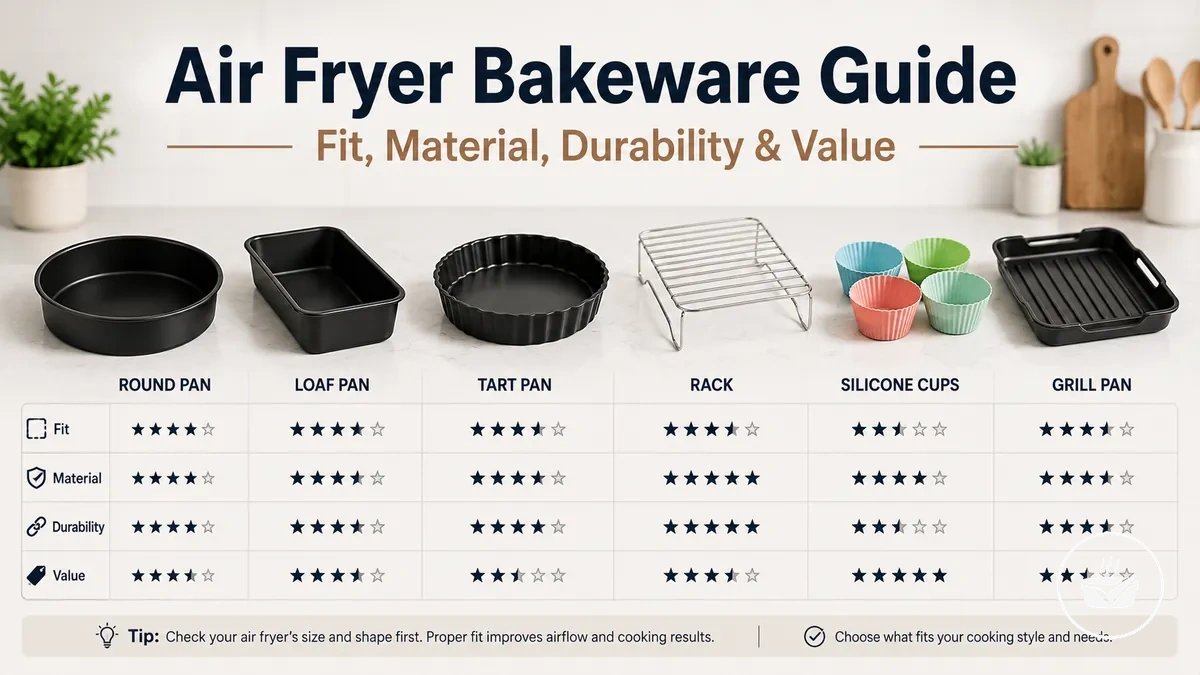
Best Air Fryer Bakeware for Value-Focused Buying
Air fryer bakeware is a value-focused buying choice, not a product catalog decision. The right piece should help the basket stay usable while supporting the kind of baking you repeat most. A cake pan, baking tray, or bakeware set may offer better value when its fit, material, and use case match your air fryer.
Frequent baking can make dedicated air fryer bakeware more useful, especially when small bakes, tray foods, or easier cleaning matter. Occasional baking may need only one simple baking pan if the basket has enough clearance and the material suits the food. Small baskets often make fit and removal more important than the number of accessories in a set. Easy-clean needs can also change the choice, because silicone, nonstick, and stainless steel each carry a different tradeoff in cleaning effort, durability, and safety.
Useful picks should follow criteria rather than hype. Air fryer bakeware has better value when the piece is heat-safe, easy enough to clean, durable for repeated use, and sized for the basket without assuming universal fit. The next decision is whether dedicated bakeware is worth buying before comparing criteria and material tradeoffs.
When Air Fryer Bakeware Is Worth Buying
Air fryer bakeware is worth buying when it solves a repeated baking, fit, or cleanup need. The value depends on baking habits, use frequency, pan fit, and how much effort the bakeware saves. Dedicated pieces are more useful when they make a repeated job easier without crowding the basket.
Frequent cakes, muffins, tray bakes, and saucy foods can justify a cake pan, muffin cups, or a baking pan when the piece is small enough for the basket and simple to remove. Dedicated bakeware means a pan, tray, cup, or accessory chosen for repeated air fryer baking rather than a random substitute. The air fryer bakeware guide explains the broader category before this section narrows the value question.
When Air Fryer Bakeware Is Worth Buying becomes easier to judge when the piece is shown inside the basket with clearance, removal room, and a realistic small baking use.
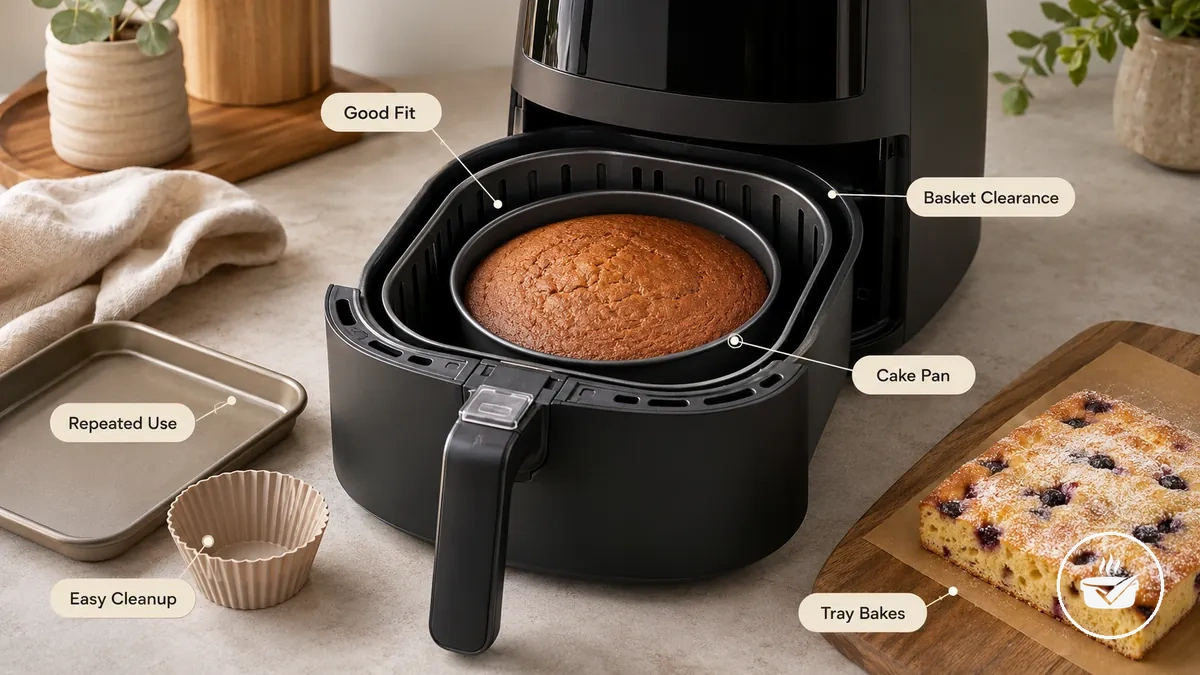
Poor substitutes, awkward fit, or messy cleanup can turn a simple bake into extra work. Air fryer bakeware may be worth buying when a heat-safe pan fits better, leaves airflow space, and reduces residue or handling problems. Occasional reheating or rare baking may not need dedicated pieces if an existing suitable pan already fits and cleans easily.
Not every air fryer owner needs extra bakeware. The practical question is whether the piece improves repeated use without adding storage clutter or a poor-fit accessory. Use this checklist to verify use frequency, fit, cleanup, and baking result value before treating dedicated bakeware as a worthwhile purchase.
- Buy only when use frequency makes the piece useful beyond one rare bake.
- Check that the pan fit leaves basket clearance, airflow space, and a safe removal path.
- Match the cake pan, tray, or muffin cups to foods you repeat often.
- Choose a heat-safe material with a surface that suits the food and cleanup burden.
- Avoid a bakeware set if most pieces duplicate storage clutter rather than solve real baking habits.
Value Criteria for Comparing Air Fryer Bakeware
Air fryer bakeware delivers practical value when you compare decision criteria instead of choosing the longest accessory list. Each feature should connect to a useful outcome, a possible limitation, or a buying decision. Comparing air fryer bakeware by feature-to-outcome relationships makes later product choices easier to judge.
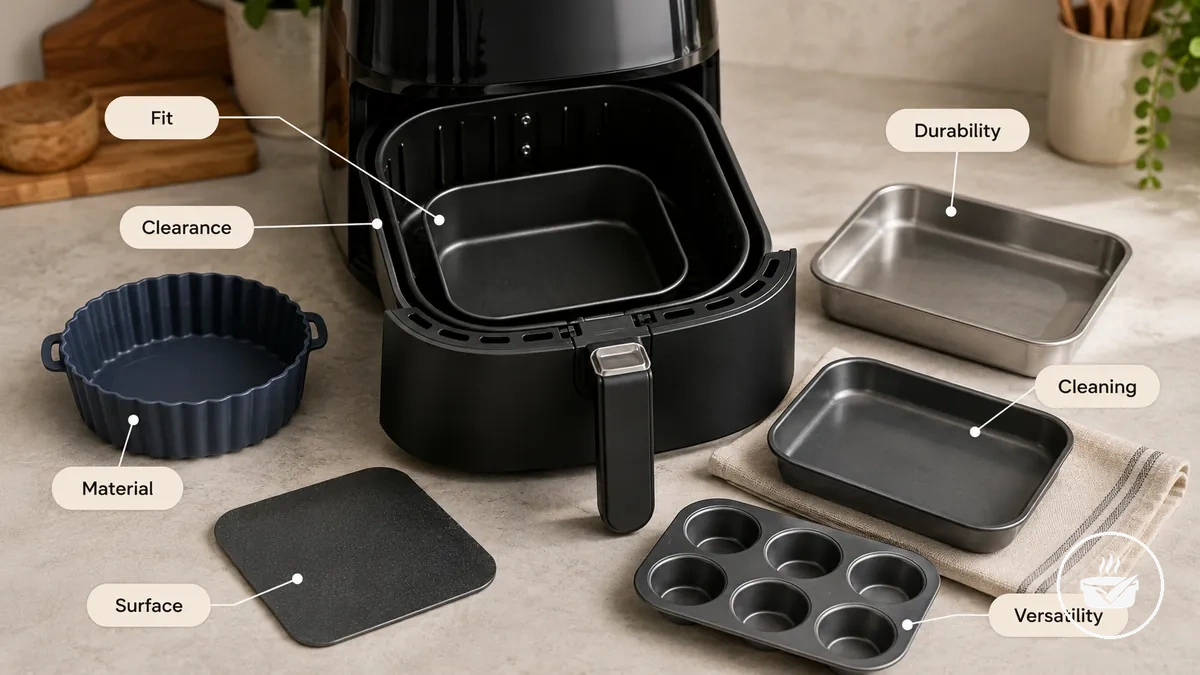
Value Criteria for Comparing Air Fryer Bakeware become easier to understand when the main features are organized before individual recommendations. The image below highlights the key evaluation points that influence suitability rather than ranking products, and the table connects each attribute with a practical buying decision.
| Criterion | What to check | Strong value signal | Weak value signal |
|---|---|---|---|
| Fit | Basket size and clearance | Fits with airflow space and easy removal | Tight fit or restricted clearance |
| Heat safety | Heat-safe construction for intended use | Suitable for normal air fryer baking conditions | Unclear heat suitability |
| Material | Condition and intended baking task | Matches repeated baking needs | Poor match for the intended use |
| Food-contact surface | Surface condition and coating behavior | Easy food release when properly maintained | Damaged or difficult-to-clean surface |
| Durability | Build quality during repeated use | Maintains useful condition over time | Shows early wear during normal use |
| Cleaning effort | Residue removal after baking | Simple routine cleanup | Frequent heavy residue |
| Versatility | Range of suitable baking tasks | Supports multiple small baking uses | Useful for only one occasional task |
Merchant-style scoring can hide the reasons why one piece suits a particular baking habit better than another. Focus on how each criterion changes suitability instead of searching for a single winner. For broader selection logic, see how to choose air fryer bakeware.
Size, Fit, and Airflow Clearance
A bakeware piece should fit inside the basket without blocking airflow to provide practical value. Heat-safe bakeware may still be a poor choice if it restricts circulation or is difficult to remove. Check pan width, pan height, side clearance, and removal room before treating a piece as suitable.
Size, Fit, and Airflow Clearance are easier to judge when the relationship between the pan, basket, and airflow path is visible. The image below highlights the fit conditions that help verify whether a bakeware piece can sit safely while still allowing circulation.
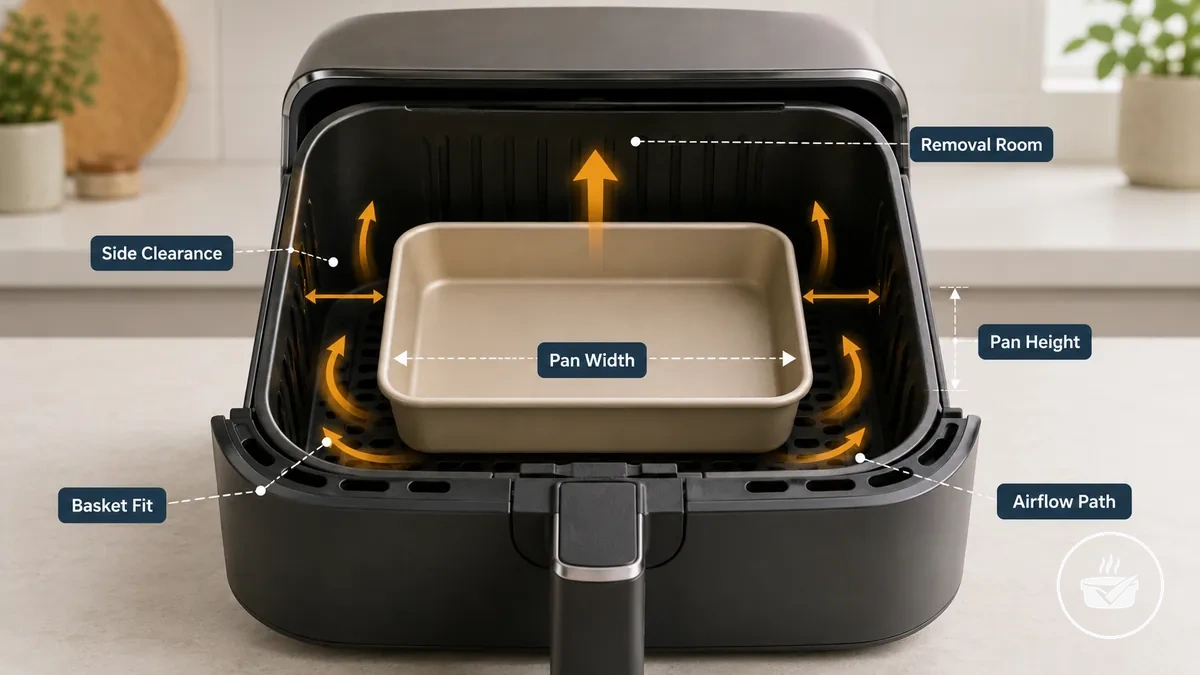
- Check that the pan width leaves side clearance inside the basket.
- Confirm the pan height and handle shape do not crowd the heating area.
- Make sure the handles allow stable placement without reducing usable space.
- Leave enough airflow clearance around the bakeware instead of filling the basket tightly.
- Verify there is a clear removal path for lifting the bakeware safely.
- Check that the airflow path remains open to reduce the chance of blocked circulation.
A heat-safe pan may still offer poor value if it fits awkwardly, limits airflow clearance, or is difficult to remove. Compatibility depends on basket shape and usable space rather than heat safety alone.
Drawer-style air fryers, oven-style trays, and compact models can require different basket dimensions even when baking tasks are similar. Compare the bakeware piece with the available space instead of assuming one size suits every air fryer. For broader sizing guidance, use the fit checklist.
Heat-Safe Construction and Food-Contact Claims
Heat-safe and food-contact claims should be verified before buying air fryer bakeware. A stated label or material claim can improve purchase confidence only when it matches the intended use and the bakeware remains in good condition. Safety suitability may depend on the stated temperature rating, material, and surface condition.
Heat-Safe Construction and Food-Contact Claims are easier to evaluate when the material label and surface cues are visible. The image below highlights the labels and condition checks that can help verify material claims and surface condition before purchase.
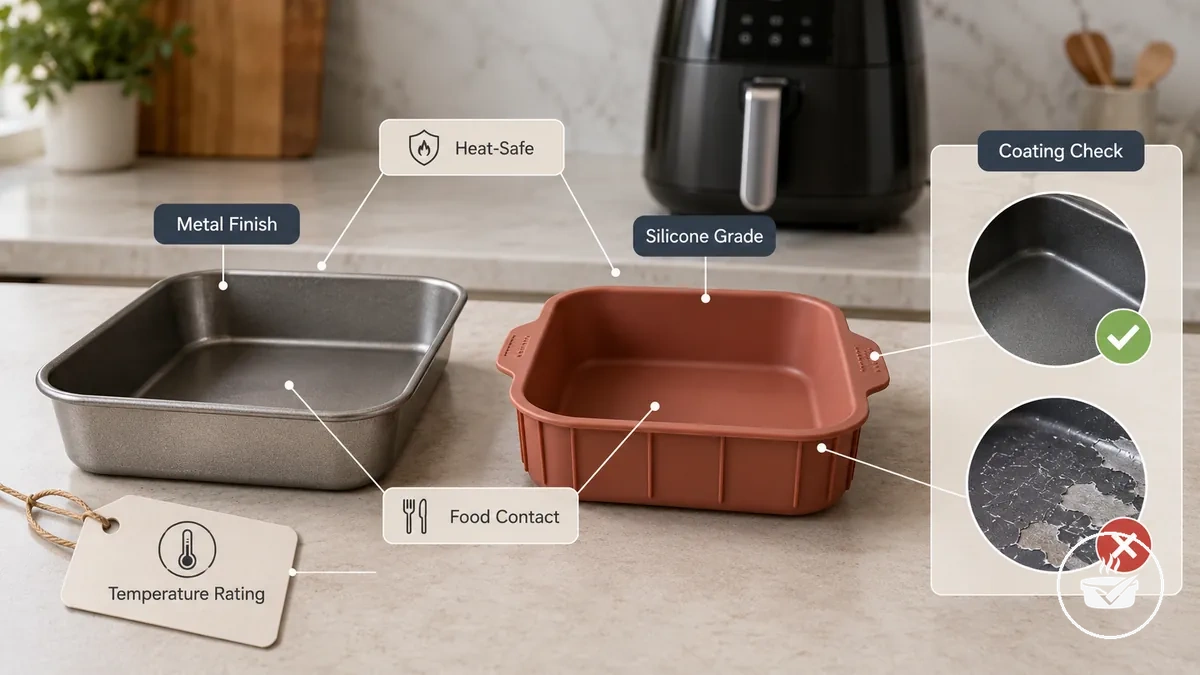
Heat-safe construction refers to the material and its stated temperature rating, while food-contact claims relate to surfaces intended to contact food. Check the coating condition, silicone grade where applicable, metal finish, and any stated temperature rating together instead of relying on a single claim. Material, coating condition, and the stated temperature range should be considered together when assessing the safe use range or identifying a possible rejection signal.
An oven-safe claim does not automatically mean a bakeware piece is suitable for every air fryer. Actual suitability can also depend on basket fit and airflow clearance, even when the stated material claim appears appropriate. Verify both the product label and the bakeware's condition before treating it as a suitable choice.
- Check for a clear heat-safe claim and stated temperature rating.
- Inspect the coating condition and reject pieces with obvious scratches, peeling, or other visible surface damage.
- Confirm the silicone grade or metal finish when that information is provided for food-contact use.
- Compare any oven-safe claim with the bakeware's actual fit and airflow conditions inside the air fryer.
- Treat unclear material claims or heavily worn food-contact surfaces as a rejection signal.
Durability, Coating Quality, and Cleaning Effort
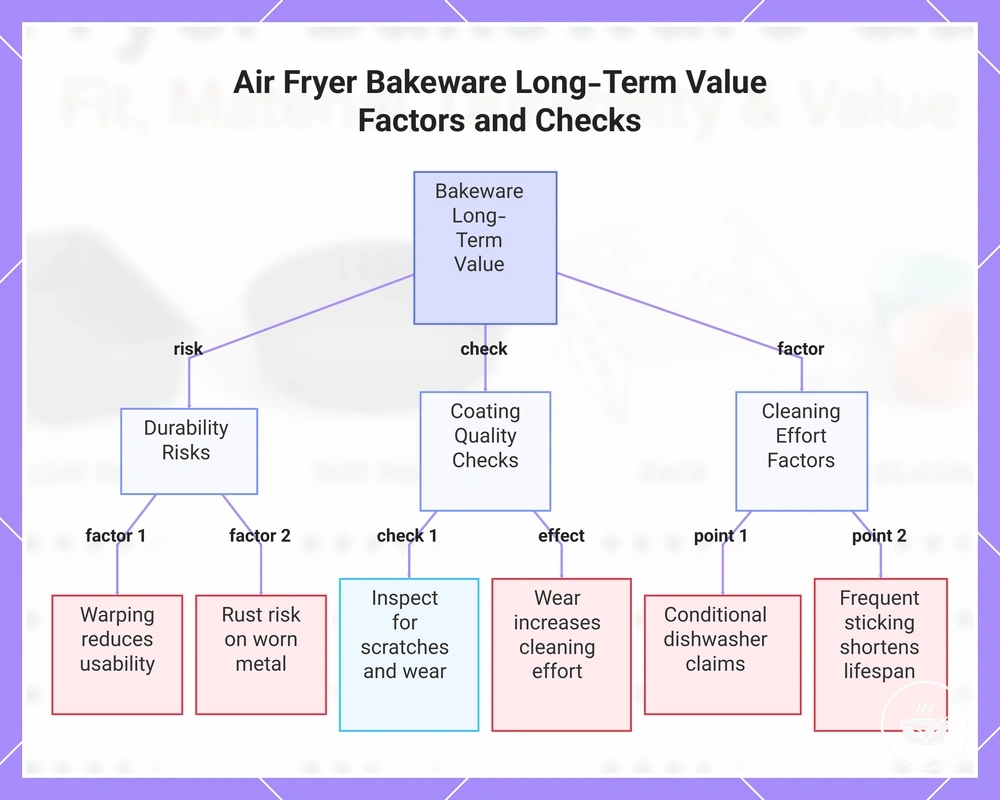
Durability, coating quality, and cleaning effort influence the long-term value of air fryer bakeware. A lower-priced pan may lose value over time if it warps, sticks, scratches, develops rust, or becomes difficult to clean after repeated use, increasing maintenance effort or replacement likelihood.
Bakeware surface quality can affect residue release, care burden, and practical lifespan. A nonstick surface may release sticky batters and oily foods more easily while the coating remains in good condition, but coating wear or reduced scratch resistance can increase cleaning effort over time. Dishwasher claims may also vary by surface quality and material, so they should be treated as product-specific rather than universal.
- Check for warping, as changes in shape may reduce long-term usability.
- Inspect coating quality for scratches, wear, or surface damage that can reduce residue release and increase maintenance effort.
- Consider rust risk if exposed metal surfaces or finishes become worn during repeated use.
- Treat dishwasher claims as conditional and confirm they match the bakeware's material and surface finish.
- Compare how easily residue releases after typical baking tasks, since frequent sticking may increase care burden and shorten practical lifespan.
This chart shows the main durability risks, coating quality checks, and cleaning effort factors that determine the long-term value of air fryer bakeware.
Versatility Across Cakes, Trays, and Small Bakes
Versatility increases the value of air fryer bakeware when one piece supports multiple realistic baking tasks. The useful range depends on bakeware shape, depth, usable surface, and how well it suits the available basket space. A cake pan, baking tray, or muffin cup is most valuable when its form matches the small bakes you prepare most often.
Cakes and brownies often benefit from a cake pan with suitable depth, while a baking tray may better support tray bakes that need more usable surface. Muffin cups can provide portion flexibility for individual servings, but their value depends on how frequently portioned baking is needed. Choosing a form that matches repeated baking habits can reduce unnecessary storage and avoid redundant accessories.
No single bakeware piece can cover every baking task. Versatility should be judged by how many practical uses one piece supports rather than by expecting it to replace every accessory.
| Bakeware form | Best use case | Value limitation |
|---|---|---|
| Cake pan | Small cakes and brownies requiring depth | May be less suitable for flatter tray bakes |
| Baking tray | Tray bakes and small batch baking | May provide limited depth for thicker batters |
| Muffin cups | Muffins and portioned small bakes | May offer limited value if portioned baking is uncommon |
| Set piece | Mixed baking when multiple pieces see regular use | May create unnecessary storage if most pieces remain unused |
Material Tradeoffs That Affect Baking Results and Value
Material choice affects browning, food release, handling, cleaning, and long-term value. Silicone, nonstick metal, stainless steel, and coated metal each involve different material tradeoffs rather than one universal advantage. The better value depends on food type, basket fit, cleaning preference, and expected lifespan.
Material tradeoffs compare how heat behavior and surface type influence practical baking results. The comparison table below organizes the main strengths and limitations without ranking one material as universally better. For a broader explanation of material tradeoffs, compare these criteria with your most common baking tasks.
| Material | Strong value signal | Tradeoff to check | Better use case |
|---|---|---|---|
| Silicone | Flexible handling and easy release in many cases | May produce softer browning and depends on basket fit | Muffins, portioned foods, and small bakes |
| Nonstick metal | Often supports browning with easier release | Coating wear may affect durability over time | Cakes, brownies, and tray bakes |
| Stainless steel | Good durability and resistance to surface wear | Sticky foods may require more cleaning effort | Frequent baking where durability is the priority |
| Coated metal | Can balance browning and release when the surface remains in good condition | Surface condition and care may influence expected lifespan | General baking with repeated use |
Material comparisons become less useful when one option is treated as the right choice for every recipe. Browning, release, cleaning effort, durability, and fit can vary with food type, batter thickness, and ongoing care, so value depends on the intended baking task.
Silicone may suit flexible release for portioned foods, while nonstick metal may appeal to result-focused baking where browning and release matter. Stainless steel can be a practical option when durability is the main priority despite potentially greater cleaning effort with sticky foods. These material tradeoffs provide the context for the more detailed comparisons in the following sections.
Silicone versus Metal for Browning and Flexibility
Silicone and metal differ in how they balance browning, flexibility, release, handling, and cleanup. Silicone usually favours flexibility and easier release, while metal often favours structure and browning through different heat transfer characteristics. The better value depends on the recipe, basket fit, and whether browning, release, or handling is the higher priority.
When baking muffins, a silicone mold may make portion removal easier, while cakes, brownies, and tray bakes may benefit from the structure of a metal pan. Metal may encourage more browning, whereas silicone may simplify cleanup for foods that tend to stick. Silicone liners are a separate choice from structured bakeware, so compare bakeware by the intended baking task rather than treating both as the same accessory.
| Silicone | Metal |
|---|---|
| May provide easier release for muffins and other portioned bakes | May support stronger browning through heat transfer |
| Flexibility can help with removing baked items | Rigid structure can support cakes, brownies, and thicker batters |
| Cleanup may be easier depending on the food type and surface condition | Cleanup depends on the surface and how much food adheres during baking |
| Often suits recipes where flexibility and release are the priority | Often suits recipes where browning and structure are the priority |
Nonstick Coating versus Stainless Steel for Care and Lifespan
Nonstick coating often improves easy release, while stainless steel often improves durability over time. The care-and-lifespan tradeoff is that convenience and long lifespan may not come from the same surface. Value depends on scratch sensitivity, cleaning method, sticky batters, and how carefully the bakeware is used.
Scratching, residue, rust risk, and coating wear can change the better choice. A nonstick coating may reduce sticking with sticky batters, but metal utensils or abrasive cleaning can increase replacement risk. Stainless steel may support durability and rust resistance when properly maintained, but sticky foods may require more cleaning effort. Choose the surface that matches your care tolerance, not just the easiest first use.
| Surface | Advantage | Care risk | Better buyer |
|---|---|---|---|
| Nonstick coating | Easy release for sticky batters in many cases | Scratch sensitivity and coating wear may shorten useful life | Convenience-focused buyer who avoids abrasive cleaning |
| Stainless steel | Durability and rust resistance when properly maintained | Sticky foods may need more cleaning effort | Durability-focused buyer who accepts extra care |
Best Air Fryer Bakeware Picks by Use Case
Use case should determine the recommended bakeware category rather than a single universal pick. The right recommendation depends on the baking job, basket fit, material, and expected care. Match each category to the earlier value criteria instead of comparing individual products.
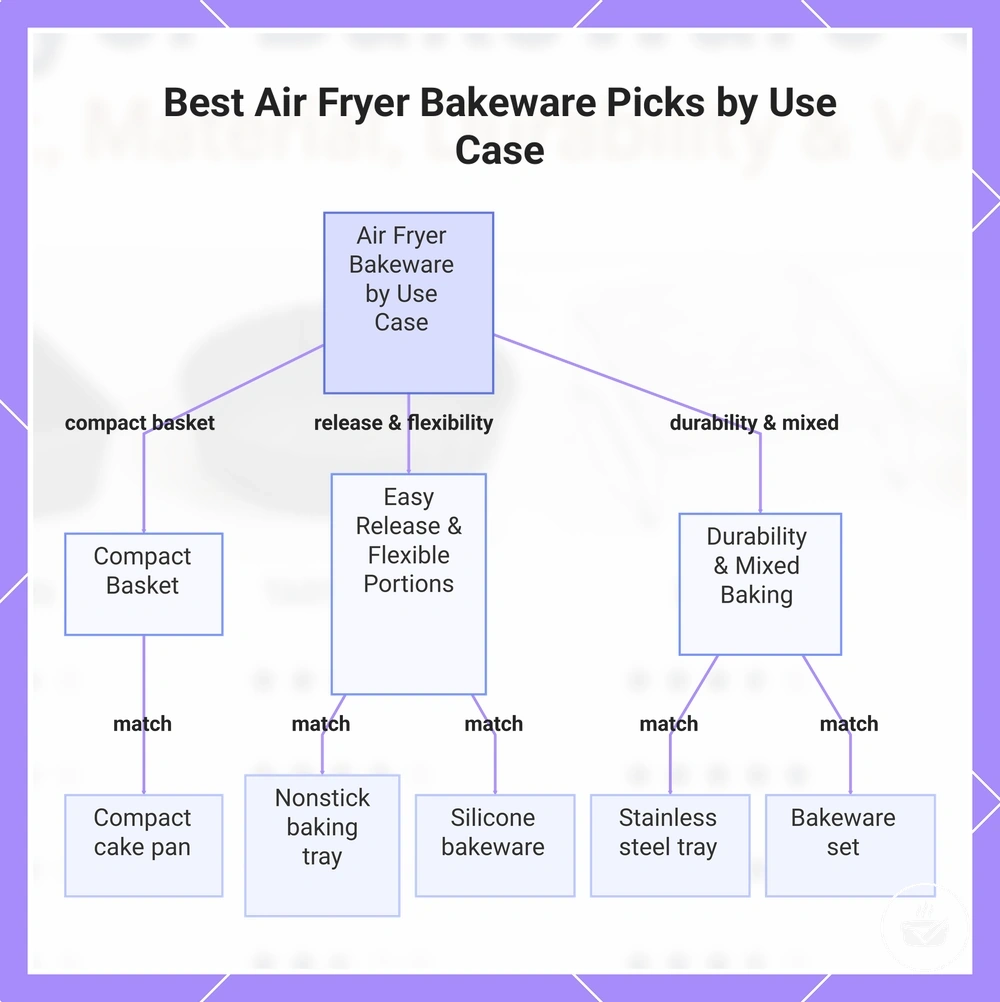
For a compact basket, a compact cake pan may be the most practical match when fit tolerance and easy removal matter. If easy release is the priority, a nonstick baking tray may suit sticky batters when coating quality is maintained through appropriate care. A stainless steel tray may suit buyers who prioritise durability over easier release, while silicone bakeware may be a practical choice for flexible portions such as muffins. A bakeware set may suit mixed baking jobs when most pieces have a regular purpose, but unused accessories can reduce overall value.
The most suitable recommendation is not the same for every buyer. Match the bakeware category to the baking need, available basket space, and care preference so the practical choice reflects the intended use case rather than a one-size-fits-all approach.
- Compact basket: A compact cake pan may suit drawer-style air fryers where fit tolerance and removal space are priorities.
- Easy release: A nonstick baking tray may suit sticky batters when coating quality and careful cleaning are maintained.
- Durability-first: A stainless steel tray may be a practical match when long-term wear matters more than release performance.
- Flexible portions: Silicone bakeware may suit muffins and other portioned bakes where flexible removal is useful.
- Mixed baking: A bakeware set may provide value when multiple pieces match regular baking jobs without creating unnecessary redundancy.
This chart shows how to match air fryer bakeware categories to specific use cases, based on basket fit, material, and care preferences.
Best Compact Cake Pan for Drawer-Style Air Fryers
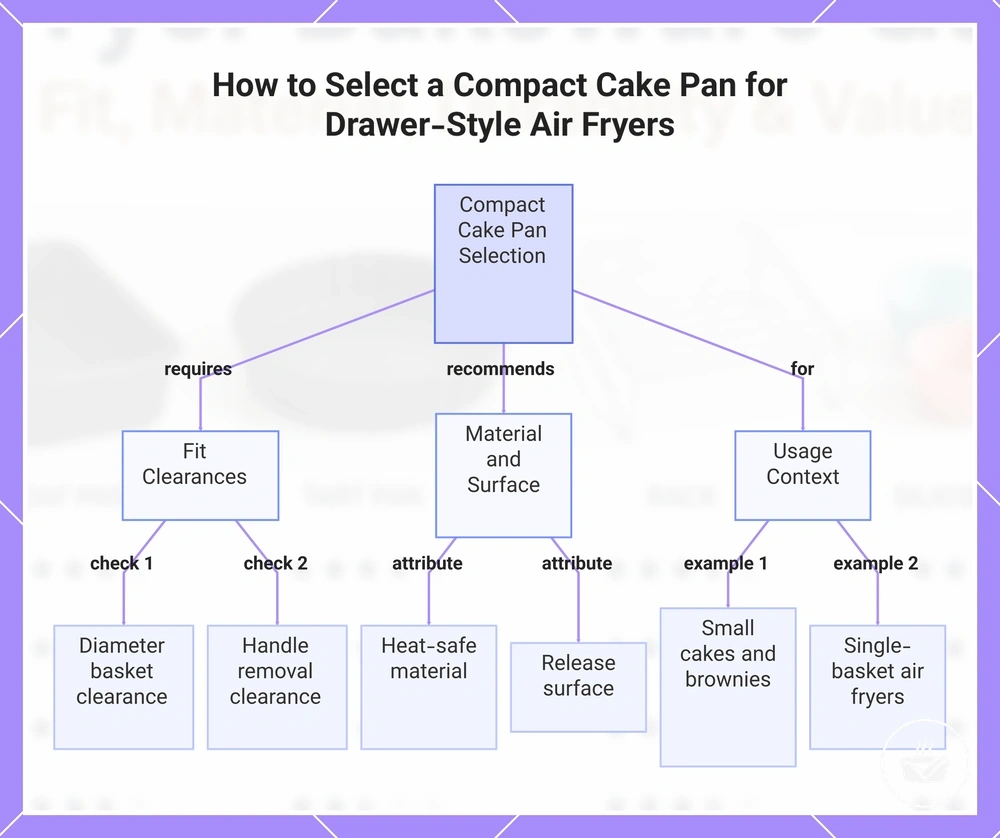
A compact cake pan is valuable when it fits a drawer-style air fryer basket with enough room for removal. The pan should clear the basket sides, hold the intended batter, and remain easy to lift after baking. Fit depends on diameter, depth, handle clearance, and the usable space inside the drawer basket.
Small cakes, brownies, and single-basket air fryers often make compact depth more important than accessory quantity. A shallow pan may limit batter capacity, while a deeper pan may become awkward if it crowds the basket or blocks handling space. The strongest recommendation is a compact pan that balances heat-safe material, release surface, and practical drawer-style fit.
- Diameter: Choose a compact cake pan that leaves basket clearance around the sides.
- Depth: Match depth to small cakes or brownies without crowding the drawer basket.
- Handles: Check handle clearance so the pan can be removed without awkward tilting.
- Material: Use heat-safe material that suits the intended baking task.
- Release surface: Prefer a surface that supports easier release and cleaning when cared for properly.
This chart outlines the key fit requirements, material attributes, and usage context for choosing a compact cake pan that fits drawer-style air fryers.
Best Nonstick Baking Tray for Easy Release
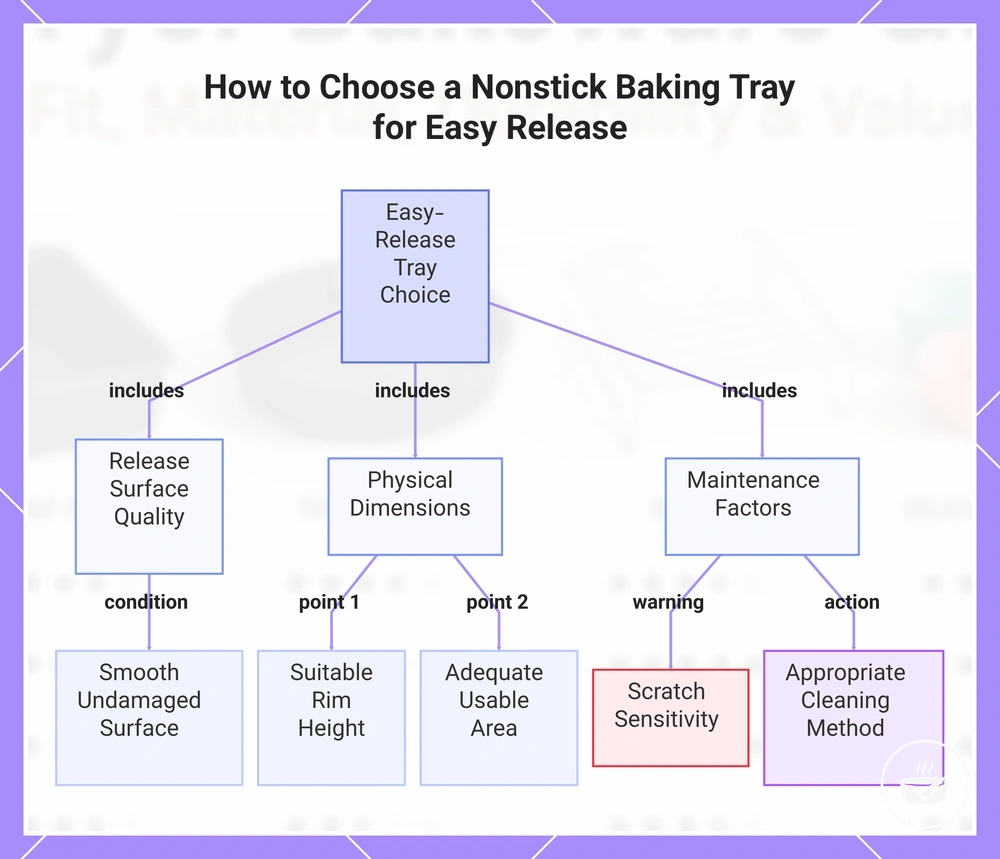
A nonstick baking tray is a better-value choice when easy release and simple cleanup are priorities for sticky batter, delicate foods, or reheated bakes. The tray should provide adequate usable area and suitable rim height while maintaining an intact release surface. Easy-release value depends on coating quality, food type, and care habits.
Sticky batter and baked-on residue can increase cleaning effort if the release surface becomes scratched or worn. A nonstick baking tray may reduce maintenance effort when the coating remains in good condition and the cleaning method matches the manufacturer's care guidance. Scratch sensitivity means abrasive utensils or harsh cleaning can increase replacement risk, so long-term value depends on careful use rather than the coating alone.
- Coating quality: Choose a tray with a smooth, undamaged release surface.
- Rim height: Select a rim height that supports tray bakes while keeping handling practical.
- Usable area: Match the tray size to the intended portion while maintaining basket fit.
- Scratch sensitivity: Check for surface wear and use utensils that help reduce coating damage.
- Cleaning method: Follow an appropriate cleaning method to help preserve coating quality and easy release.
This chart shows the key selection criteria and maintenance factors for choosing a nonstick baking tray that ensures easy release and simple cleanup.
Best Stainless Steel Tray for Durability
A stainless steel tray is a stronger value choice when durability matters more than easy release. It may suit frequent baking, repeated cleaning, and buyers who prefer a long-lasting baking surface. Long-term value depends on tray construction and ongoing care.
Frequent use, metal utensils, or abrasive cleaning risk may make a stainless steel tray a practical option when care tolerance is higher than the need for easy release. Tray gauge, edge construction, and perforation or flatness can influence durability, airflow, and handling. A stainless steel tray may require more effort with sticky foods than some coated surfaces, so durability can trade off against easy release.
- Gauge: A sturdier gauge may support durability during repeated use.
- Edges: Well-finished edges can help maintain tray shape and handling.
- Perforation or flatness: Choose a perforated or flat tray according to the airflow and baking task you expect.
- Rust resistance and care: Rust resistance depends on material quality and appropriate cleaning requirements.
- Boundary: Sticky foods may require more release and cleaning effort on stainless steel than on some coated surfaces.
Best Silicone Bakeware for Muffins and Flexible Portions
Silicone bakeware is useful when muffins, flexible portions, and easy removal matter more than firm metal structure. It may suit portioned foods when the cavity size supports the intended serving and the walls remain stable during handling. Value depends on structure, heat rating, and how the bakeware behaves under air fryer heat.
Muffins, egg bites, and other small portions can benefit from flexible removal when the silicone mold is supported well enough to reduce spill risk. Silicone bakeware is not the same decision as a flat liner, because portion molds need cavity depth and wall stability. Silicone may help with release and cleaning, but it may not brown like metal in every recipe or air fryer setup.
- Cavity size: Match the cavity size to muffins, egg bites, or flexible portions without overfilling.
- Wall stability: Choose silicone bakeware that supports handling and reduces spill risk when moved.
- Heat rating: Check the stated heat rating against the intended air fryer use.
- Release: Use silicone where flexible removal can help portioned foods release more easily.
- Cleaning: Consider how residue releases from the mold after repeated portioned bakes.
Best Bakeware Set for Mixed Baking Jobs
A bakeware set is valuable only when its useful pieces solve different mixed baking jobs instead of repeating the same function. The right piece mix depends on basket fit, baking habits, and storage space. Redundant accessories can reduce overall value.
Users who alternate between cakes, tray bakes, muffins, and small batches may benefit from a bakeware set when each piece supports a distinct task. Fit consistency across the included pieces can simplify use, while material variety may provide suitable options for different baking needs. A useful piece mix often offers more value than a larger set with overlapping accessories.
Duplicate pieces, poor basket fit, or unnecessary accessories can create storage burden without improving baking flexibility. Choose a bakeware set when the included cake pan, tray, muffin cups, or similar useful pieces match your regular baking pattern and justify the storage space they require.
A bakeware set is the right recommendation when your mixed baking jobs regularly require different bakeware shapes rather than a single piece. If many included accessories would remain unused, individual bakeware may provide better value.
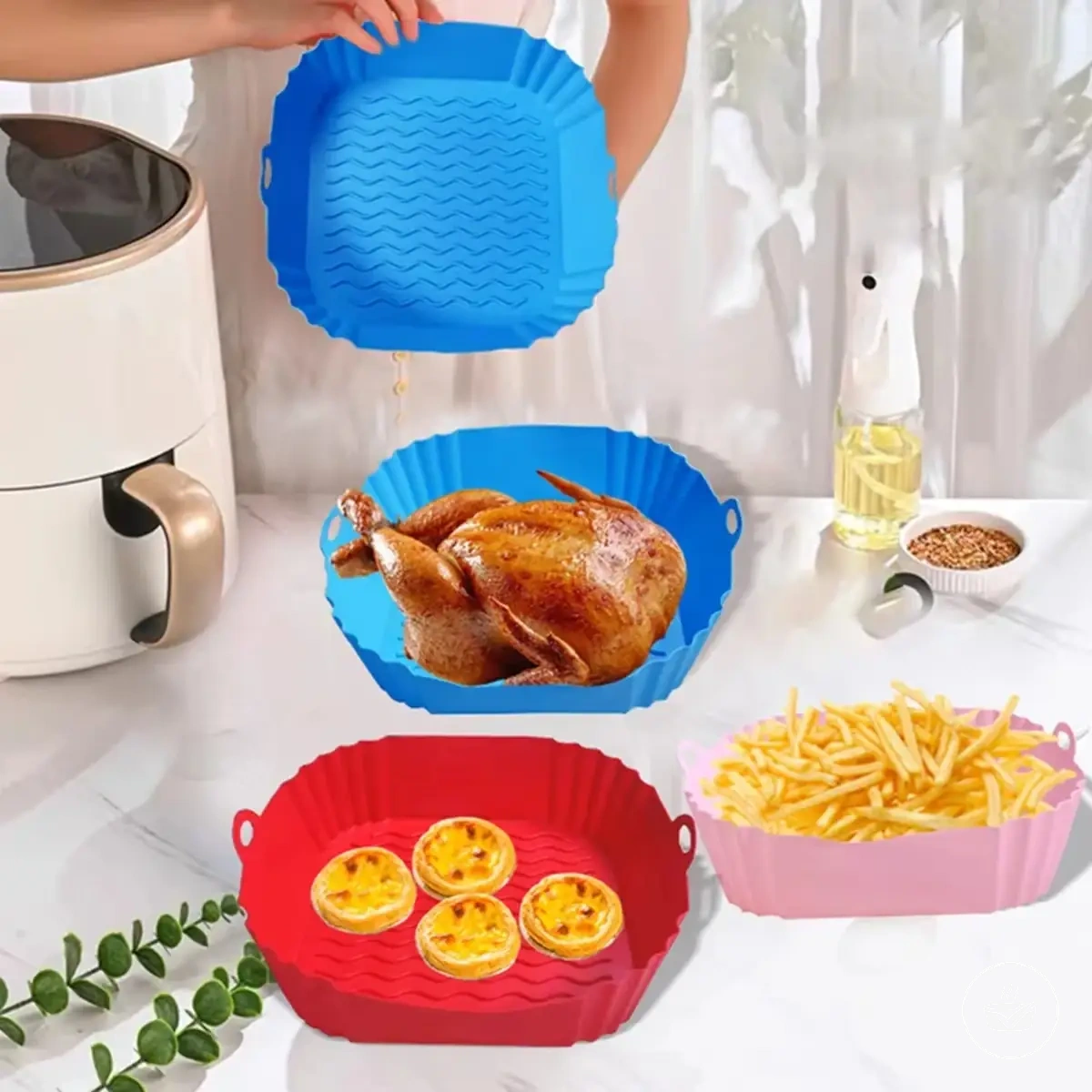
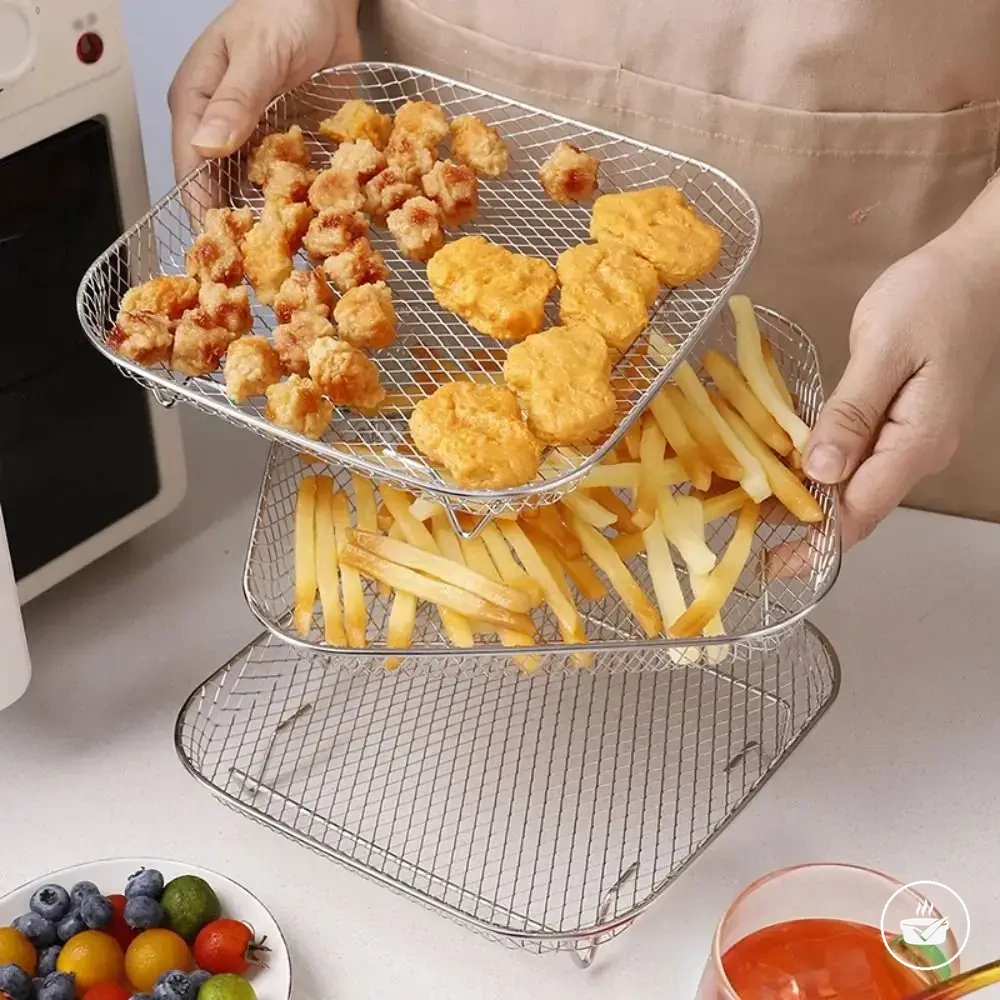
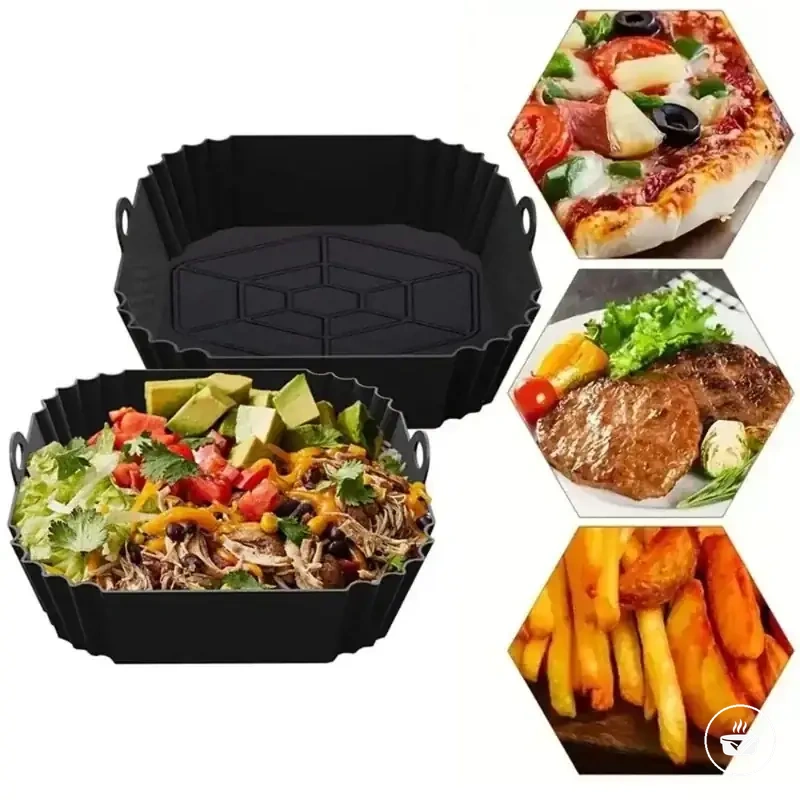
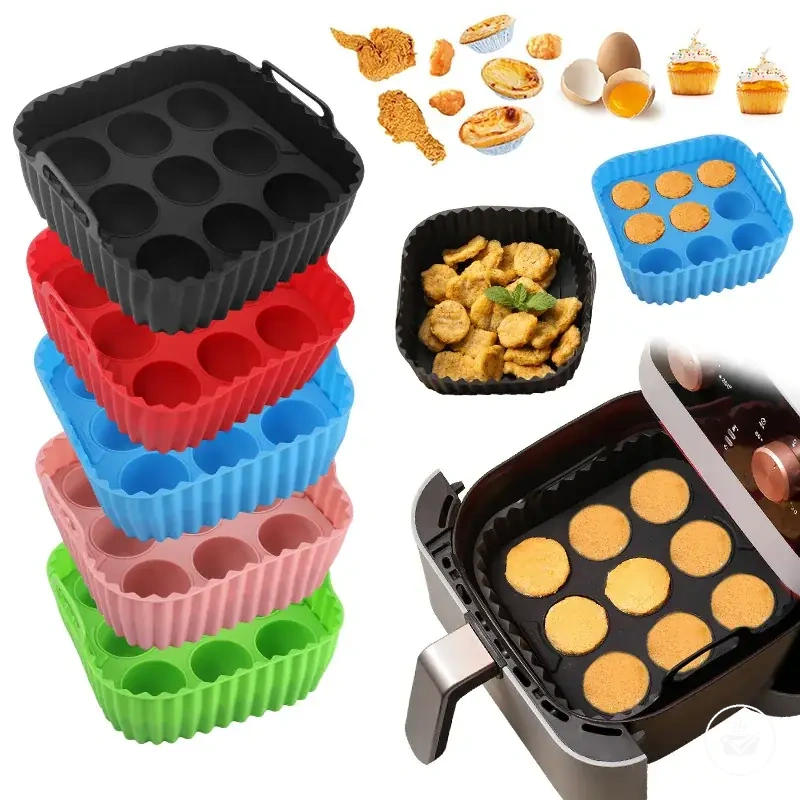
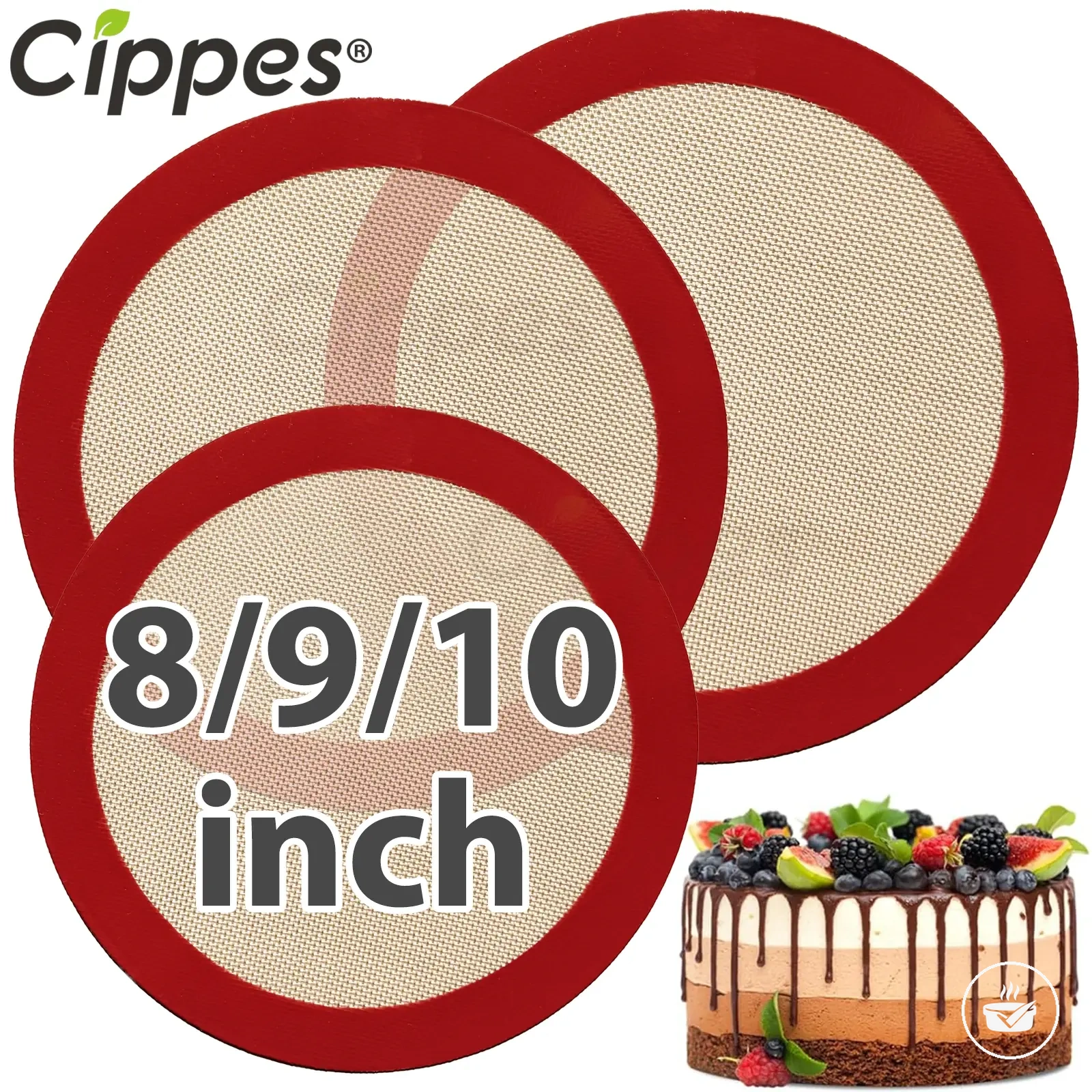
Here are product examples that may make comparison easier. Before buying, always review the compatibility criteria, essential features, and product details.
Bakeware Sets Versus Single Pieces for Better Value
Bakeware sets win only when several included pieces will be used regularly. Single pieces can be better value when one specific baking task matters most. The better value depends on useful pieces, fit certainty, storage, and duplicate accessories.
The set-versus-single comparison is a purchase-format decision, not a product-count decision. Bakeware sets spread value across multiple pieces only when the material mix, piece sizes, and repeated fit match real baking needs. For broader set selection, compare air fryer bakeware sets by use frequency and redundancy risk.
| Buying path | Strong value condition | Weak value signal | Better for |
|---|---|---|---|
| Bakeware sets | Several useful pieces support mixed baking jobs | Duplicate accessories increase storage without adding use | Frequent mixed baking |
| Single pieces | One pan or tray fits a repeated task with more certainty | Too narrow if baking needs change often | Specific tasks or small baskets |
Frequent mixed baking can justify a set when cakes, trays, muffins, and small batches each need a different piece. A useful material mix can also help when cleaning, release, and durability needs vary by food type. Set value is strongest when most included pieces solve repeated jobs.
One specific baking task or a small air fryer basket often makes a single piece the safer value choice. A single pan or tray may provide better fit certainty, reduce storage pressure, and avoid paying for accessories that will not be used.
A bundle is not automatically better value. Better value comes from a purchase format that matches real use, avoids wasted storage, and limits duplicate accessories.
Here are product examples that may make comparison easier. Before buying, always review the compatibility criteria, essential features, and product details.
When Air Fryer Bakeware Is Not the Best Value
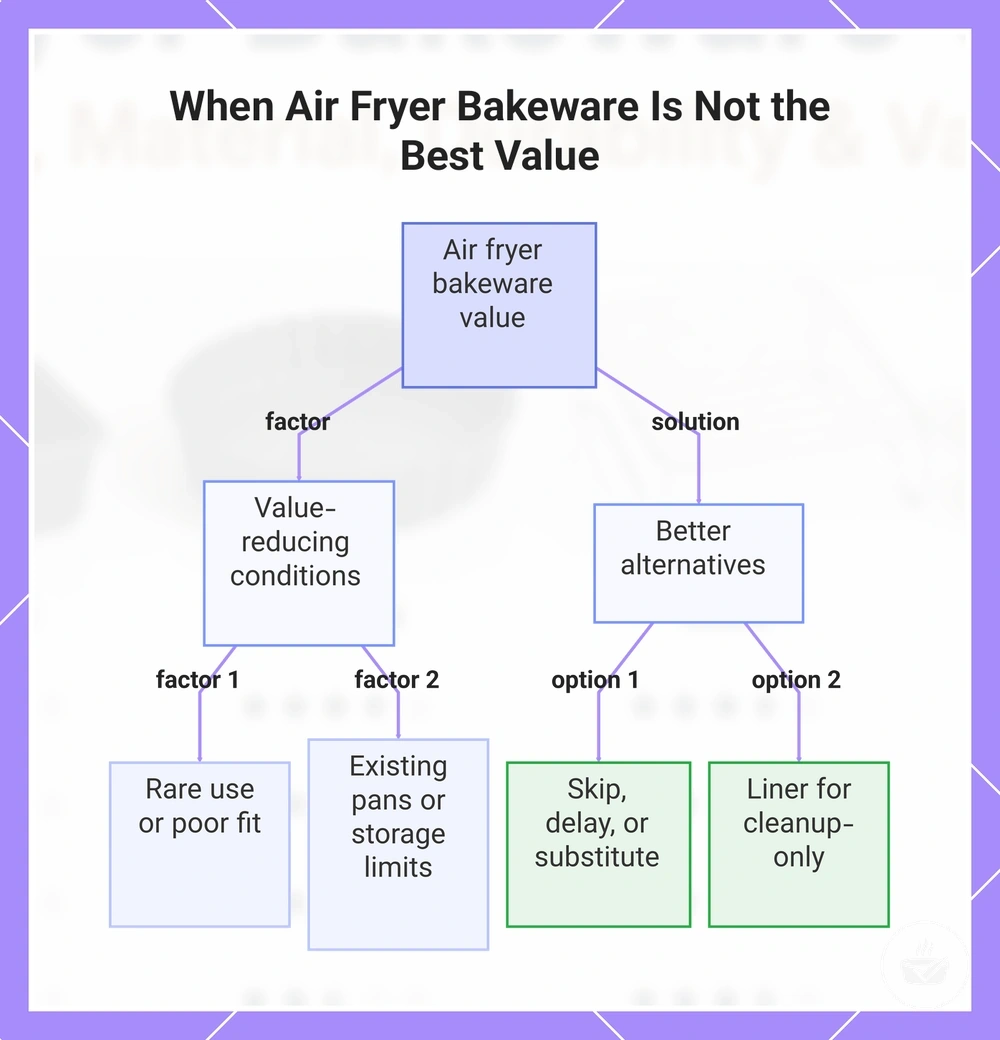
Air fryer bakeware is not the best value when use is rare, basket fit is poor, or an alternative already solves the job. Buying can be delayed when the expected benefit is only occasional. The better decision depends on fit, frequency, cleanup needs, and whether a substitute is already suitable.
Poor basket fit, cleaning burden, storage limits, or existing safe pans can turn a new accessory into a weak-value purchase. A pan that crowds airflow or is hard to remove may not justify buying, even if the material seems suitable. If existing safe pans already fit and suit an occasional bake, it may be better to substitute or delay the purchase until repeated use is clear.
Liner alternatives can help with cleanup or occasional use, but they are not a direct replacement for structured bakeware. Batter containment, shape support, and repeated baking often require a pan, tray, cup, or mold rather than a flat liner. Use bakeware or liners as a boundary decision when cleanup is the main reason for buying.
Occasional bakes or cleanup-only needs may not justify dedicated bakeware. In those cases, delaying, substituting, or choosing a liner alternative may provide better value than adding storage clutter.
- Skip buying when low use frequency makes the accessory unlikely to earn regular use.
- Delay purchase when poor basket fit could restrict airflow or make removal awkward.
- Substitute only when existing safe pans already fit and suit the occasional baking task.
- Avoid extra bakeware when cleaning burden or storage limits outweigh the benefit.
- Consider liner alternatives when cleanup is the main need, not structure or batter containment.
This chart shows the conditions that reduce the value of air fryer bakeware and the better purchase alternatives based on use frequency, fit, existing pans, and cleanup needs.