
Air Fryer Bakeware Materials Compared
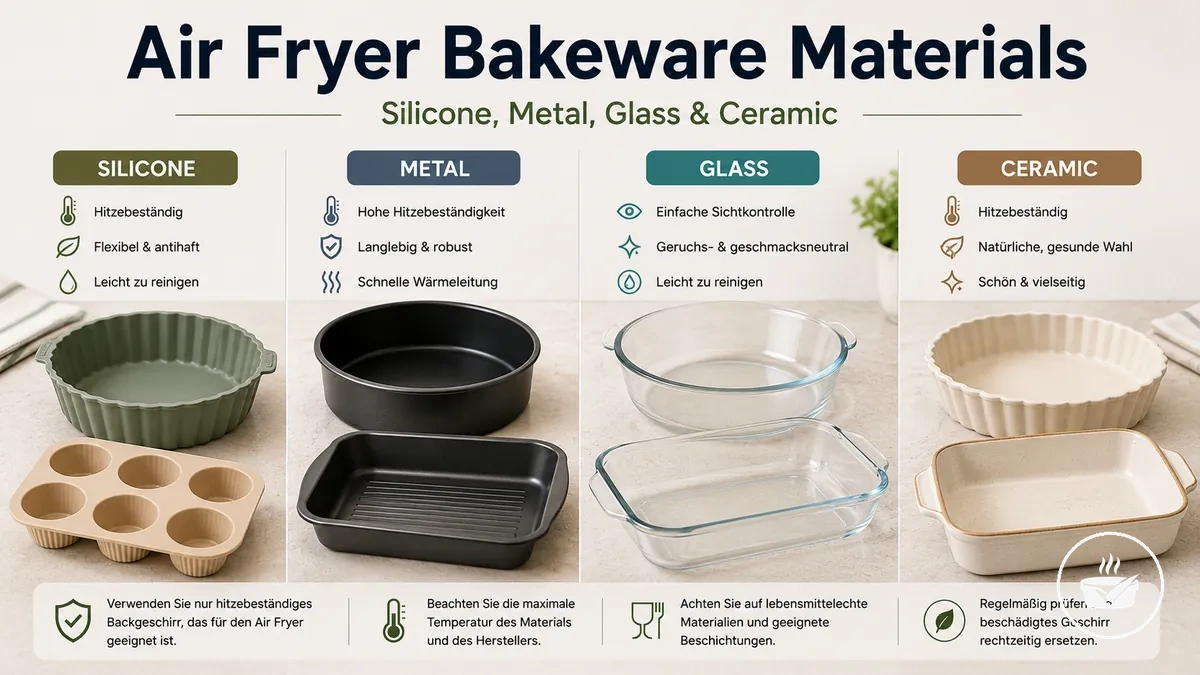
Air fryer bakeware materials compare by heat response, food release, material safety, cleaning effort, and fit-dependent baking results. The main comparison set is silicone, metal, glass, and ceramic.
Bakeware materials affect how a baking pan, tray, mold, or baking dish handles heat and food contact inside an air fryer. Metal can support stronger browning when airflow and food exposure allow it, while silicone is flexible and often useful for soft batter and low-stick release. Glass and ceramic may suit oven-safe baking dishes when the piece fits correctly, but thermal shock, coating condition, and nonstick surface damage still need checking against the item’s oven-safe rating and fit.
If the food needs crisp edges, material choice may lean toward a metal tray with enough airflow around it. If the food is soft, delicate, or moisture-heavy, food release and handling may matter more than browning. Air fryer model, basket space, coating condition, and food type can change the result, so no single material should be treated as the right answer for every bake.
The safest comparison starts with material behaviour, then checks whether the piece is oven-safe, correctly sized, and suitable for the food being cooked. For the broader fit, use, and category context, start with the air fryer bakeware guide before narrowing the choice to a specific material.
How Material Changes Air Fryer Baking Results
Material properties shape air fryer baking results by changing how heat reaches the food, how the surface releases food, and how moisture leaves or stays in the bake. The main variables are heat response and surface behaviour.
A material property is the heat or surface attribute that sits between the bakeware and the air fryer condition. Thickness can slow or soften heat response, airflow can affect surface drying, and food moisture can change browning, crispness, sticking, and texture. Metal often supports faster browning when exposure and airflow are strong, while silicone, glass, and ceramic may behave more gently depending on thickness and safe rating.
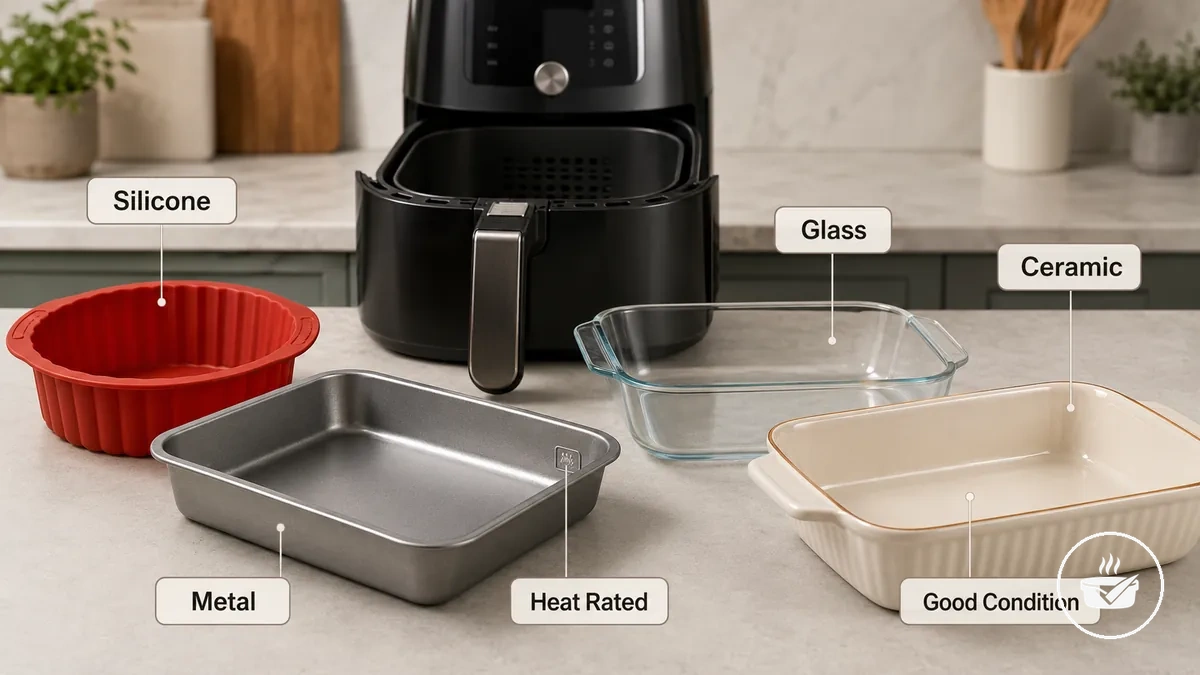
How material changes air fryer baking results depends on heat response and surface behaviour. The table clarifies those result differences by material attribute.
| Material attribute | Common effect | When it matters | Qualification |
|---|---|---|---|
| Heat response | Can influence browning, crispness, and surface drying. | When the food needs a firmer edge or browned top. | The result depends on thickness, airflow, and the air fryer configuration. |
| Surface release | Can affect food release, sticking, and cleanup. | When soft batters or delicate bakes need clean removal. | Release behaviour depends on surface condition, coating, and food moisture. |
| Moisture behaviour | Can affect texture, drying, and the balance between softness and crispness. | When the bake should stay moist inside but still set on the surface. | Food moisture and airflow can change the final baking result. |
| Rigidity | Can affect handling, shape support, and batter stability. | When a filled baking dish, tray, or mold must be moved in and out of the basket. | Fit, basket space, and material thickness can change handling confidence. |
| Coating condition | Can affect food release, cleanup, and material safety confidence. | When nonstick surfaces show wear or scratched areas. | Safe use depends on the visible condition and the item’s safe rating. |
Heat transfer, browning, and crispness
Heat transfer explains how energy moves from air fryer bakeware into food, influencing surface drying, browning, and edge crispness. Material conductivity and heat retention change how quickly heat reaches the food surface, making browning and crispness depend on both the bakeware and the cooking conditions.
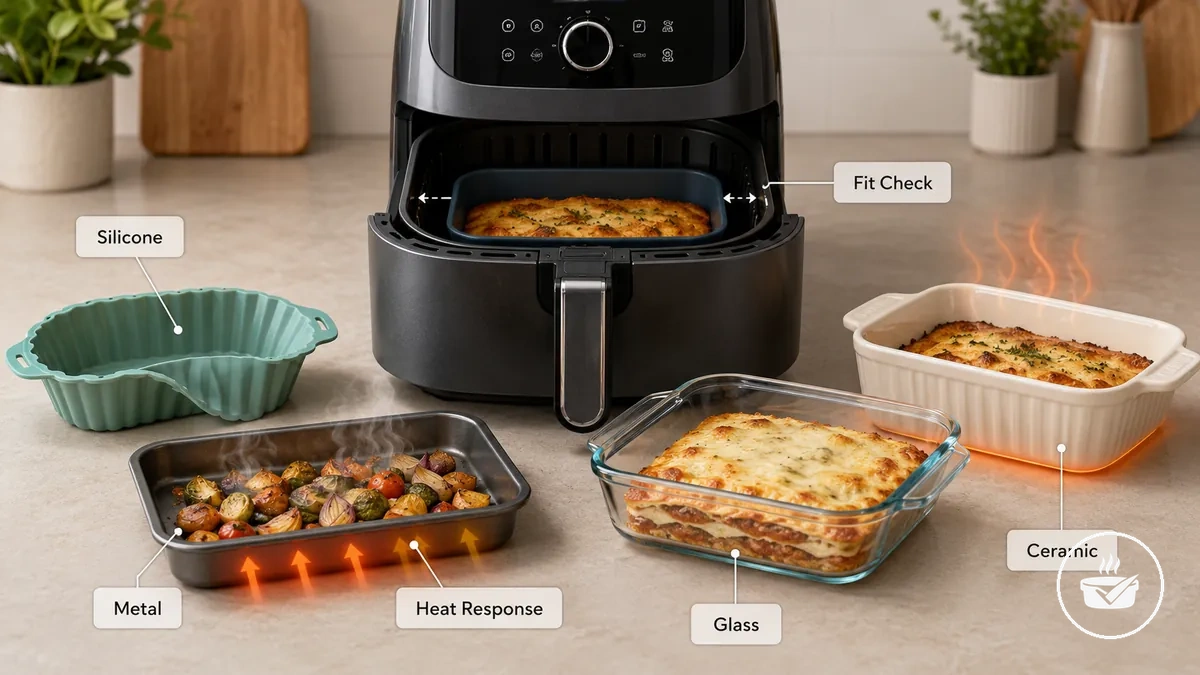
If the air fryer model, pan thickness, or food moisture changes, browning and crispness may change as well. Heat transfer, browning, and crispness are influenced by airflow, so the same material can produce different results under different conditions. The image below labels how material behaviour affects surface drying and browning.
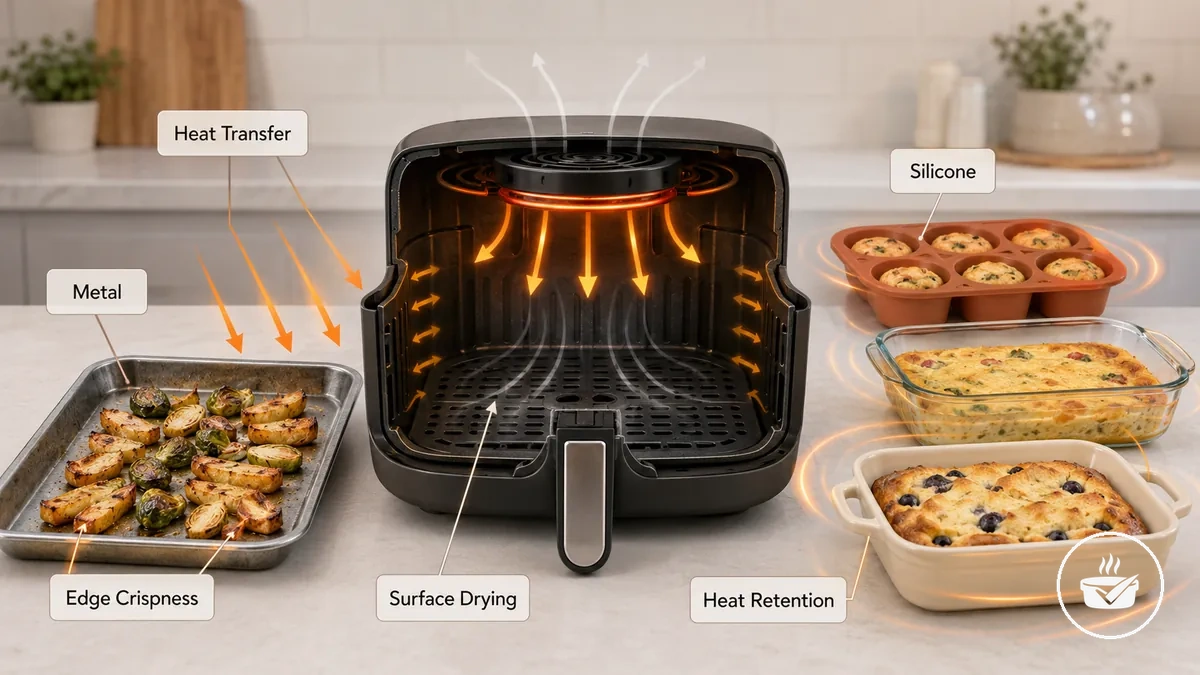
Heat transfer, browning, and crispness compare these common material behaviours:
- Metal: Higher conductivity can support faster browning when airflow is good and food moisture is not excessive.
- Glass and ceramic: Greater heat retention may create a slower heat response that depends on thickness and airflow.
- Silicone: Lower conductivity may produce a gentler heat response that suits softer bakes more than pronounced edge crispness.
- Reduced crispness: Higher food moisture, thicker pans, or restricted airflow can limit surface drying regardless of material.
Moisture retention, flexibility, and food release
Moisture retention, flexibility, and food release describe how a bakeware surface affects the removal of baked food after cooking. Surface flexibility, material texture, and coating condition can influence how soft batters release from the pan and whether sticking or tearing is more likely.
If the coating condition changes, the batter is especially delicate, or the bakeware is handled while the food is still fragile, release behaviour may differ. Moisture retention, flexibility, and food release also depend on batter type and surface condition, so easier release does not automatically mean better browning or a better fit for every bake. The image below shows how surface and structure affect sticking and handling.
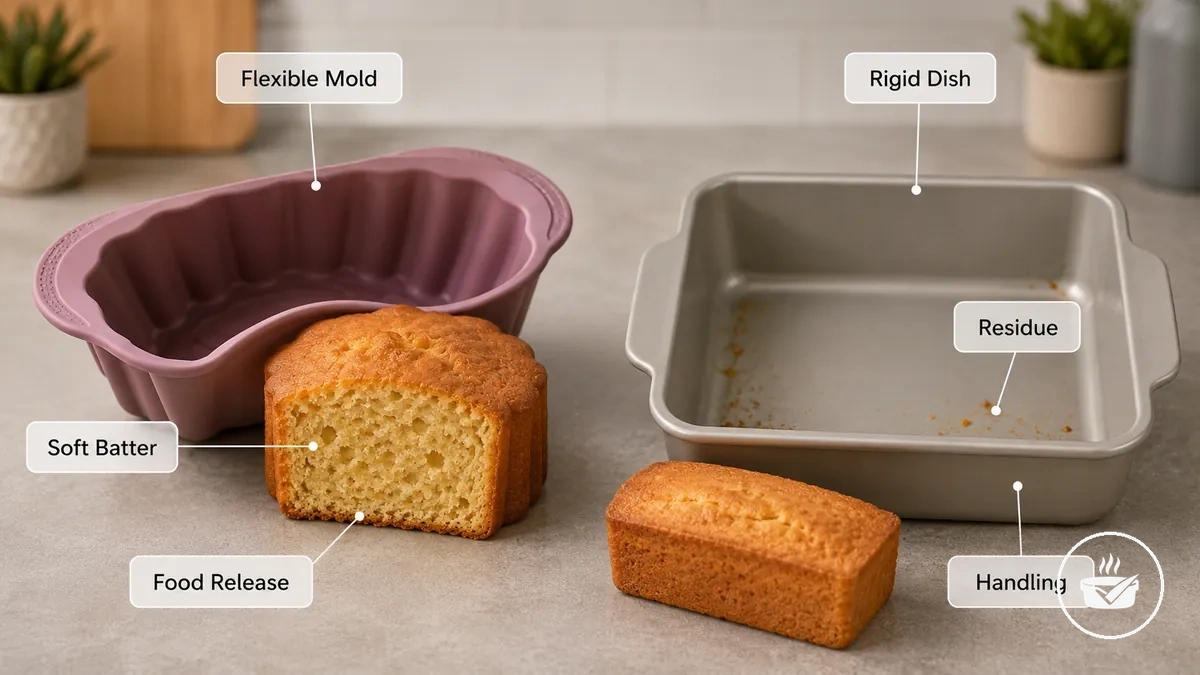
Moisture retention, flexibility, and food release separates release factors from browning factors in these common material behaviours:
- Flexible silicone molds: Flexibility can help release soft batters with less risk of sticking or tearing during removal.
- Coated metal bakeware: Food release may depend on coating condition as well as batter type.
- Glass and ceramic: Greater rigidity can provide shape support, but delicate bakes may require more careful handling during removal.
- Residue and handling: Batter residue or sticking can increase when surface condition changes or the bake is removed before it has set sufficiently.
Silicone, Metal, Glass, and Ceramic Bakeware Differences
Silicone, metal, glass, and ceramic bakeware differences depend on heat response, food release, visibility, heat retention, coating condition, and handling risk. These four material options should be compared as air fryer bakeware choices, not as a single ranked list.
Material attributes explain why each option behaves differently in the basket. Silicone is flexible and often low-stick, metal can support faster heating and browning, glass offers visibility when the baking dish is suitable, and ceramic can retain heat for gentler baking. Suitability still depends on oven-safe status, thickness, fit, and surface condition.
When the same food can work in more than one material, the result may differ by texture, browning, or handling. Silicone, Metal, Glass, and Ceramic Bakeware Differences compare decision variables, not product rankings, and the table summarizes strengths, limits, suitable baking jobs, and caution points.
| Material | Useful strengths | Main limits | Best-fit baking jobs | Caution point |
|---|---|---|---|---|
| Silicone | Flexible, often low-stick, useful for food release | May brown more gently than metal | Soft batters, muffins, delicate bakes | Use only when the mold is oven-safe and fits the basket. |
| Metal | Responsive heat response and browning support | Performance may depend on coating condition | Cakes, biscuits, pastries, crisp-edged bakes | Surface condition and fit can influence results. |
| Glass | Visibility and heat retention | Heavier and slower to change temperature | Casseroles and gentle baking | Use only oven-safe glass suited to the cooking conditions. |
| Ceramic | Heat retention and gentle baking support | Heavier with slower heat response | Baked desserts and recipes that benefit from retained heat | Handling and fit should match the available basket space. |
Silicone bakeware for flexible molds and low-stick baking
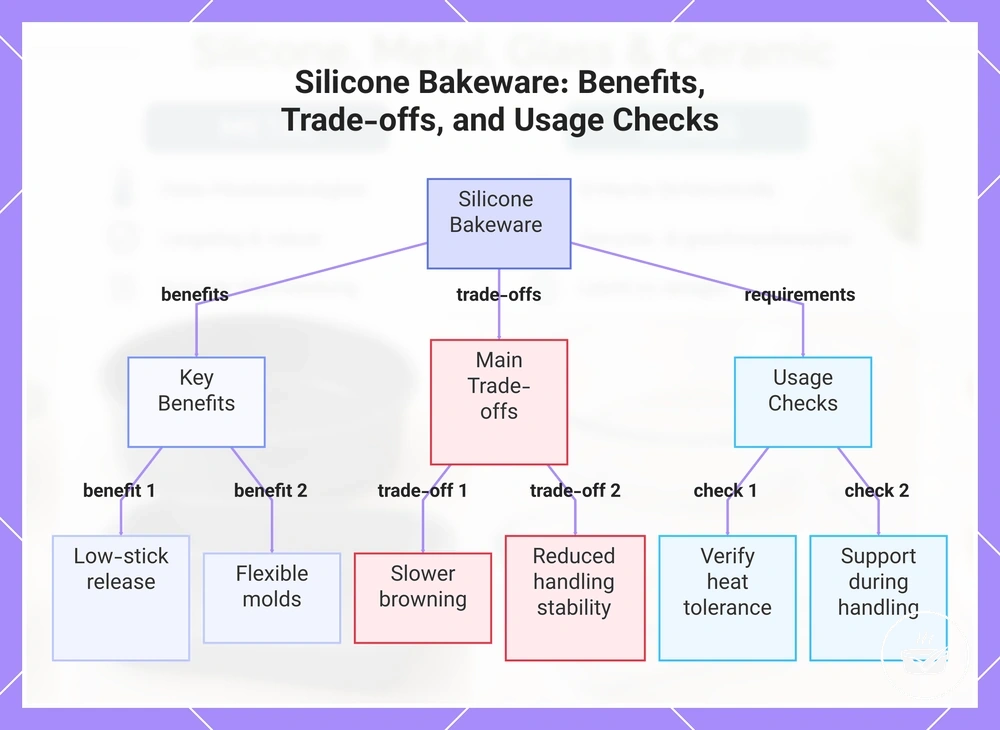
Silicone bakeware is a flexible and often low-stick option that works well for flexible molds and soft batters in an air fryer. Many silicone molds can make food release easier than rigid bakeware, while heat tolerance should be verified from the product's rating before use. Silicone bakeware is often a suitable choice when flexibility and easy release are priorities.
When deeper browning is the goal, silicone bakeware may produce gentler surface colour than metal under similar cooking conditions. Food-grade silicone and appropriate heat tolerance should be confirmed for the specific product, while thicker or more flexible molds may require additional support during handling. Silicone liners are a separate accessory and should not be confused with silicone bakeware molds. Slower browning and reduced handling stability are the main trade-offs to consider.
Benefits and limits:
- Heat tolerance: Check that the bakeware is made from food-grade silicone and has a heat rating suitable for the intended cooking method.
- Release: The low-stick surface can help release cakes, muffins, and other soft batters with less sticking.
- Flexibility: Flexible molds can make food removal easier but may need support when carrying filled batter.
- Slower browning: Silicone may brown food more gently than metal, depending on the recipe and cooking conditions.
- Handling stability: Stability depends on the mold's thickness, shape, and the amount of batter it holds.
This chart outlines the key benefits, main trade-offs, and essential usage checks for silicone bakeware when used for flexible mold baking in an air fryer.
Metal bakeware for faster heating and stronger browning
Metal bakeware is often the preferred choice when faster heating and stronger browning are important. Its quick heat response can help develop crisp edges and a more browned surface, although the final result depends on pan thickness, food surface exposure, and air fryer airflow. Metal trays are often well suited to recipes where browning and tray-style crisping are priorities.
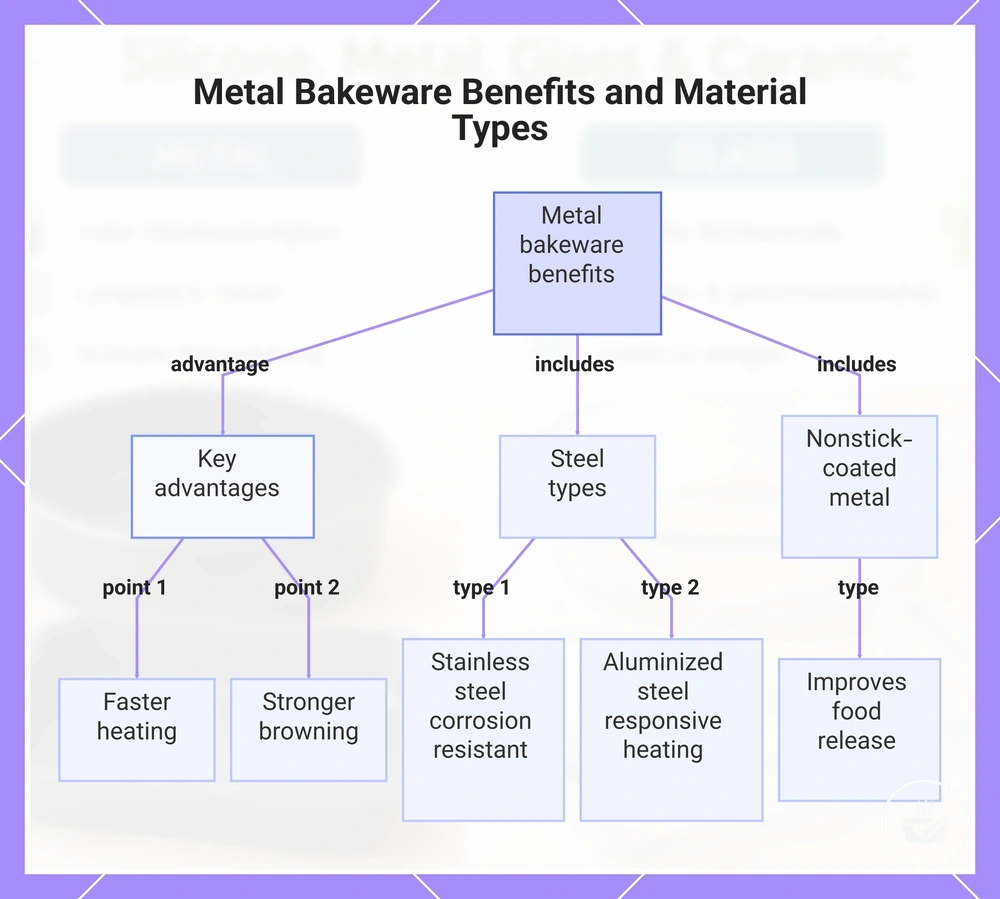
Metal bakeware includes stainless steel, aluminized steel, and nonstick-coated metal, each with different surface characteristics. Stainless steel is often chosen for its corrosion resistance, while food release depends on the surface finish and cooking conditions. Aluminized steel can provide responsive heating, and nonstick-coated metal may improve food release when the coating condition remains intact. Compared with silicone bakeware, metal often supports stronger browning, while silicone may be better suited to soft batters that benefit from flexible molds. Coating condition and corrosion resistance should be considered according to the specific pan and its intended use.
This chart shows the key advantages of metal bakeware and the common material types used.
Glass bakeware for visibility and slower heat response
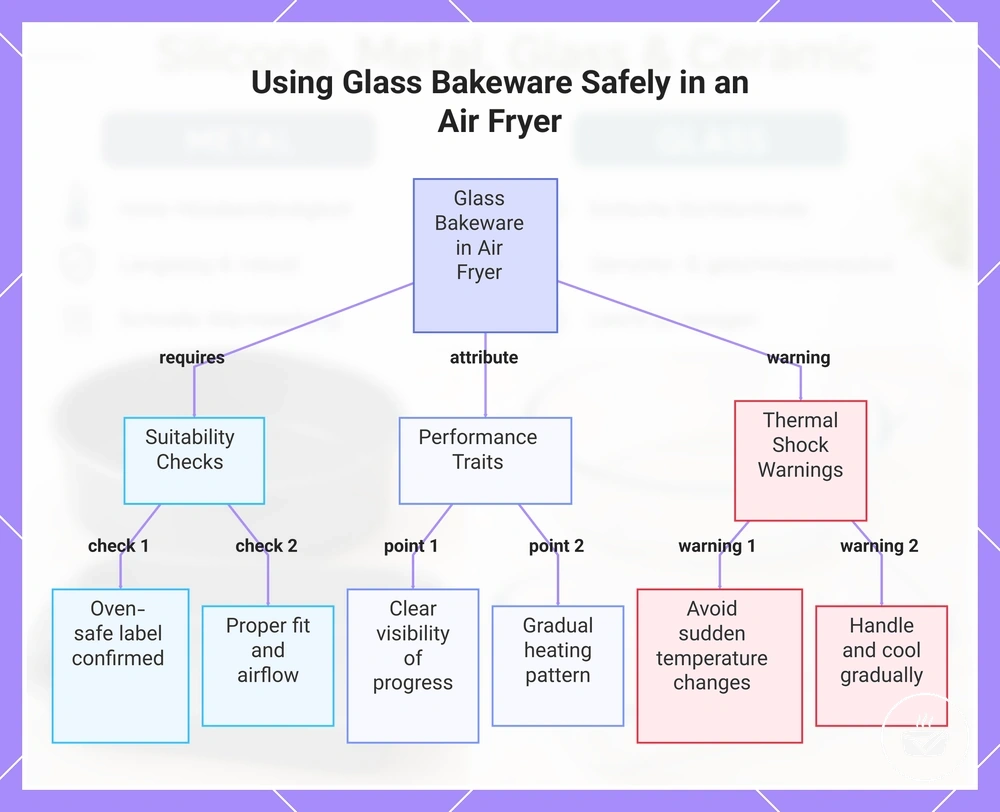
Glass bakeware can be used in an air fryer when the dish is oven-safe, fits the basket correctly, and is suitable for the intended cooking conditions. Its clear sides make baking progress easy to monitor, while its slower heat response often creates a more gradual heating pattern than metal. Glass bakeware is most suitable when both the oven-safe label and proper fit are confirmed.
When steady baking and visibility matter more than faster browning, a glass baking dish may be a practical choice. Tempered glass or borosilicate glass should be identified by the manufacturer rather than assumed from appearance alone. Glass bakeware typically responds to heat more slowly than metal, and sudden temperature changes, including placing a cold dish into a preheated basket, may increase the risk of thermal shock.
Caution:
- Use only glass bakeware that is clearly labeled as oven-safe for the intended cooking method.
- Choose a glass dish that fits the air fryer basket without restricting airflow.
- Avoid placing a cold glass dish into a preheated basket or exposing hot glass to sudden cooling, as thermal shock may occur.
- Thicker glass bakeware may respond more slowly to heat than thinner alternatives.
- Handle hot glass carefully and allow it to cool gradually according to the manufacturer's guidance.
This chart explains the suitability checks, performance traits, and thermal shock risks when using glass bakeware in an air fryer.
Ceramic bakeware for heat retention and gentle baking
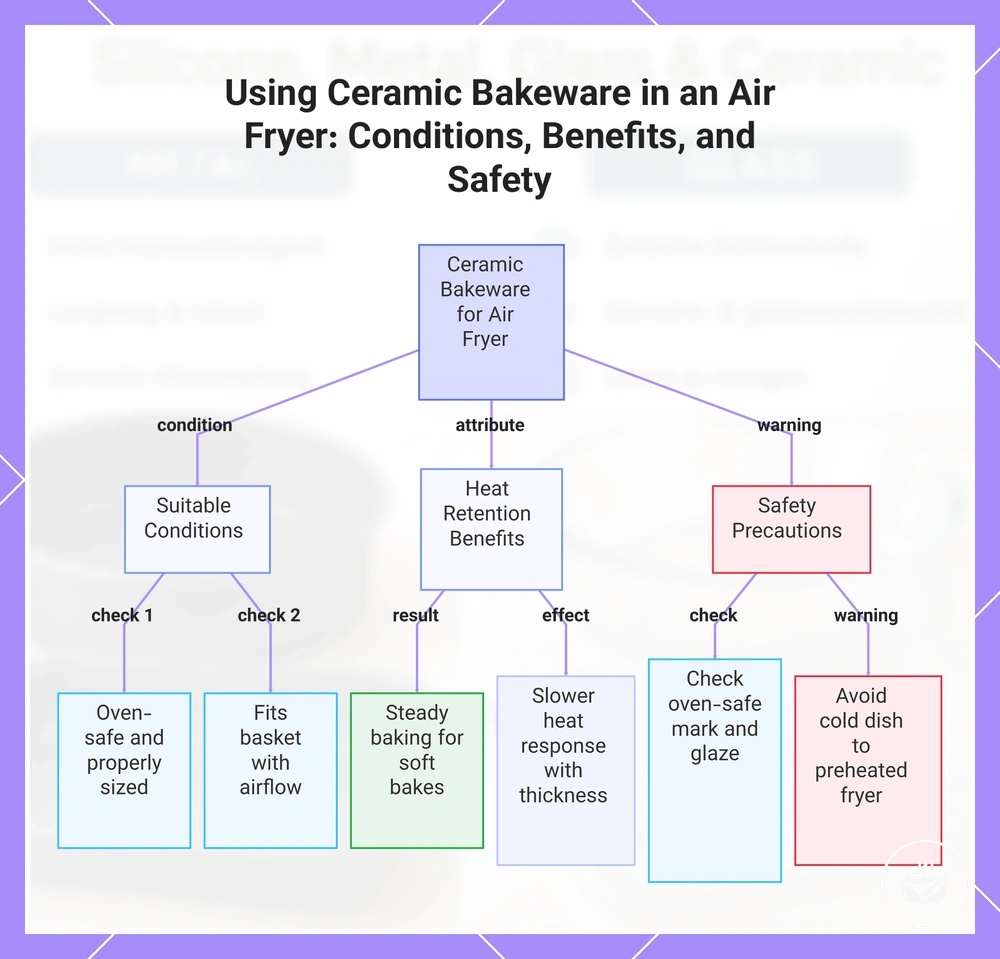
Ceramic bakeware can be a suitable option for gentle baking when the dish is oven-safe, properly sized, and fits the air fryer basket. Its heat retention can help maintain steady baking conditions, making ceramic bakeware and stoneware suitable for soft bakes or a serving-style dish when the manufacturer's oven-safe guidance is followed.
Ceramic bakeware includes ceramic dishes and stoneware with different thicknesses and glaze finishes. Greater thickness often increases retained heat and slows heat response compared with metal, while glaze condition and oven-safe status should be checked before use. Sudden temperature changes may increase the risk of thermal shock, so ceramic bakeware should be handled with appropriate care.
Caution:
- Use only ceramic bakeware or stoneware that is clearly marked as oven-safe.
- Check that the glaze is intact and suitable for food contact before cooking.
- Thicker ceramic pieces may heat more slowly and require enough basket space for proper fit.
- Avoid moving a cold ceramic dish directly into a preheated air fryer, as thermal shock may increase the risk of cracking.
- Choose a properly sized serving-style dish that allows adequate airflow around the bakeware.
This chart shows the requirements, heat retention advantages, and key safety precautions for ceramic bakeware used in an air fryer.
Material Safety Checks Inside an Air Fryer
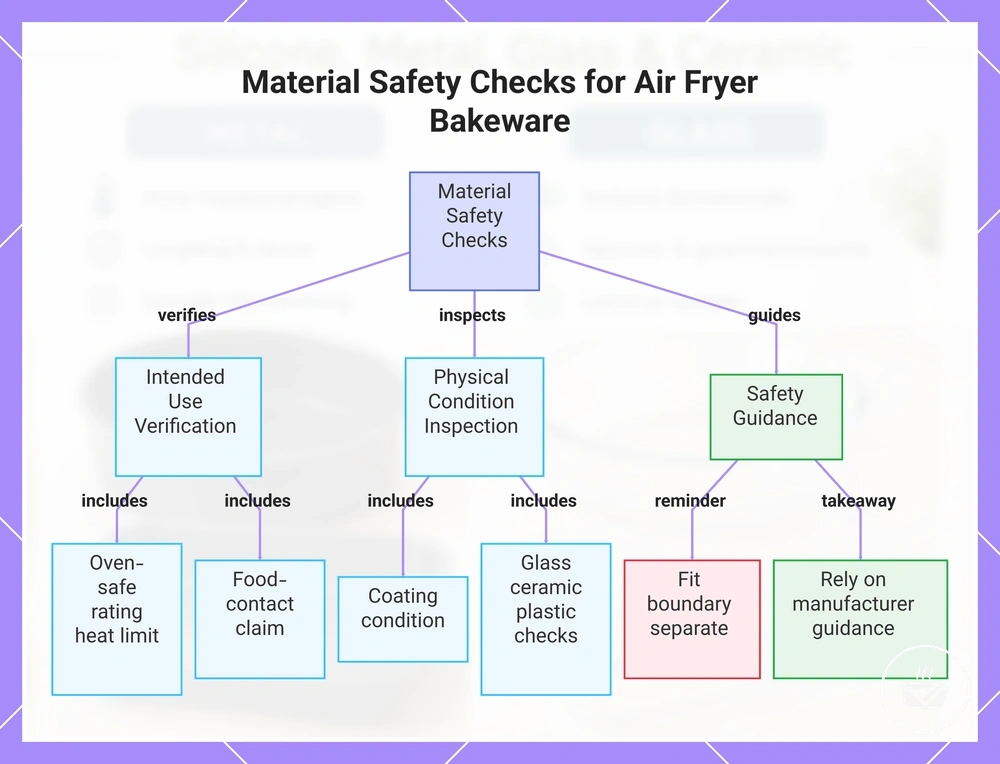
Material safety checks inside an air fryer begin by verifying that the bakeware is intended for the cooking conditions. Check the manufacturer instructions, oven-safe rating, heat limit, and visible condition before use rather than relying on the material alone.
Material safety checks verify ratings, food-contact claims, surface condition, and thermal-shock risks before baking. A food-contact claim, oven-safe rating, and stated heat limit help confirm intended use, while visible damage or missing labeling can reduce confidence in suitability. Safety decisions should remain based on the manufacturer's guidance and the item's current condition.
- Oven-safe rating: Confirm that silicone, metal, glass, or ceramic bakeware is marked for oven use and follow the manufacturer instructions.
- Heat limit: Keep cooking within the stated heat rating.
- Food-contact claim: Use bakeware intended for food contact when the labeling supports that use.
- Coating condition: Check nonstick surfaces for a scratched surface, peeling, or other damaged coating before use.
- Glass and ceramic: Avoid sudden temperature changes that may increase the risk of thermal shock.
- Loose plastic: Do not use damaged or loose plastic components that are not intended for the cooking environment.
- Fit boundary: Material safety does not replace separate checks for size, clearance, and airflow.
If you need broader guidance beyond material verification, see air fryer bakeware safety for additional safety considerations.
This chart shows the key material safety checks to perform before using bakeware in an air fryer, including intended use verification, physical condition inspection, and safety boundaries.
Oven-safe ratings and food-contact material claims
Oven-safe ratings and food-contact material claims should be verified before selecting bakeware for an air fryer. Start by checking the oven-safe label, maximum temperature, manufacturer instructions, and the item's visible condition before deciding it is suitable for use.
Labels such as heat-resistant, microwave-safe, or dishwasher-safe describe different product characteristics, but they do not automatically confirm air fryer suitability. Food-grade silicone and other food-contact claims should be considered together with the stated heat rating and manufacturer instructions. If product markings are missing, unclear, or the material shows visible damage, suitability should remain uncertain until verified.
- Label: Confirm that the bakeware is clearly marked as oven-safe.
- Maximum temperature: Check that the intended cooking temperature remains within the stated heat rating.
- Food-contact claim: Verify food-contact labeling or food-grade silicone claims where they apply.
- Surface condition: Inspect for visible damage such as cracks, peeling, or worn coatings before use.
- Material-specific warnings: Follow all manufacturer instructions and product markings for the intended material.
- Missing instructions: Do not treat microwave-safe, dishwasher-safe, or heat-resistant wording alone as proof that the item is suitable for air fryer use.
Nonstick coatings, PFAS or PTFE claims, and scratched surfaces
Nonstick coatings, PFAS or PTFE claims, and scratched surfaces should be evaluated by checking both the coating claim and the condition of the cooking surface. An intact nonstick coating can support food release when used within the manufacturer instructions, while a scratched surface or peeling coating requires greater caution and may be a replacement cue.
PFAS, PTFE, and PFOA-free labels describe different coating claims, but they should not be treated as equivalent or as proof that every coated surface is suitable for the same heat exposure. Verify food-contact information and coating claims against the available product guidance, and treat unclear labeling or visible damage as reasons for additional caution before continued use.
- Intact coating: An undamaged nonstick coating can support food release when the coated surface remains in good condition and is used as intended.
- Scratched or peeling surface: A scratched surface or peeling coating is a replacement cue because visible damage can reduce confidence in the food-contact surface.
- Vague claims: General marketing wording should not replace clear claim verification or manufacturer guidance.
- PFAS, PTFE, or PFOA-free wording: Treat these as coating claims that require verification rather than as universal indicators of safety or performance.
- When to stop using the item: Consider replacing the bakeware if the nonstick coating is peeling, heavily scratched, or otherwise visibly damaged.
Thermal shock risk for glass and ceramic dishes
Thermal shock is the stress that can occur when a glass dish or ceramic dish experiences a sudden temperature change. Even if a dish is labeled oven-safe, rapid heating or cooling may increase the risk of cracking, particularly when a cold dish is exposed to a preheated basket or another abrupt temperature change.
When a cold dish is placed into a preheated air fryer or a hot dish contacts a wet surface, thermal shock can increase the breakage risk because the material may not adjust evenly to rapid heating or cooling. Thick ceramic may retain heat longer than thinner pieces, so handling and cooling conditions can differ. Following the manufacturer instructions and reducing sudden temperature changes can help lower the risk when the dish is suitable for the intended use.
Use these handling checks to reduce thermal shock risk:
- Do: Allow a cold glass dish or ceramic dish to warm gradually before rapid heating when practical.
- Avoid: Moving a cold dish directly into a preheated basket unless the manufacturer instructions indicate it is appropriate.
- Avoid: Placing a hot dish onto a wet surface or exposing it to sudden cooling.
- Do: Remember that thick ceramic may retain heat longer and cool more slowly than thinner dishes.
- Do: Follow the manufacturer instructions for oven-safe use, handling, and cooling.
Materials and coatings to avoid near high heat
Materials and coatings to avoid near high heat include items that are not designed for oven use, have uncertain material identification, or show visible damage. Plastic parts, unknown coatings, damaged nonstick surfaces, non-oven-safe ceramic, ordinary glass, and loose lightweight materials should be rejected or verified before exposure to high heat inside an air fryer.
When the material or coating cannot be verified, suitability becomes uncertain. Instead of assuming that an item can tolerate heat exposure, check the manufacturer guidance and the condition of the bakeware before use. Clear identification and an undamaged surface provide a more reliable basis for deciding whether the item is appropriate for high heat.
Use these caution checks before placing bakeware near high heat:
- Plastic parts: Avoid plastic parts that are not intended for oven use because they may not tolerate high heat.
- Unknown coating: Verify any unknown coating before use if its heat suitability cannot be confirmed.
- Damaged nonstick: Reject bakeware with peeling or heavily damaged nonstick surfaces rather than continuing to use it.
- Ordinary glass: Do not assume ordinary glass is suitable for high heat without manufacturer confirmation.
- Non-oven-safe ceramic: Avoid ceramic items that are not clearly identified as oven-safe.
- Loose paper: Keep loose lightweight paper away from direct high-heat airflow unless it is intended for that cooking use.
- Sealed containers: Do not place sealed containers into an air fryer unless the manufacturer indicates they are suitable for that use.
Material Selection by Baking Job
Material selection depends on matching the baking job to the baking result you want rather than choosing one material for every recipe. Food type, browning, food release, airflow, and bakeware fit all influence which material tendency may be more suitable for a particular use case.
Material Selection by Baking Job compares common baking tasks with material tendencies so you can match the food type to the expected effect while considering practical cautions. The table below is designed to support selection decisions rather than rank one material above another.
| Baking job | Material tendency | Why it fits | Watch for |
|---|---|---|---|
| Cakes or muffins | Silicone or nonstick metal | Silicone may support food release, while nonstick metal may provide more baking structure. | Fit, pan support, and recipe requirements. |
| Brownies | Metal or silicone | Material choice depends on the preferred balance between browning and food release. | Pan thickness and coating condition. |
| Crisping | Metal tray | Greater airflow and surface exposure may encourage stronger browning. | Avoid restricting airflow with overcrowding. |
| Roasting or reheating | Glass, ceramic, or metal | Glass and ceramic may suit gentler heat retention, while metal may favour greater surface exposure. | Choose bakeware that suits the cooking conditions and basket fit. |
| Tray-style baking | Metal tray | Can support broad surface exposure across the baking area. | Ensure the tray fits without restricting airflow. |
When the baking job involves soft batters, silicone and nonstick metal can both be suitable, but they often achieve different outcomes. Silicone may favour food release, while nonstick metal may provide additional structure during handling, depending on the recipe and pan design.
When crisping or stronger browning is the priority, metal often becomes the preferred material tendency because it can leave more food surface exposed to circulating air. The final baking result still depends on airflow, pan fit, moisture, and surface exposure rather than material alone.
When reheating, roasting, or tray-style baking, the material choice depends on the desired heat response and the food being prepared. For broader guidance on matching bakeware to your cooking needs, see choose air fryer bakeware.
Cakes, muffins, brownies, and soft batters
Cakes, muffins, brownies, and soft batters depend on material selection that balances food release, structure support, and heat gentleness. Silicone, nonstick metal, glass, and ceramic can all suit delicate baked goods, but the better fit depends on batter moisture, pan shape, and the texture goal rather than one material for every use.
When easier release is the priority, silicone may suit delicate bakes because its flexibility can help remove soft batters from the pan. When greater structure support or more edge browning is preferred, nonstick metal may be a better match. Glass and ceramic may also suit moist batters when gentler heat response and proper pan fit are more important than stronger browning. Material choice should reflect the baking goal without expecting fixed bake-time changes.
Use these material-selection points for common soft-batter baking jobs:
- Cakes: Silicone or nonstick metal can both be suitable, depending on the balance between release and structure support.
- Muffins: Soft batters often benefit from reliable pan support and food release based on the pan design.
- Brownies: Nonstick metal may encourage more edge browning, while silicone may favour easier release.
- Moist batters: Glass or ceramic may suit recipes that benefit from heat gentleness when the bakeware fits the basket.
- Texture goal: Match the material to the desired balance of release, structure support, heat gentleness, and browning instead of relying on a single material for every recipe.
Crisping, roasting, reheating, and tray-style baking
Crisping, roasting, reheating, and tray-style baking depend on material choice that supports airflow exposure, surface drying, and browning. A metal tray often suits these baking jobs because greater surface exposure can encourage browning, although the result still depends on food moisture, tray depth, and the air fryer design.
When crisp edges are the goal, an open tray may expose more of the food surface than a deeper dish. Tray depth and perforation can influence airflow exposure and surface drying, while reheating results also depend on food moisture and bakeware shape. Material selection should focus on these criteria rather than temperature or timing adjustments.
Use this checklist when selecting bakeware for crisping-oriented cooking:
- Metal tray: May support browning by exposing more of the food surface to circulating air.
- Open tray: Greater airflow exposure can help promote surface drying for foods that benefit from crispness.
- Tray depth: Deeper trays may reduce surface exposure compared with shallower options.
- Perforation: Perforated trays may improve airflow exposure when the tray is designed for that purpose.
- Food moisture: Moisture content can influence crisping, roasting, and reheating outcomes regardless of tray material.
- Selection focus: Match the tray and material to the baking job instead of expecting guaranteed crispness or relying on temperature adjustments.
Fit and airflow checks before choosing a material
Material choice depends on whether the bakeware fits the basket or oven-style cavity without restricting airflow. A suitable material can only perform as intended when there is enough clearance for air circulation around the bakeware.
If the bakeware is too large, too deep, or has a handle shape that reduces available space, airflow exposure may be limited even when the material itself is appropriate. Complete a size check by confirming basket fit, clearance, height, tray depth, and handle shape before deciding whether the bakeware is a safe fit or a poor-fit choice.
Use this checklist before choosing a material:
- Basket fit: Select bakeware that fits inside the basket or oven-style cavity without forcing it into place.
- Height: Check that the bakeware leaves enough vertical space for airflow.
- Handle shape: Make sure handles do not reduce usable space or interfere with placement.
- Airflow exposure: Leave enough clearance around the bakeware to support air circulation.
- Tray depth: A deep dish may reduce surface exposure and contribute to poorer browning than a shallower piece under similar conditions.
- Oven-style cavity: Confirm the bakeware fits the available cavity without blocking airflow.
Even a material that is otherwise suitable may perform poorly if the bakeware is too large, too deep, or too enclosed for the available space. For broader sizing guidance, see size and fit considerations.
Durability, Cleaning, and Long-Term Value by Material
Long-term value depends on durability, cleaning effort, and care rather than purchase price alone. A material that stays usable with appropriate storage and cleaning may offer better value than one chosen only for release convenience or faster browning.
Durability, Cleaning, and Long-Term Value by Material compares how each material responds to wear, storage, dishwasher safety, and routine cleaning. Coating wear, corrosion, staining, and chipping can change whether a material remains worth using over time. The table below organises material care tradeoffs so replacement and value decisions stay tied to condition rather than price.
| Material | Durability factor | Cleaning or storage issue | Value signal |
|---|---|---|---|
| Silicone | Flexible and less prone to cracking under normal use | May retain odours or staining; storage can affect shape | Useful when release convenience matters more than cosmetic wear |
| Stainless steel | Corrosion resistance can support lasting use | Cleaning effort may increase after baked-on residue | May suit frequent use when durability matters more than easy release |
| Nonstick metal | Release depends on coating condition | Coating wear can increase replacement need | Value depends on surface condition and careful use |
| Glass | Stable surface when handled carefully | Weight, chipping risk, and dishwasher safety should be checked | May suit slower, careful use when visibility and care are priorities |
| Ceramic | Glaze condition affects long-term confidence | Chipping, weight, and storage require care | May provide lasting use when handled and stored carefully |
When release convenience is the main goal, silicone or a nonstick coating may be appropriate if the surface remains in good condition. When bakeware is used frequently, durability, corrosion resistance, cleaning effort, and storage risk may matter more than fast browning alone. Replacement decisions should depend on use frequency, surface condition, and visible coating wear.
Visible coating wear, corrosion, staining, or chipping can signal that long-term value should be reassessed rather than ignored. If recurring performance problems appear with visible damage, review sticking and warping issues before deciding whether replacement is appropriate.
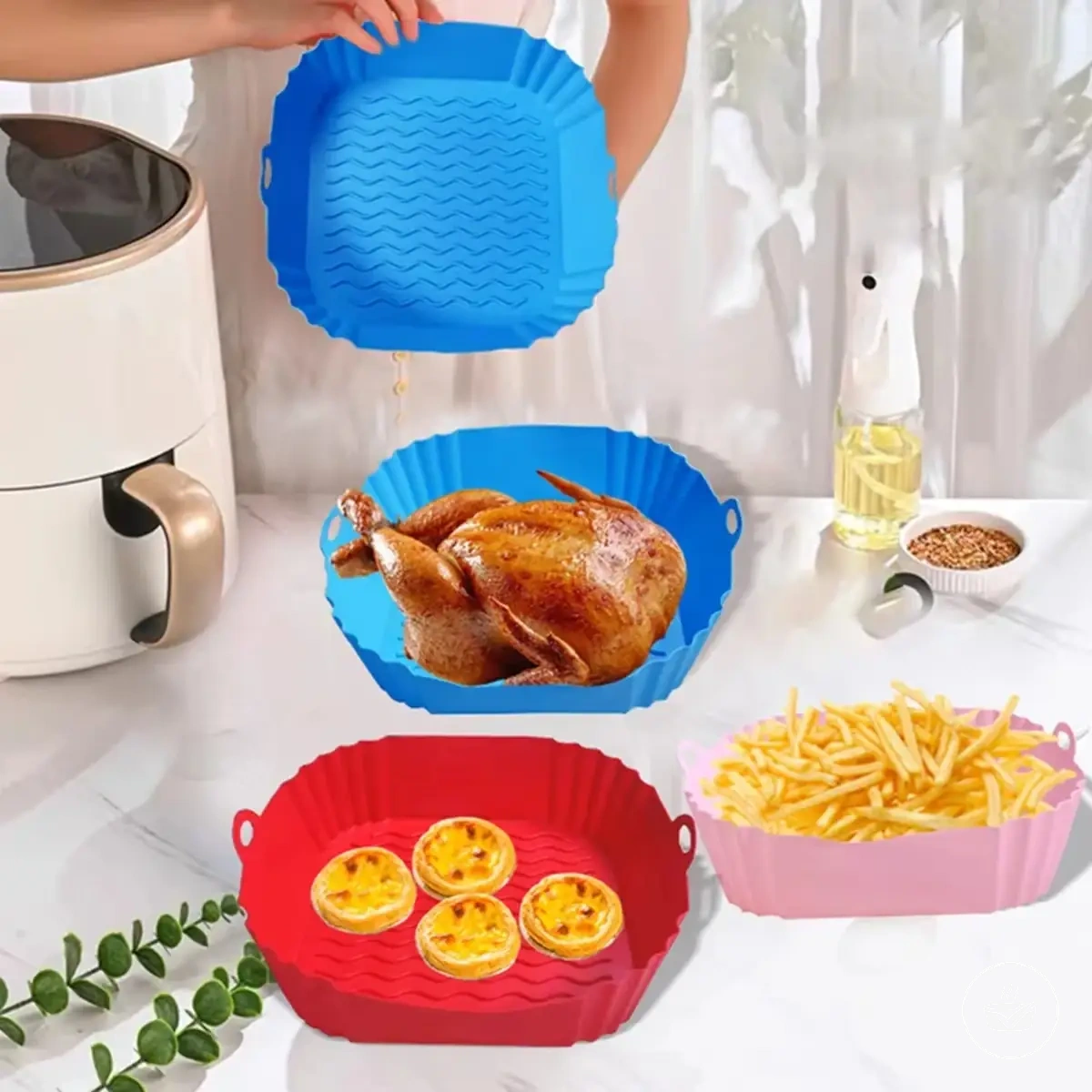
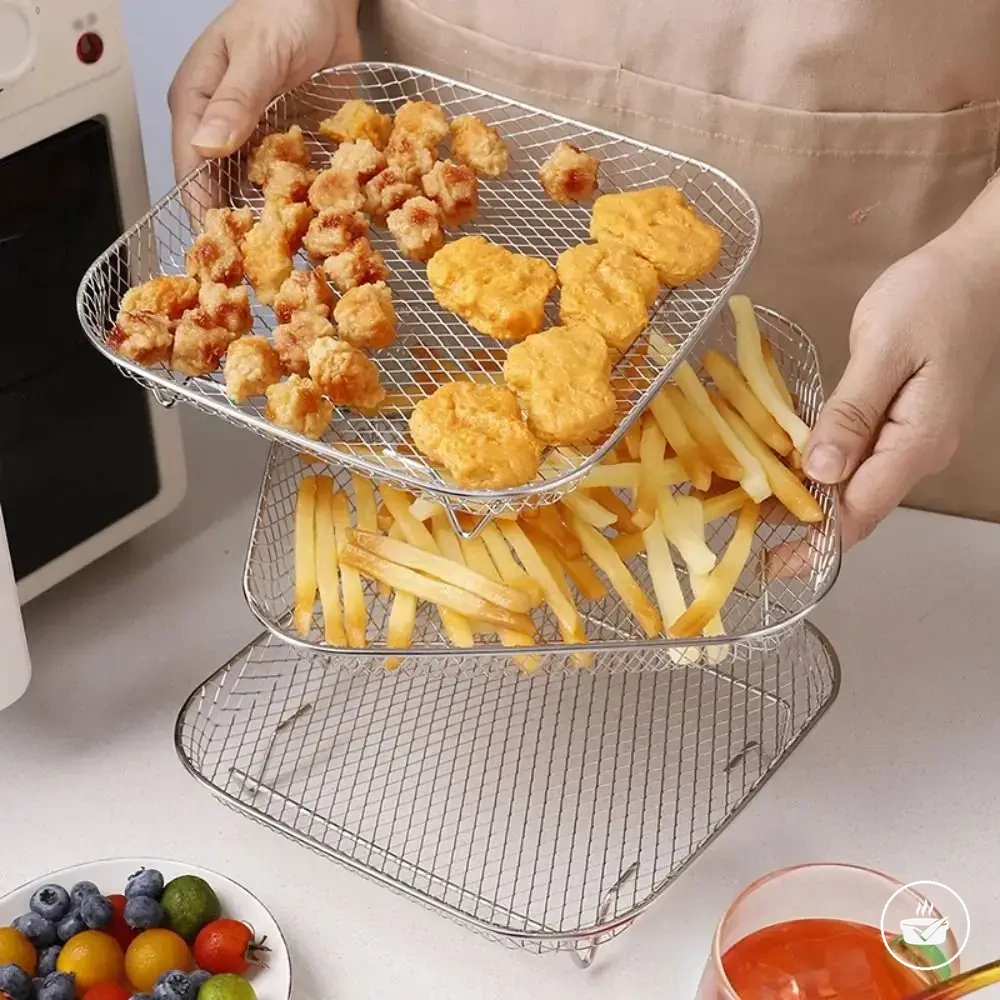
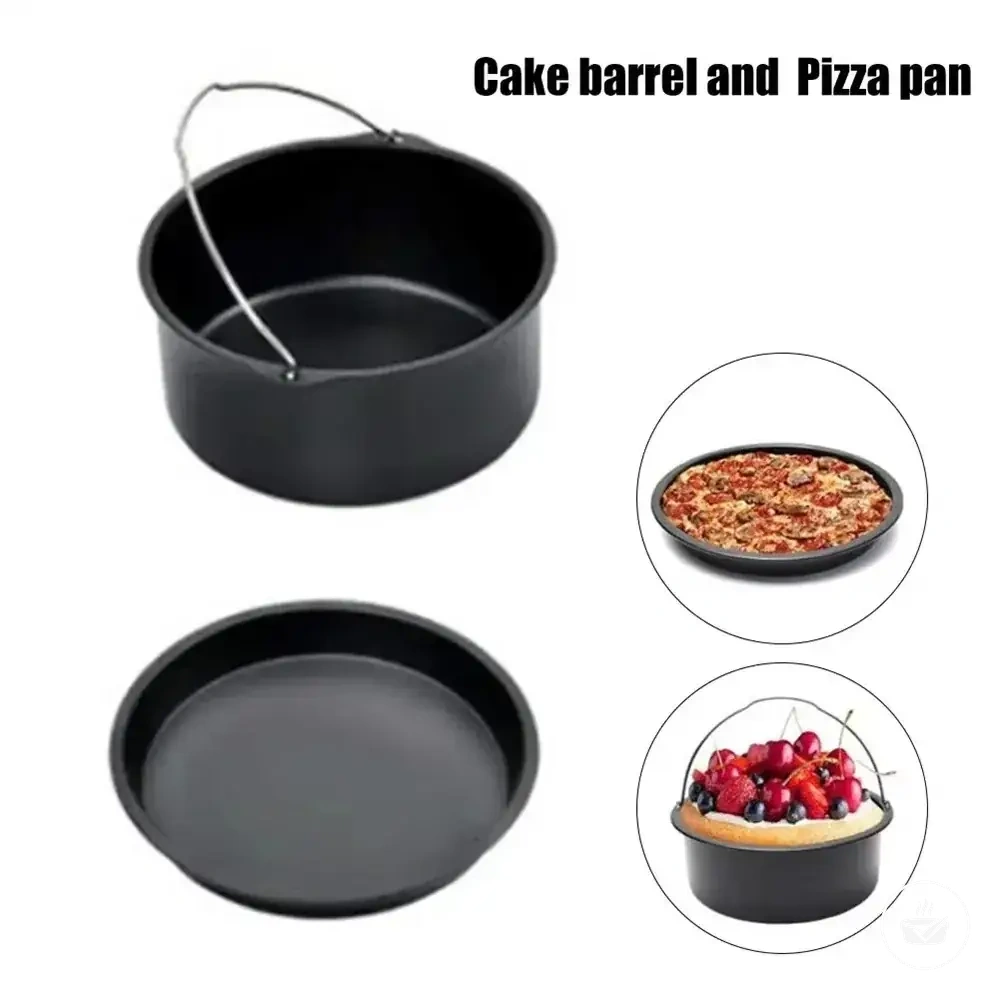
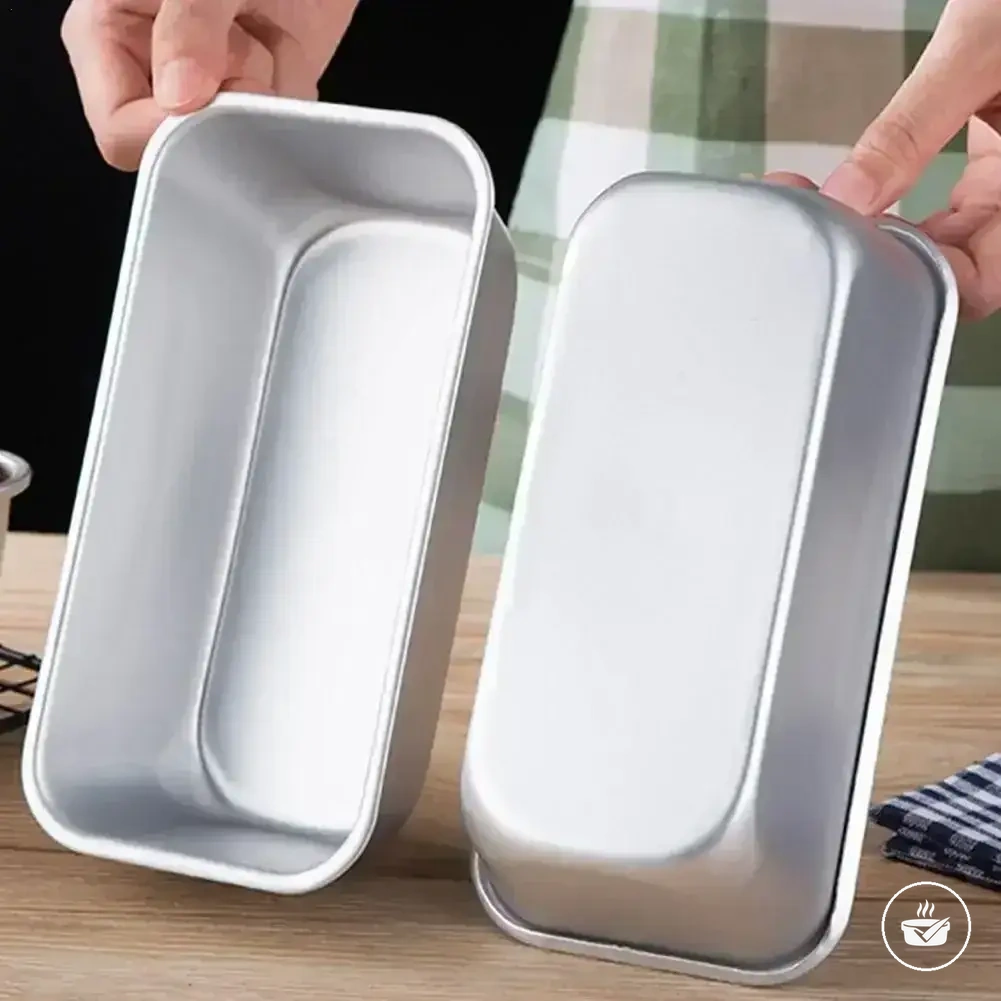
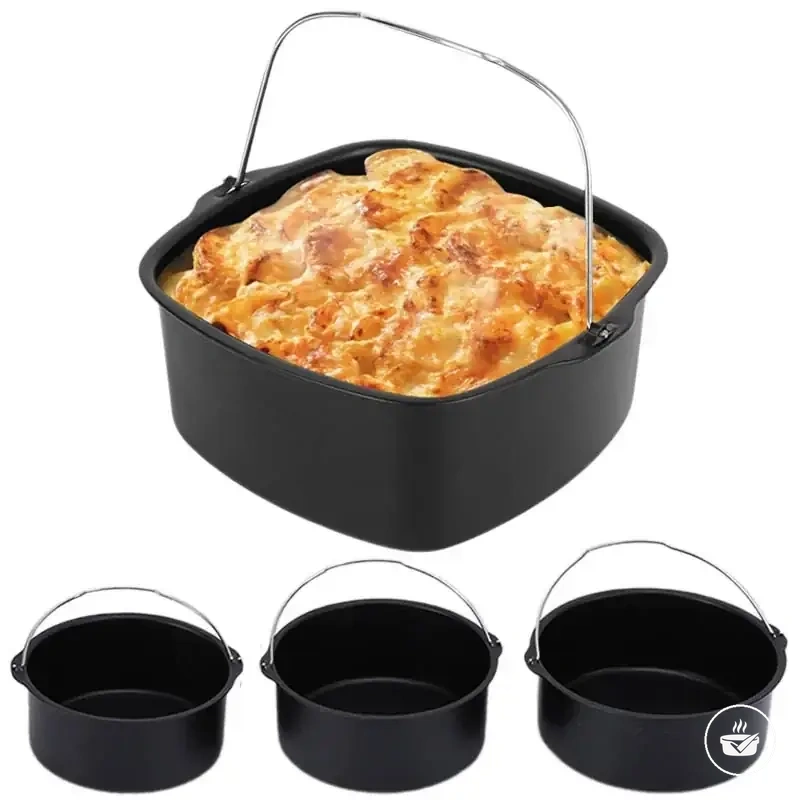
The products below are useful examples for comparing available options. Before buying, check that the compatibility criteria, key features, and product details match your needs.
Dishwasher safety, corrosion, staining, and storage
Dishwasher safety, corrosion, staining, and storage affect the long-term usefulness of each material. Silicone, metal, glass, and ceramic retain value best when cleaning and storage match the material surface and help minimise unnecessary surface damage.
Dishwasher-safe does not mean every material should be cleaned or stored in the same way. Dishwasher safety depends on the product label, while corrosion, staining, odour retention, and stacking pressure vary by material surface and use condition. Care decisions should reflect the dishwasher rating and visible surface condition rather than assuming identical maintenance for every material.
Use this care checklist to support long-term material value:
- Dishwasher label: Follow the dishwasher safety or dishwasher-safe rating provided for the item.
- Metal: Dry metal bakeware when appropriate to help reduce corrosion or rust where moisture may remain.
- Silicone: Check for odour retention, staining, or residue that may affect continued use.
- Glass: Store heavier glass carefully to reduce unnecessary impact or stacking pressure.
- Ceramic: Inspect for chipping or other surface damage before continued use.
- Stacking: Avoid stacking pressure that may scratch metal, deform silicone, or increase the chance of damage to glass or ceramic.
When stainless steel or nonstick metal makes more sense
Choosing between stainless steel and nonstick metal depends on the balance between release convenience and durability. Stainless steel and nonstick metal are both metal bakeware subtypes, but the better selection depends on food type, surface condition, and the release-versus-durability tradeoff.
When easier food release is the priority, nonstick metal may be appropriate while the coating remains in good condition. When durability, corrosion resistance, or repeated use is more important, stainless steel may make more sense despite requiring more cleaning effort for some foods. A scratched surface or noticeable coating wear can increase replacement risk, so the condition of the metal subtype should remain part of the selection decision.
Compare the two metal subtypes using these criteria:
| Stainless steel | Nonstick metal |
|---|---|
| May suit users who prioritise durability and corrosion resistance. | May suit foods that benefit from easier release. |
| Browning may be more pronounced for some baking tasks, depending on the recipe and air fryer. | Release depends on the condition of the low-stick surface. |
| Cleaning effort may increase when food residue adheres to the surface. | Coating wear or a scratched surface can increase replacement risk over time. |
| Selection depends on food type, cleaning tolerance, and intended use. | Selection depends on food type, surface condition, and continued coating integrity. |