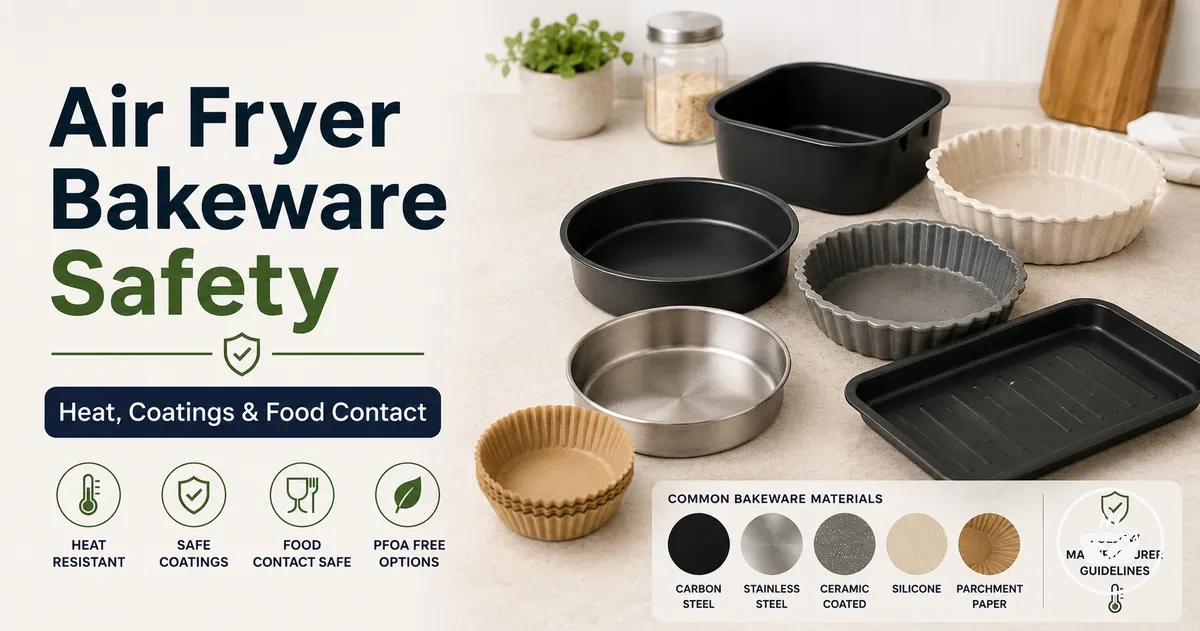
Air Fryer Bakeware Safety
Safe bakeware for an air fryer is oven-safe or heat-rated, food-contact appropriate, undamaged, and fitted so it does not block circulation. Air fryer bakeware should be used only when the specific item matches the appliance conditions rather than the material name alone. The manufacturer label, air fryer manual, item condition, and basket fit form the essential safety gate before use.
When bakeware is placed inside an air fryer, concentrated heat and circulating air can increase the importance of proper clearance and surface condition. A food-contact coating may become unsuitable if it is scratched, chipped, peeling, or otherwise damaged, and a poorly fitting dish can restrict airflow around the food. For that reason, the safety decision should move from general suitability to checking heat rating, coating condition, clearance, and placement.
Microwave-safe, oven-safe, and air-fryer-safe are not equivalent labels. An oven-safe or heat-rated item may still require confirmation against the manufacturer label, appliance guidance, condition, and available clearance before it is used in an air fryer. These checks provide the foundation for the more detailed safety criteria covered next.
What Makes Air Fryer Bakeware Safe
Air fryer bakeware is safe when its heat rating, food-contact surface, condition, and fit all match the appliance and the intended use. The manufacturer instruction should also be checked because suitability can depend on both the bakeware and the air fryer model. The key criteria are heat rating, food-contact surface, condition, and fit.
What Makes Air Fryer Bakeware Safe depends on these criteria working together rather than on a single feature. The image below highlights the checks that help support a safe-use decision before bakeware is placed in the appliance. A heat-rated item with an undamaged food-contact surface may still require enough basket clearance for airflow, so the manufacturer instruction, appliance model, and item condition should all be considered together.
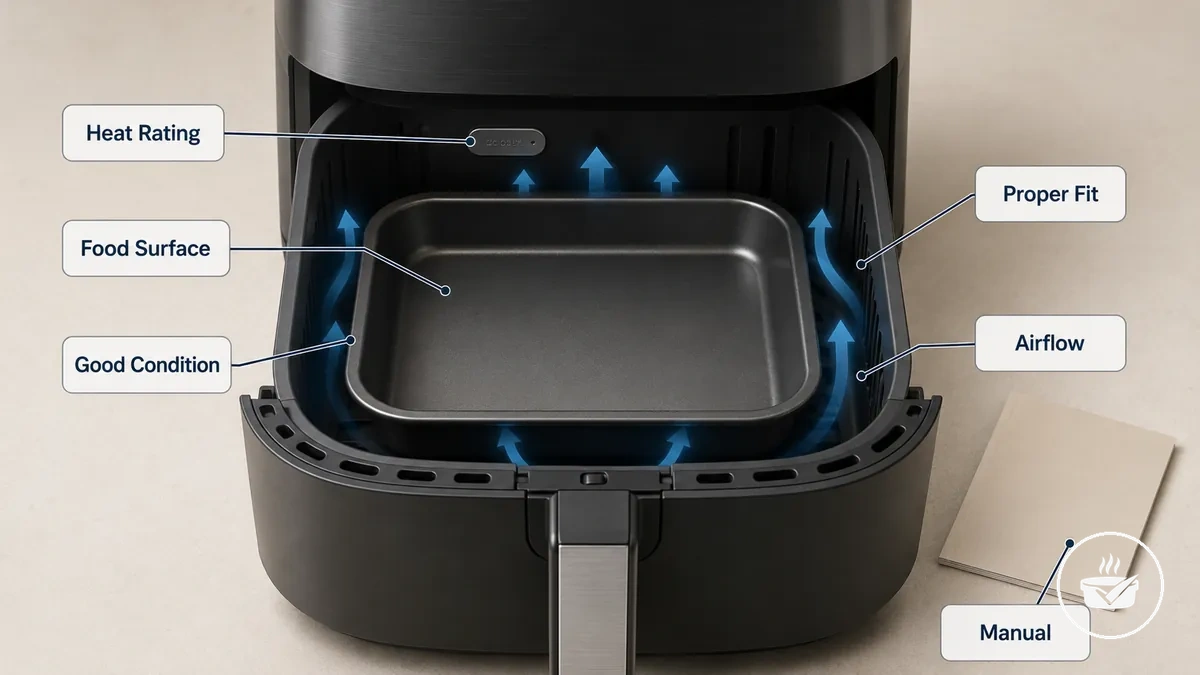
- Verify the heat rating using the item label or manufacturer instruction.
- Check that the food-contact surface is clean and free from visible damage.
- Use bakeware only when its condition does not show cracks, chips, or peeling surfaces.
- Confirm the fit allows basket clearance for airflow inside the appliance.
Microwave-safe, oven-safe, and air-fryer-safe labels do not always mean the same thing. An oven-safe item may still require confirmation of its fit, condition, and manufacturer guidance before use in an air fryer. For broader guidance on choosing safe bakeware for air fryers, treat the label as one part of the decision rather than the only requirement.
Heat Resistance and Oven-Safe Limits
Heat resistance depends on the bakeware's temperature rating, oven-safe status, exposure to the heating element, and the air fryer mode being used. Heat Resistance and Oven-Safe Limits should be judged by the manufacturer label and the air fryer manual instead of assuming one heat limit applies to every item. The key decision begins with the temperature rating and the selected air fryer mode.
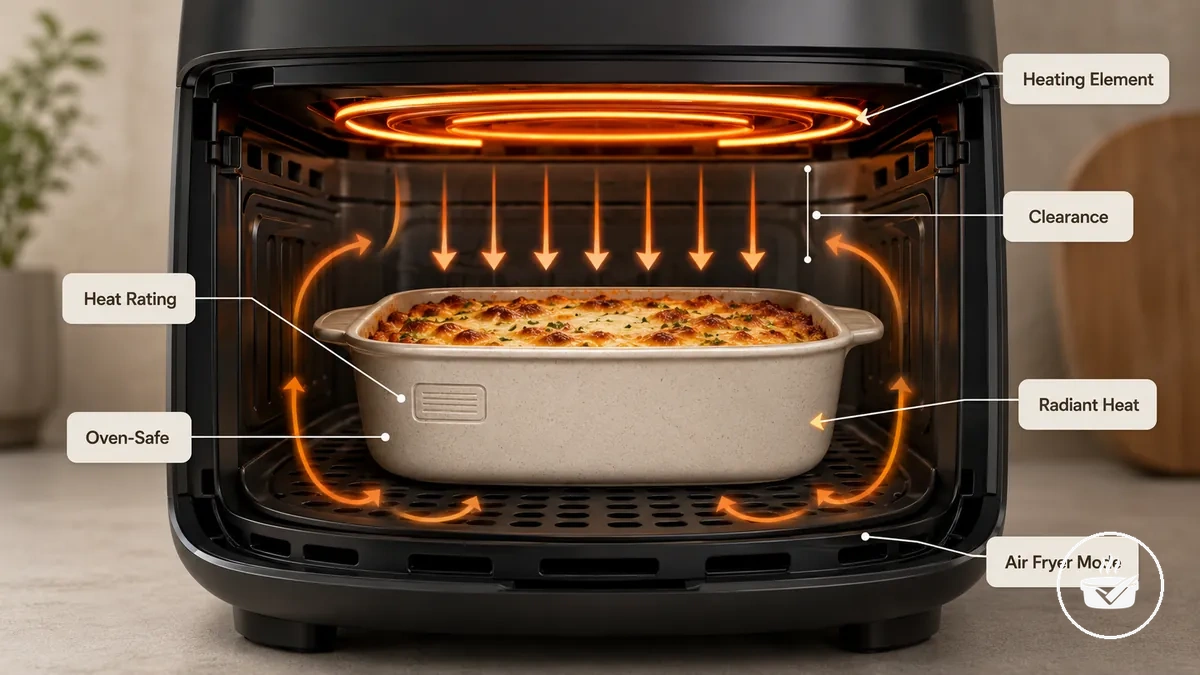
Heat Resistance and Oven-Safe Limits depend on rating, exposure, and mode. An oven-safe label identifies intended oven use within the manufacturer's stated limits, while broil-safe use, if specified, may involve different heat exposure. In an air fryer, radiant heat from the heating element and limited clearance can increase heat intensity when bakeware is positioned too close to the hot zone. The table below summarizes the main heat-related checks before use.
| Heat factor | What to check | Why it matters | Safer decision |
|---|---|---|---|
| Temperature rating | Manufacturer label | Shows the intended heat limit | Stay within the stated rating |
| Oven-safe label | Approved oven use | Confirms intended oven compatibility | Verify before use |
| Broil exposure | Manufacturer guidance | Direct radiant heat may increase risk | Follow the stated instructions |
| Empty preheating | Air fryer manual | May increase thermal stress | Avoid unless instructed |
| Heating-element clearance | Bakeware position | Too little space may increase overheating | Maintain adequate clearance |
Thermal stress can develop when bakeware is exposed to rapid or uneven heating. Depending on the item, its condition, and the heat exposure, this may contribute to warping, cracking, smoking, or surface damage. For example, thin metal may warp under demanding heat conditions, while some glass items may react poorly to sudden temperature changes. If no temperature rating is visible, verify the manufacturer information or avoid using the item until its heat resistance can be confirmed.
Temperature Ratings, Preheating, and Heating Element Exposure
A rated bakeware item can still become risky when it is preheated empty, placed too close to the heating element, or used above its temperature rating. Temperature Ratings, Preheating, and Heating Element Exposure should be evaluated together because the stated rating does not replace the need for proper clearance or the correct air fryer mode. Separate the temperature rating from the way heat is applied.
Temperature Ratings, Preheating, and Heating Element Exposure are separate checks that change heat stress. The image below shows how bakeware placement can affect exposure to the top heating element during preheating and normal air fryer use.
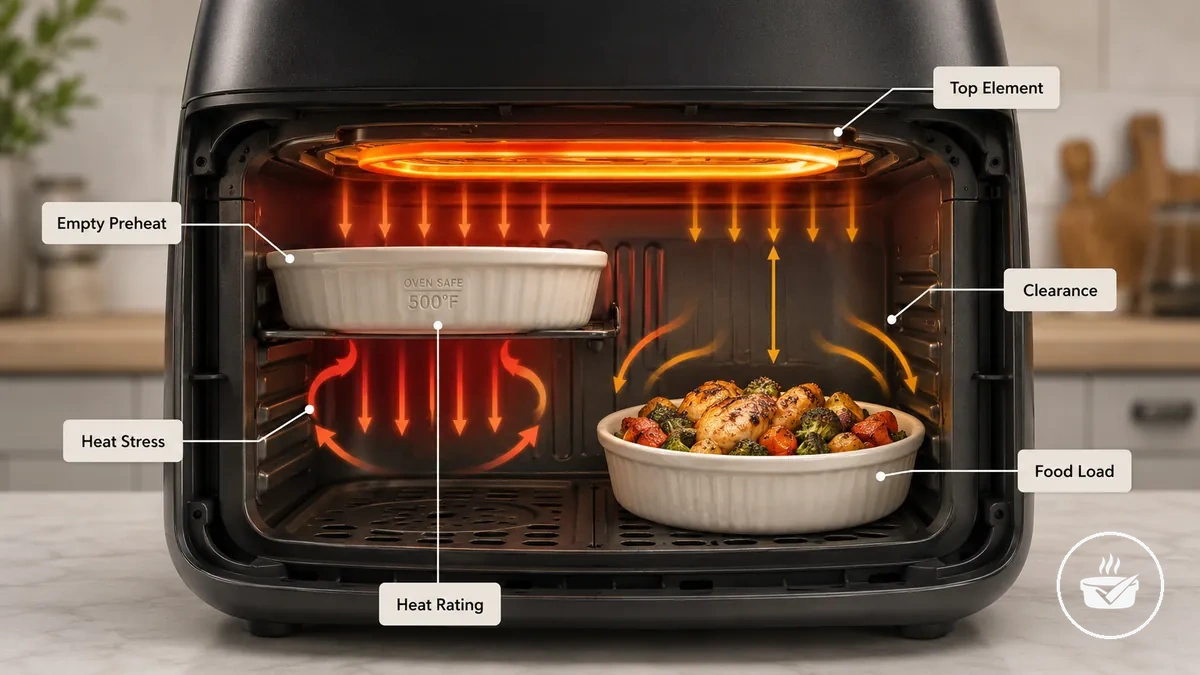
When empty bakeware is exposed during preheating, heat stress may increase because there is no food load to absorb part of the heat. Limited clearance below the heating element or direct broil exposure can increase radiant heat on the bakeware surface. Even when an item remains within its temperature rating, the combination of preheating, top-element proximity, and air fryer mode may increase the likelihood of smoke, warping, or other heat-related effects, depending on the bakeware and its condition.
Temperature Ratings, Preheating, and Heating Element Exposure should be checked separately before use.
- Verify the temperature rating on the manufacturer label.
- Avoid empty bakeware during preheating unless the manufacturer permits it.
- Maintain adequate clearance from the heating element.
- Consider how the food load changes heat stress.
If the temperature rating, placement, or intended use cannot be confirmed, verify the manufacturer information or avoid using the bakeware until those conditions are clear.
Material Safety Conditions for Common Bakeware
Silicone, metal, glass, and ceramic can be safe for air fryer use only when the specific item is heat-rated, food-contact appropriate, intact, and correctly fitted. Material Safety Conditions for Common Bakeware depend on the item's heat rating, surface, condition, and fit rather than the material category alone. The material name by itself is not enough to make a safety decision.
Material Safety Conditions for Common Bakeware compare the safety checks that should be verified before using different bakeware types in an air fryer. The image and table below compare material categories by safety conditions rather than buying preferences, using heat rating, coating or glaze, condition, and thermal shock as the key decision points.
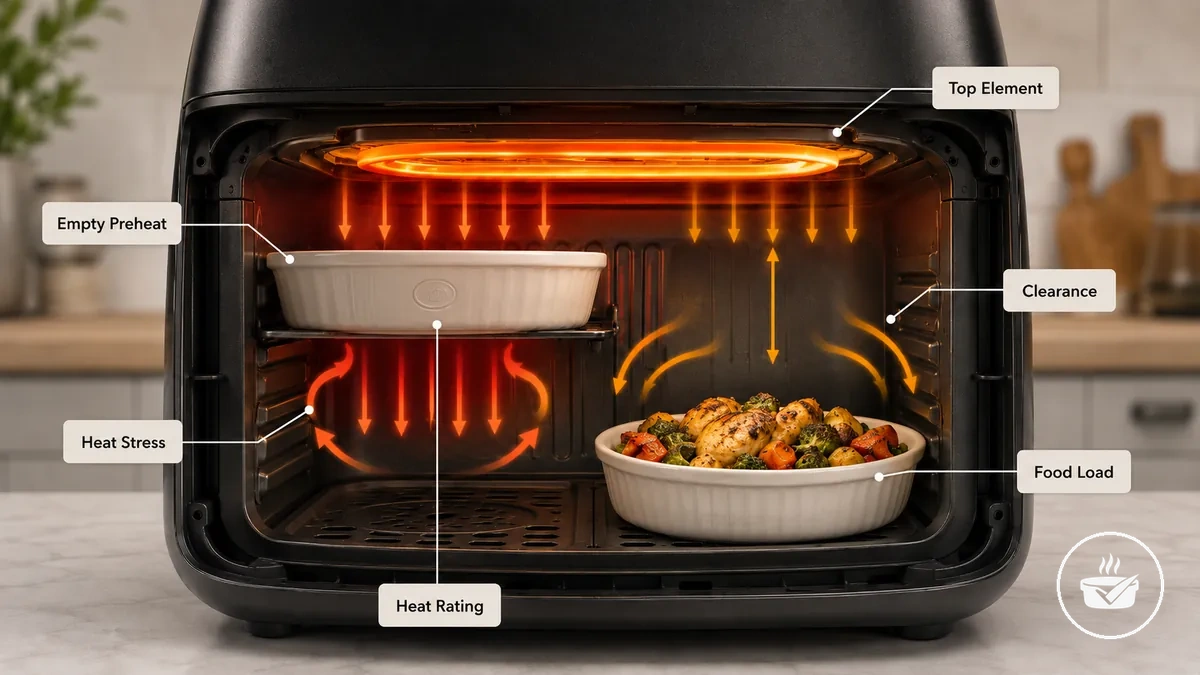
| Material | Safety conditions to verify | Common risk signal | Safer decision |
|---|---|---|---|
| Silicone | Heat-rated, food-contact appropriate, proper fit | Uncertain heat rating or poor placement | Verify the label and maintain clearance |
| Metal | Heat-rated, intact coating, correct fit | Damaged coating or distortion | Use only when the surface remains in good condition |
| Stainless steel or aluminium | Heat-rated, undamaged surface, suitable fit | Warping, damaged coating, or poor clearance | Check the manufacturer label and appliance fit |
| Glass | Heat-rated, free from cracks or chips | Thermal shock or visible damage | Avoid use when condition or heat tolerance is uncertain |
| Ceramic | Heat-rated, intact glaze, undamaged condition | Cracks, chipped glaze, or thermal shock | Confirm the glaze and condition before use |
When silicone or metal bakeware is considered, the material type should be evaluated together with the heat-rated label, food-contact surface, coating condition, and fit. Stainless steel and aluminium may respond differently to heat, but neither should be assumed suitable without verifying the manufacturer label and confirming that the bakeware fits the air fryer without restricting airflow.
When glass or ceramic bakeware is used, structural condition becomes especially important because cracks, chips, damaged glaze, or thermal shock may affect suitability. Material type alone does not determine the safety decision, so heat rating, condition, and manufacturer guidance should be verified together.
For a broader comparison beyond these safety conditions, see air fryer bakeware materials.
Food-Grade Silicone Under Air Fryer Heat
Food-grade silicone can be suitable for air fryer use when its heat rating, food-contact claim, and placement match the air fryer environment. Whether a silicone liner, silicone mould, silicone tray, or silicone pan is appropriate depends on the specific product rather than the material name alone. Verify the food-grade silicone claim and the heat rating before use.
When a silicone accessory is placed inside an air fryer, placement becomes as important as the silicone checks. Empty preheating or allowing a silicone liner or silicone mould to touch the heating element may increase the likelihood of smoke, odour, or heat-related damage, depending on the product and the cooking conditions. Food-Grade Silicone Under Air Fryer Heat depends on the food-contact claim, heat limit, and placement.
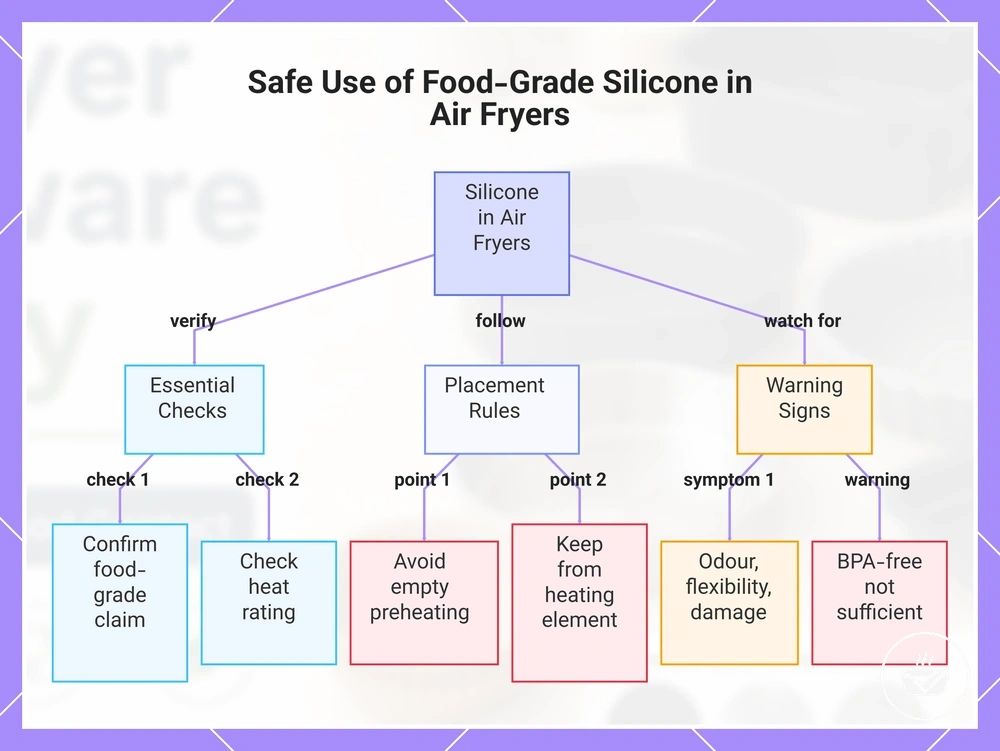
- Confirm the food-grade silicone claim before use.
- Check the maximum temperature against the product's heat rating.
- Avoid empty preheating unless the manufacturer permits it.
- Keep the silicone accessory away from the heating element.
- If unusual odour, excessive flexibility, or visible damage develops, stop using the item until its condition can be verified.
A BPA-free label does not replace the need to verify the silicone checks. A silicone liner and a silicone mould are not automatically equivalent, and odour or flexibility alone should not be treated as proof of safety or danger without confirming the product's rating and condition.
This chart summarizes the key checks, placement rules, and warning signs for safely using food-grade silicone accessories in an air fryer.
Metal Pans and Stainless Steel Trays
Oven-safe metal pans and stainless steel trays can be suitable for an air fryer when they fit properly and do not interfere with heat circulation. Suitability depends on the size, condition, and design of the item rather than the metal alone. Verify the fit and the coating before use.
Metal Pans and Stainless Steel Trays differ in how material attributes influence use under heat. Stainless steel trays typically have an uncoated food-contact surface, while aluminium may respond differently to heat depending on its thickness and conductivity. Coated metal should be checked for scratches or other surface damage, and excessive rim height, sharp edges, or oversized dimensions may reduce airflow if the pan occupies too much of the basket. Thin metal may also be more likely to warp under heat exposure, so proper fit and clearance remain important.
Metal Pans and Stainless Steel Trays need different checks for coating, thickness, and fit.
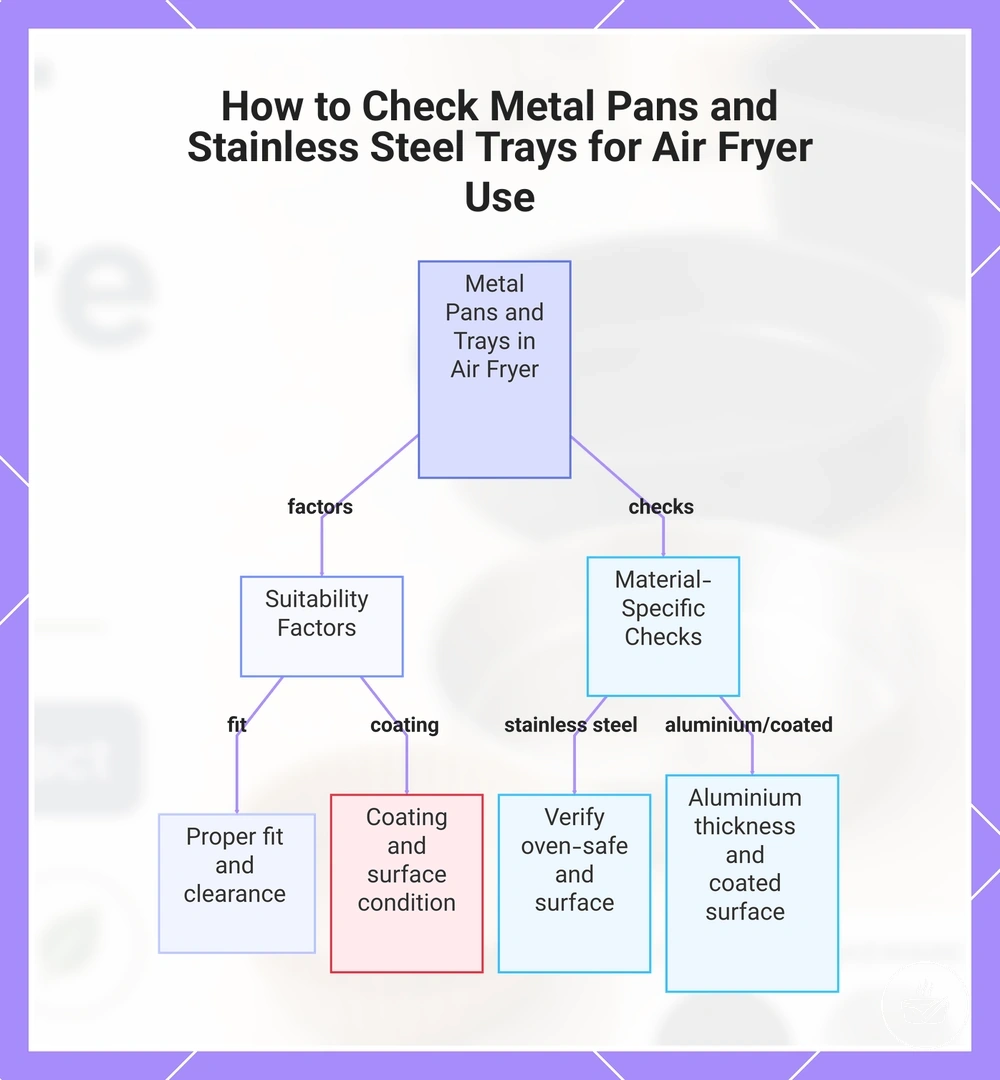
- Stainless steel tray: Verify the oven-safe status and ensure the uncoated food-contact surface remains in good condition.
- Aluminium: Check that the pan has suitable thickness and conductivity for its intended use, and that it fits the air fryer without restricting airflow.
- Coated metal: Avoid using the item if the coating is scratched, peeling, or otherwise damaged.
This chart shows the main suitability factors and material-specific checks for using metal pans and stainless steel trays in an air fryer.
Glass and Ceramic Dishes Under Rapid Heat
Glass dishes and ceramic dishes can be suitable for an air fryer only when they are oven-safe, in good condition, and appropriate for rapid heat exposure. Suitability depends on the specific dish rather than the material alone. Verify the oven-safe label and inspect the physical condition before use.
Rapid heat can increase the likelihood of thermal shock when a glass dish or ceramic dish experiences sudden temperature changes. Borosilicate or tempered glass may be designed for greater heat resistance, but the specific oven-safe label should still be confirmed. A ceramic dish should also have an intact glaze, while chips, cracks, metallic trim, or insufficient air fryer clearance can make the item unsuitable. Avoid transferring a cold dish directly into a hot air fryer unless the manufacturer indicates that this use is appropriate.
Condition checks help distinguish safer use from situations that should be avoided.
| Safer signal | Avoid signal |
|---|---|
| Oven-safe label | No oven-safe label |
| No chips or cracks | Visible chips or cracks |
| No metallic trim | Metallic trim present |
| Gradual temperature change | Cold-to-hot transfer |
A microwave-safe label alone does not confirm that a glass dish or ceramic dish is suitable for an air fryer. If the oven-safe label, glaze, physical condition, or intended use cannot be verified, avoid using the dish until those conditions are confirmed.
Food-Contact Surfaces and Coating Safety
The food-contact surface is the primary safety point because it is the part of the bakeware that comes into direct contact with food during cooking. Food-Contact Surfaces and Coating Safety should be evaluated by checking the condition of the surface, the manufacturer's coating information, and the stated heat limit rather than relying on the material alone. This applies to coated, uncoated, glazed, and silicone surfaces.
Coating claims should be verified rather than assumed. A nonstick, ceramic-coated, stainless, glazed, or silicone food-contact surface may include information about PFAS, PTFE, or other coating characteristics, but these claims should be considered together with the manufacturer's instructions and heat limit. Coating information alone does not determine the safety decision, so the surface condition and intended use should also be verified.
Surface wear can change the assessment of a food-contact surface. Peeling, visible residue, scratches, or other signs of wear may indicate that the surface should be inspected before continued use. The table below summarises the main surface evidence that supports a keep, verify, or avoid decision.
| Surface evidence | What to verify | Risk signal | Decision |
|---|---|---|---|
| Nonstick claim | Manufacturer information and heat limit | Unknown coating or overheating concerns | Verify before use |
| Ceramic-coated claim | Surface condition and heat limit | Peeling or surface wear | Avoid if damaged |
| Uncoated stainless | Clean food-contact surface | Visible residue or damage | Keep if condition is suitable |
| Silicone surface | Food-contact claim and heat limit | Surface damage or deterioration | Verify before use |
| Glazed surface | Intact glaze | Cracks or chipped glaze | Avoid if damaged |
| Worn coating | Extent of surface wear and residue | Peeling or exposed underlying surface | Avoid until replaced or verified |
Air fryer basket coatings and removable bakeware coatings can raise similar questions, but they should not be treated as the same object. Each food-contact surface should be assessed according to its own condition, coating information, and manufacturer guidance.
PFAS, PTFE, and Nonstick Claims
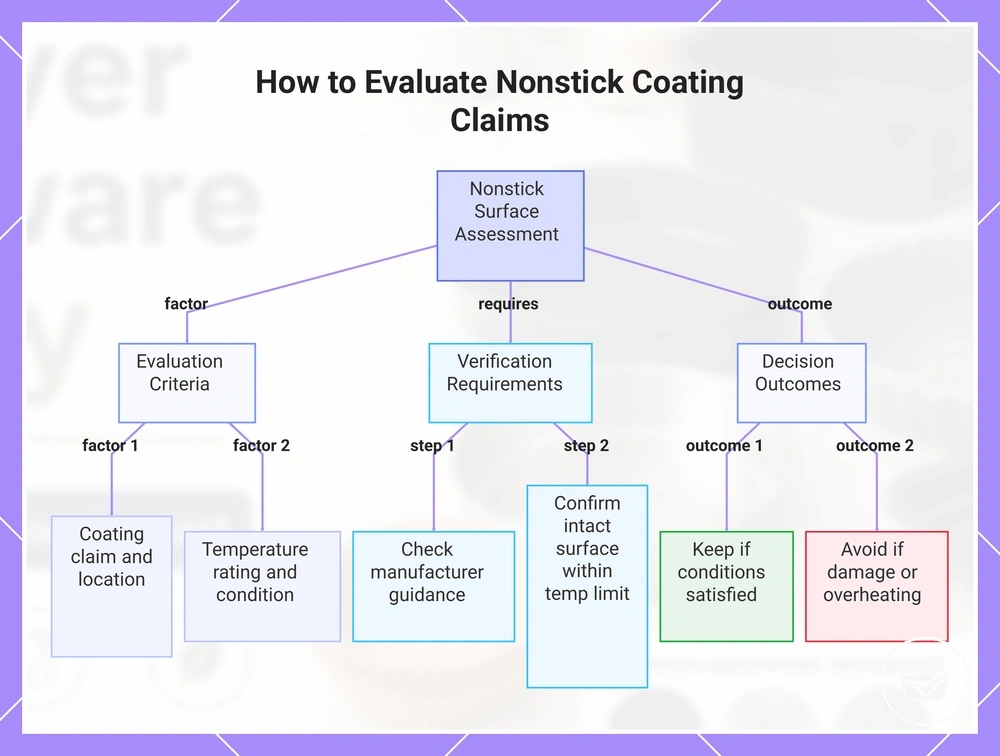
PFAS, PTFE, and nonstick claims describe characteristics of a coating rather than proving that a food-contact surface is suitable for every air fryer use. A nonstick surface should be evaluated by its coating claim, food-contact location, temperature rating, and physical condition. Claim wording is evidence that requires verification, not automatic proof of suitability.
Overheating or visible damage can change the assessment of a nonstick surface even when a coating claim is present. Verify PFAS, PTFE, Teflon, ceramic-coated, or PFAS-free information against the manufacturer's guidance, and confirm that the food-contact surface remains intact within the stated temperature rating. If peeling, coating wear, or other visible damage is present, avoid continued use until the surface can be replaced or its condition verified. Keep, verify, or avoid decisions should be based on the coating claim together with the heat limit and surface condition.
- PFAS: A claim that should be interpreted through manufacturer information rather than by name alone.
- PTFE: A nonstick coating material that should be considered together with the stated temperature rating and product guidance.
- Teflon: A brand name associated with certain PTFE-based nonstick coatings, not a general safety classification.
- Ceramic-coated and PFAS-free: Claim labels that still require verification of the food-contact surface, heat limit, and visible condition before use.
This chart outlines the evaluation factors, verification steps, and decision outcomes for assessing nonstick coating claims on air fryer food-contact surfaces.
Scratched, Peeling, or Worn Food-Contact Surfaces
Scratched, peeling, flaking, rusty, or sticky food-contact surfaces should be treated as safety and replacement signals. A minor cosmetic mark may require inspection, but peeling, rust, loose flakes, or exposed base material are stronger reasons to stop using the bakeware. Peeling, rust, and flaking are stronger stop signals than ordinary surface wear.
Surface wear can change food-contact safety when a scratched surface becomes deeper damage. A worn coating that exposes base material, leaves persistent residue, or shows discolouration should be inspected before further use. Scratched, Peeling, or Worn Food-Contact Surfaces should be assessed by visible evidence, and uncertain conditions should be inspected, verified, or avoided.
- Inspect a scratched surface for exposed base material.
- Avoid continued use if peeling coating is present.
- Treat flaking or loose flakes as a replacement signal.
- Check rust on any food-contact surface.
- Look for persistent residue or sticky areas after normal cleaning.
- Assess discolouration together with other signs of coating wear or damage.
If the visible condition remains uncertain after inspection, review related air fryer bakeware problems before deciding whether to keep using or replace the item.
Fit, Airflow, and Clearance Safety
Safe bakeware can become unsafe or less effective when the pan restricts airflow, crowds the basket, or sits too close to the heating element. Fit, Airflow, and Clearance Safety depend on the relationship between the bakeware and the air fryer rather than on the material alone. Circulation, crowding, and heating-element distance should all be checked before use.
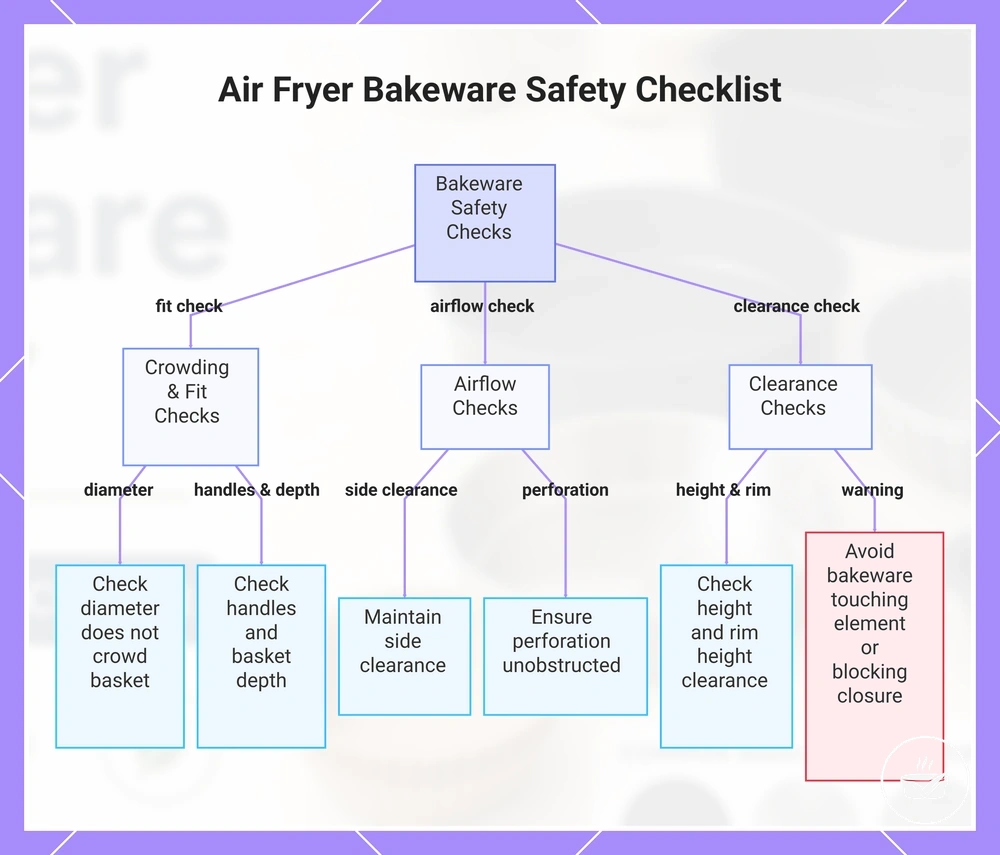
Fit, Airflow, and Clearance Safety are determined by attributes such as diameter, height, rim height, handles, side clearance, basket depth, oven-style shelf position, and perforation. These features influence circulation, available air space, and the risk of obstruction. Because basket shape and bakeware geometry vary between appliances, clearance should be assessed for the specific air fryer rather than assumed. The checklist below helps verify common obstruction risks.
- Check that the diameter does not crowd the basket.
- Confirm the height and rim height leave adequate air space below the heating element.
- Maintain side clearance so airflow can circulate around the bakeware.
- Ensure handles do not prevent the basket from closing or create an obstruction.
- Consider basket depth and oven-style shelf position when using deeper dishes.
- If the bakeware includes perforation, ensure the openings remain unobstructed.
An oversized cake pan may reduce airflow around the food, while a tall dish may sit closer to the heating element than intended. Depending on the appliance and bakeware geometry, restricted circulation may contribute to undercooking, scorching, or uneven heating. Bakeware that touches the heating element or prevents the basket from closing should not be used.
If the bakeware fits but airflow remains uncertain, review how to use bakeware without blocking airflow before cooking.
This chart shows the three main safety checks—fit, airflow, and clearance—that ensure bakeware is safe to use in an air fryer.
When Air Fryer Bakeware Should Not Be Used
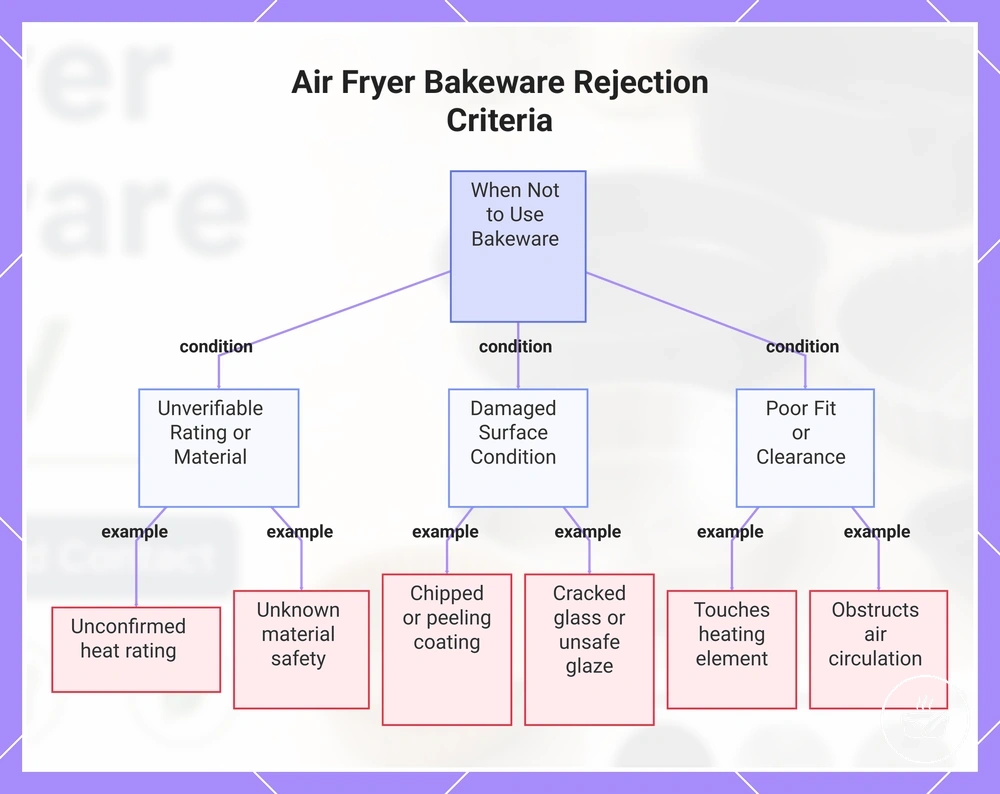
Air fryer bakeware should not be used when its heat rating, food-contact status, surface condition, or fit cannot be verified. A bakeware item with an unverifiable rating, damaged surface, or unsuitable fit should be avoided until it can be confirmed or replaced. Missing rating, surface condition, and fit are clear rejection criteria.
Missing rating, unknown material, or poor clearance are practical reasons to avoid using a bakeware item. If the heat rating cannot be confirmed or the material cannot be identified for its intended use, the item should not be used in the air fryer. Bakeware that touches the heating element or creates an obstruction should also be rejected. When these conditions cannot be verified, the safer decision is to avoid using the item.
A chipped dish, peeling nonstick surface, damaged coating, cracked glass dish, or unsafe glaze should be treated as a replacement cue rather than continued use. Damage to the food-contact surface may affect the suitability of the bakeware, and peeling nonstick coatings or cracked glass are stronger reject signals. If the condition cannot be verified with confidence, replacing the damaged item is generally a safer next step.
Random accessories, pans with poor clearance, or bakeware that contacts the heating element should not be used because they may interfere with normal air circulation or safe positioning. If the material, condition, or fit remains uncertain, avoid using the item and replace it with bakeware that clearly meets the required safety criteria.
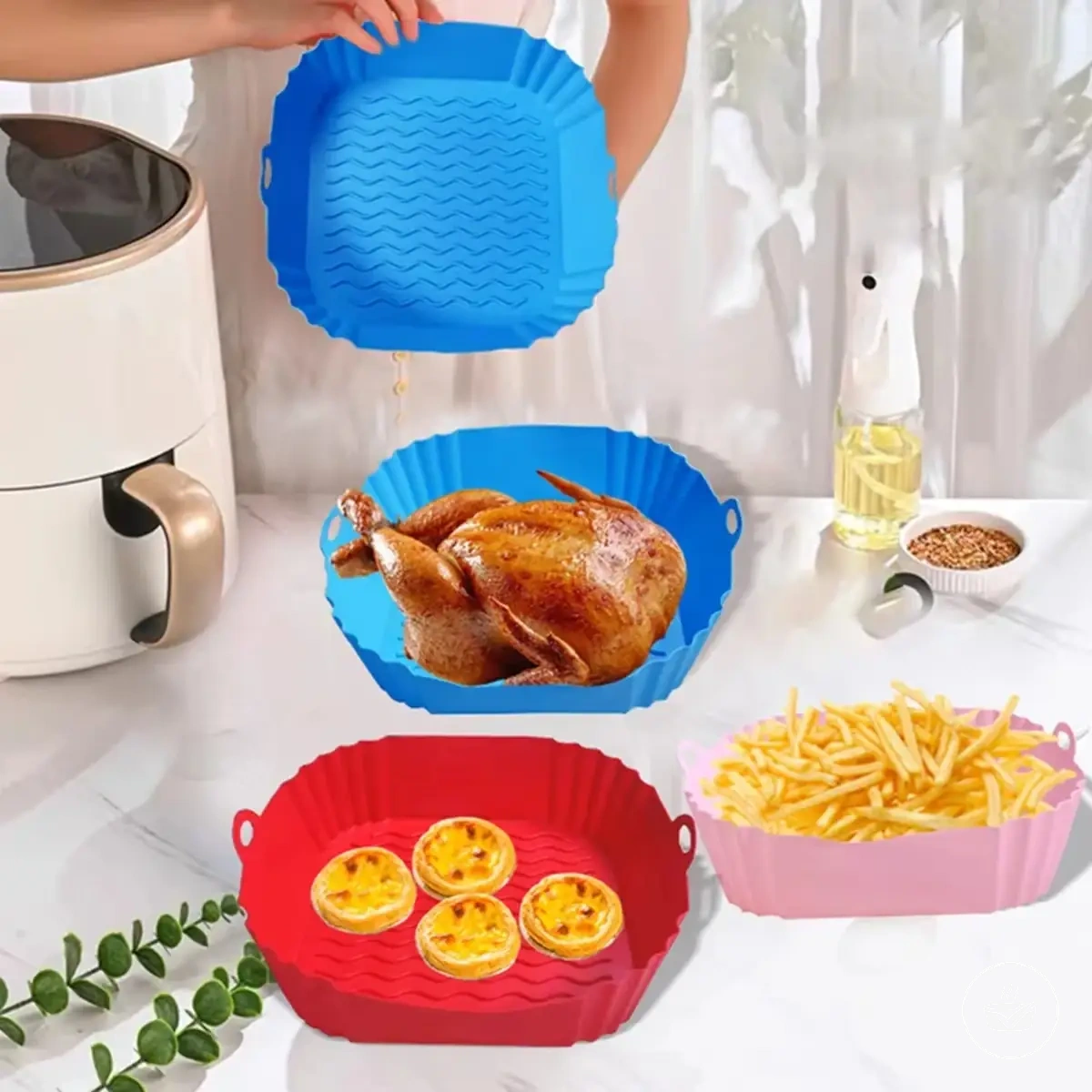
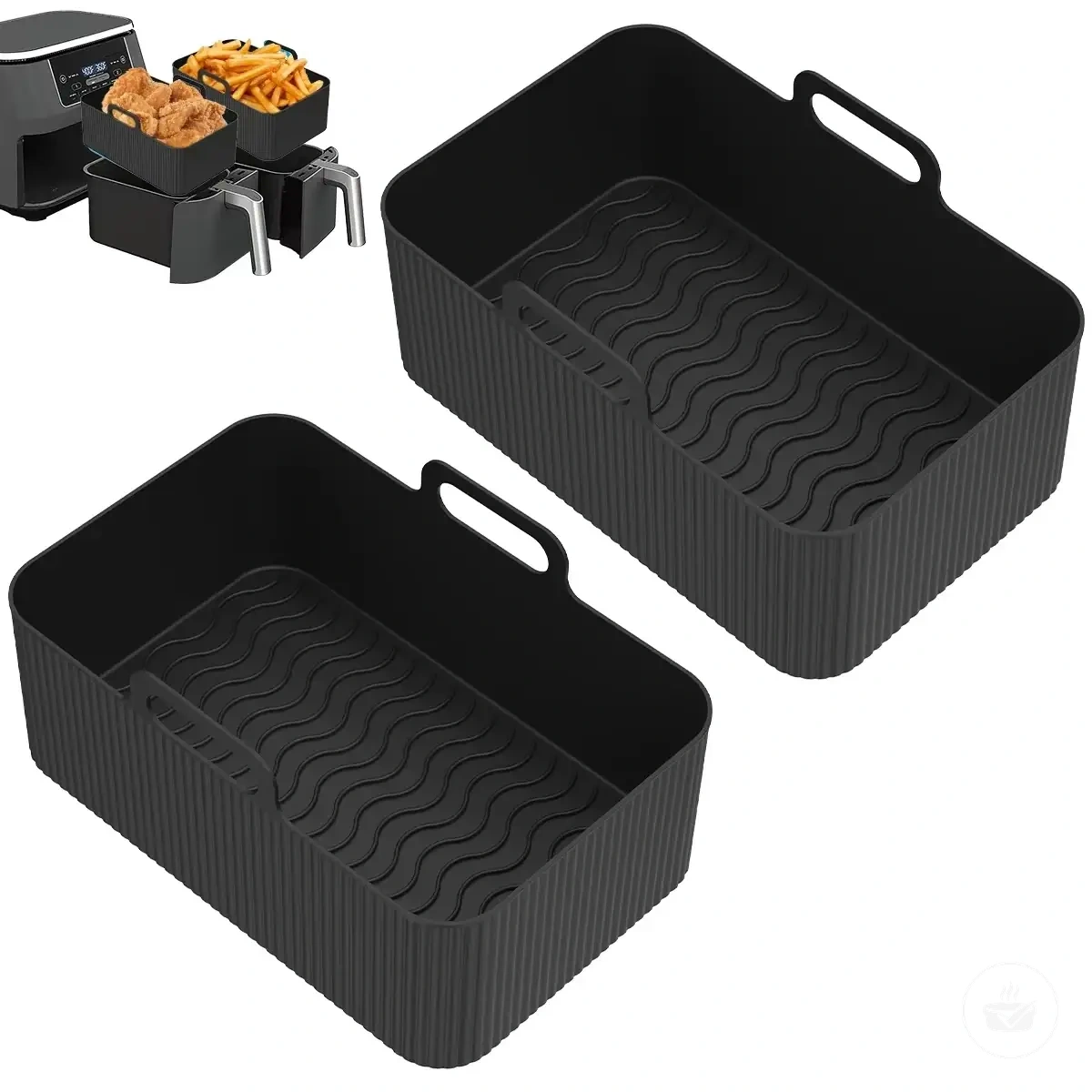
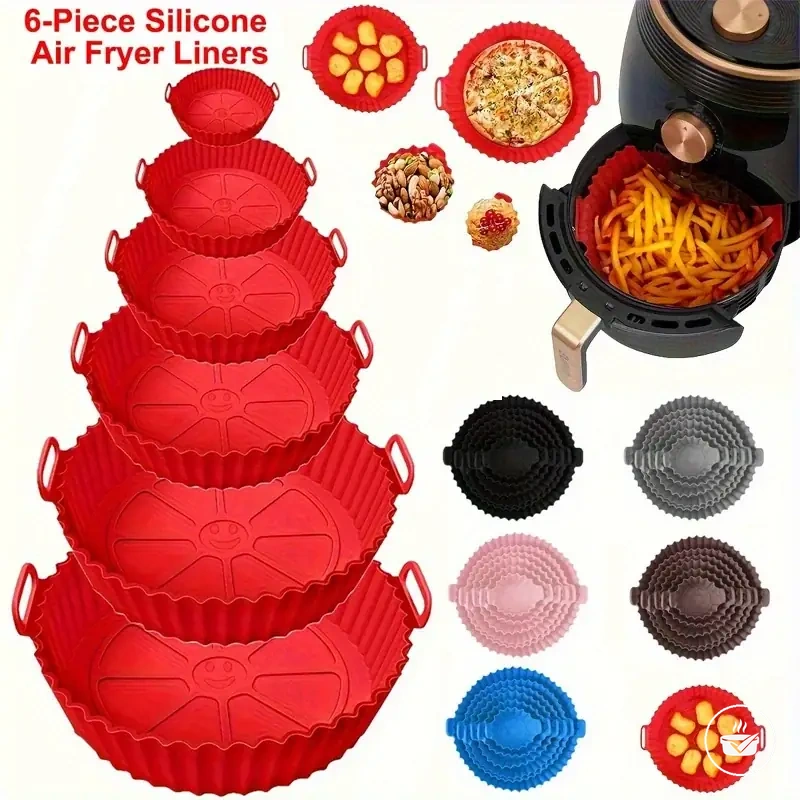
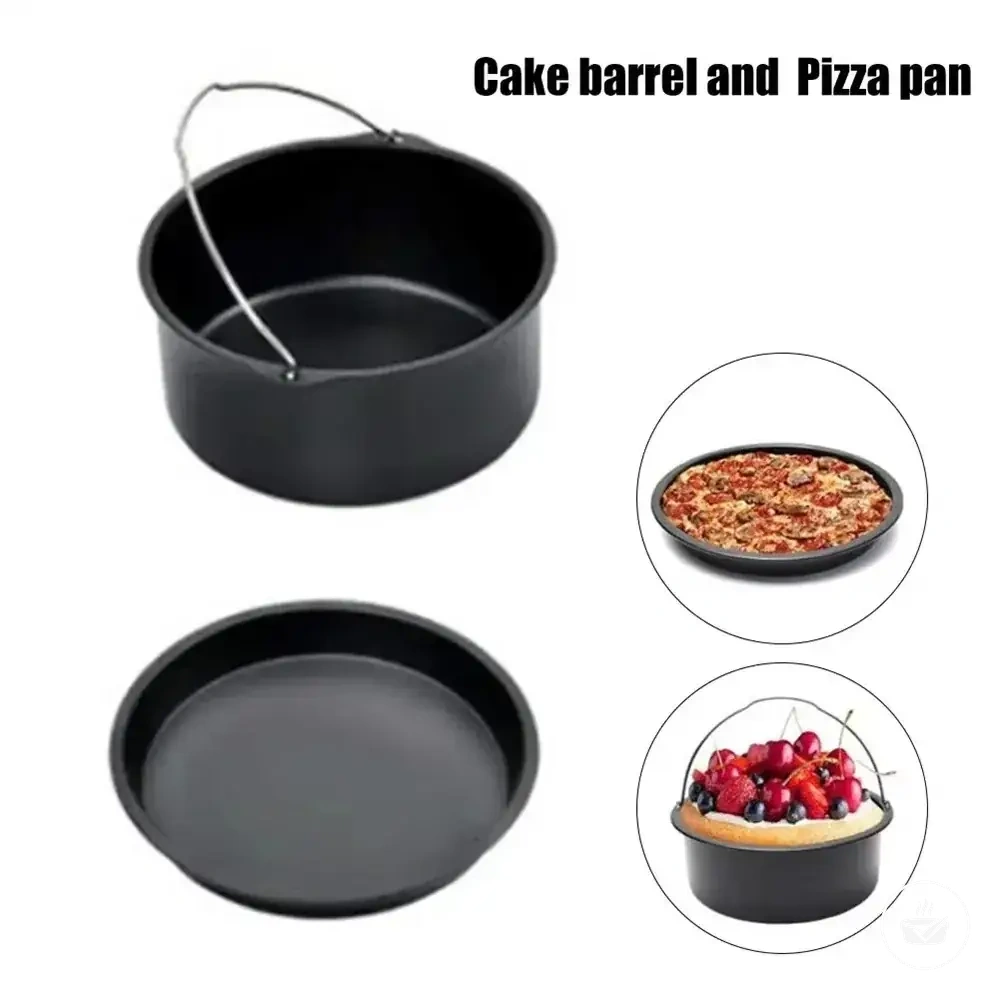
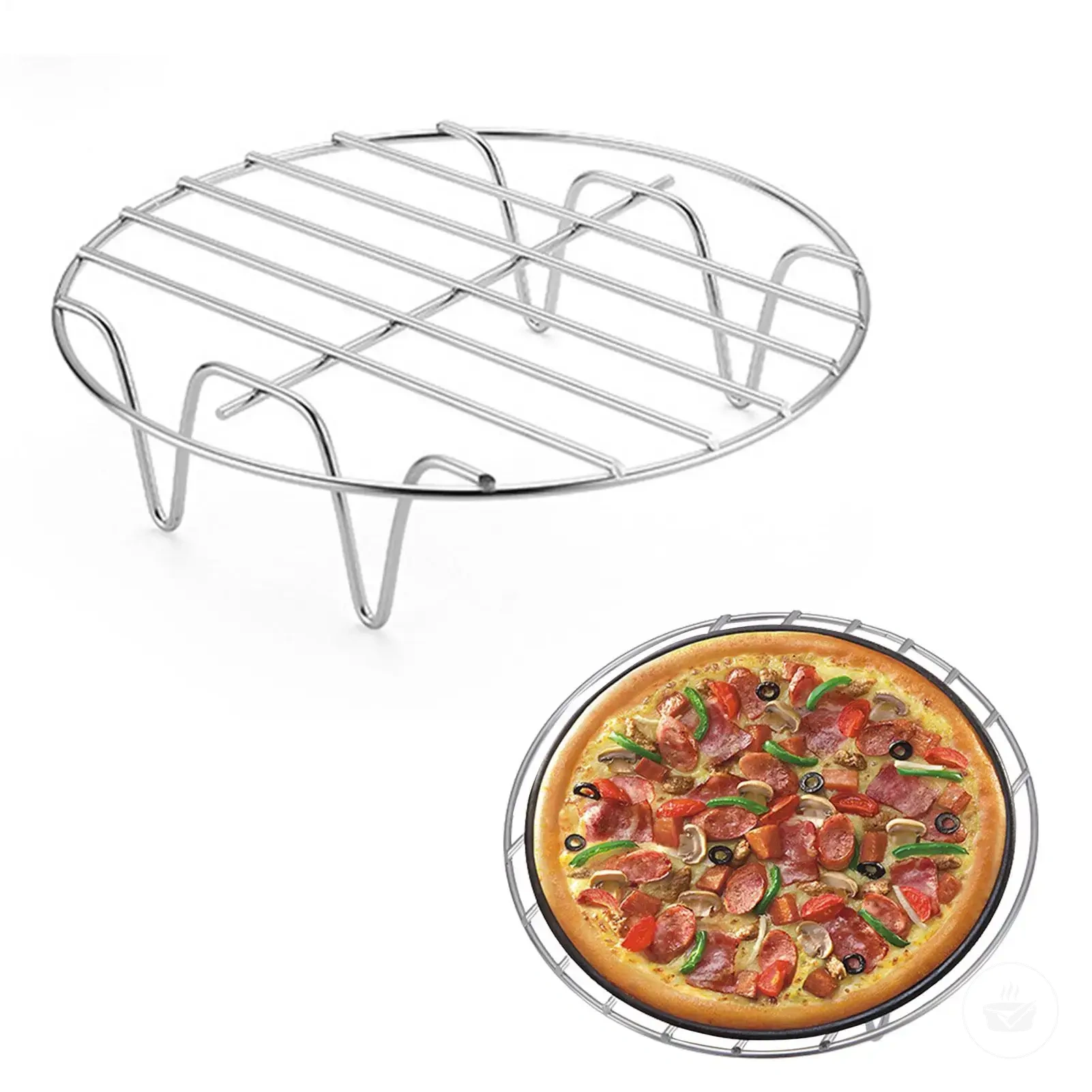
Here are product examples that may make comparison easier. Before buying, always review the compatibility criteria, essential features, and product details.
This chart shows the three main rejection criteria for air fryer bakeware: unverifiable rating or material, damaged surface, and poor fit or clearance.