
Air Fryer Bakeware vs Regular Bakeware in an Air Fryer
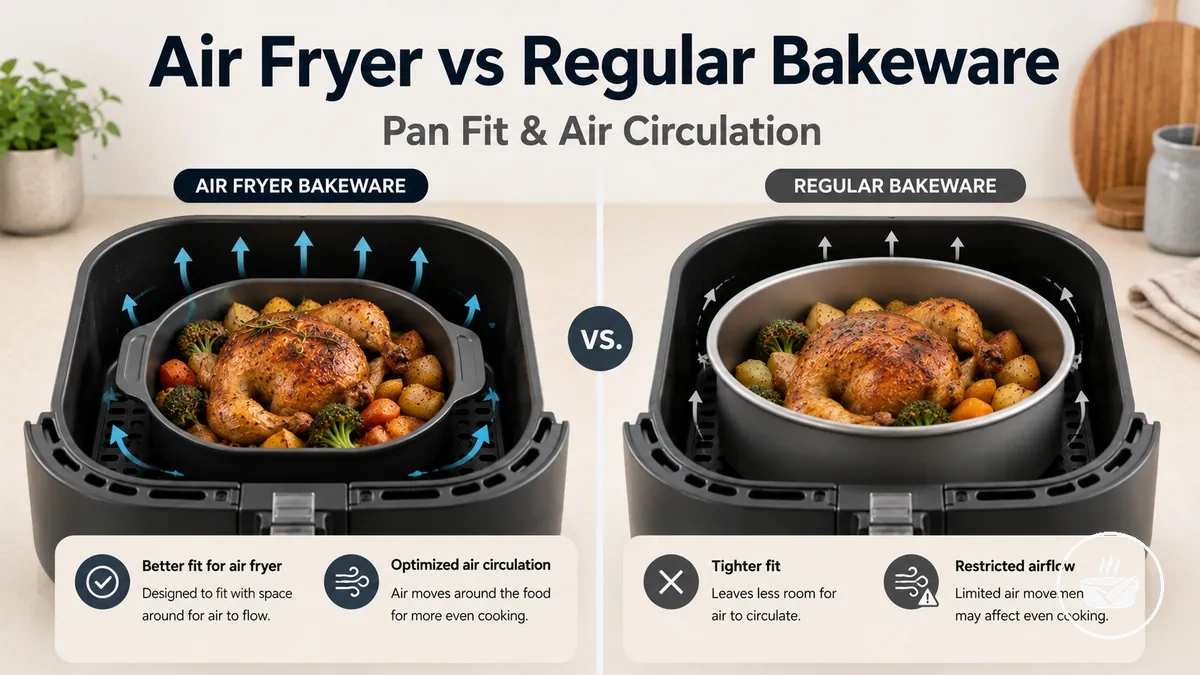
Air fryer bakeware and regular bakeware compare by suitability, not by a universal need for special pans. Special pans are not always required when regular bakeware is oven-safe, fits the basket or drawer correctly, and leaves enough room for air to move around the food.
Regular bakeware may work in an air fryer when the material and any coating, handle, lid, or loose part are supported for the heat exposure. Physical fit still needs a separate check because a pan can fit inside the appliance yet reduce circulation, browning, or removal space.
Air fryer-specific bakeware can add decision value when its shape, lower sides, handling design, or basket-sized footprint reduces friction. That value depends on the air fryer style, the recipe type, the pan depth, and whether the food needs exposed airflow for browning or crisping.
| Comparison point | Regular bakeware | Air fryer bakeware |
|---|---|---|
| Need | May be enough if it is oven-safe, correctly sized, and suitable for the recipe. | May be useful when a purpose-sized pan improves handling, clearance, or consistency. |
| Fit | Depends on footprint, depth, handles, and removal space. | May suit smaller baskets or trays when the shape matches the appliance and use case. |
| Airflow | Can be limited by tall sides, solid bases, or tight placement. | May preserve circulation better when the shape leaves more open space. |
| Results | May change browning, moisture, or timing depending on material and pan shape. | May help with repeatable results when the design matches the food and appliance style. |
The decision boundary is simple: check compatibility before buying a new pan or substituting regular bakeware. Oven-safe status, suitability, airflow allowance, and expected baking results should come before any purchase or substitution decision.
Air fryer bakeware is a fit-and-airflow optimization, not a strict requirement
Air fryer-specific bakeware is not required simply because it is labelled for air fryers. The deciding factors are whether regular bakeware is oven-safe for the intended use, fits without crowding the basket or tray, leaves enough circulation space, and can be handled safely.
The image below compares optimization signals, such as pan shape and open space, rather than treating air fryer bakeware as a mandatory replacement for regular bakeware.
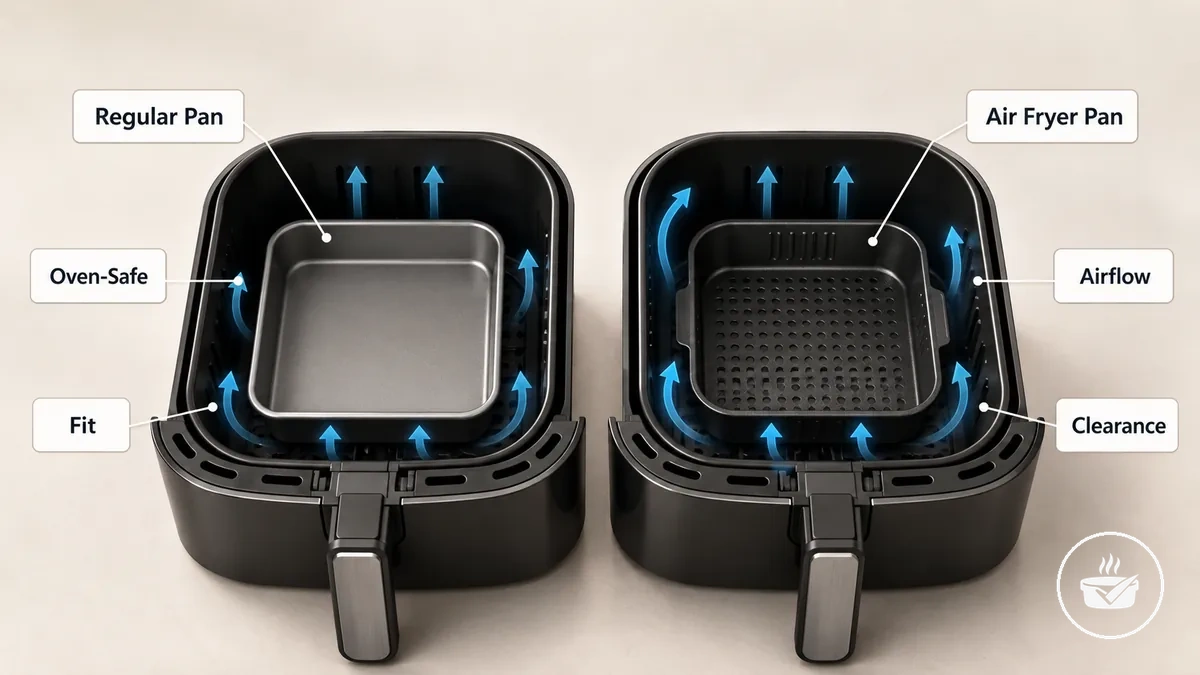
Regular bakeware may be suitable when its material, footprint, depth, and edges match the appliance and recipe. Air fryer-specific bakeware may add value when a purpose-sized shape improves basket clearance, handling, airflow, or baking consistency under those same conditions.
| Pan type | Fit, airflow, and handling | Decision effect |
|---|---|---|
| Regular bakeware | Depends on oven-safe status, pan size, side height, and available airflow. | May be appropriate when it fits properly and supports the intended baking result. |
| Air fryer-specific bakeware | Usually focuses on basket-friendly dimensions, clearance, or easier handling. | May improve convenience or consistency when fit or airflow limits regular bakeware. |
| Accessory-style pans | Accessory status alone is not the deciding factor because suitability still depends on fit, heat tolerance, airflow, and recipe type. | Should be evaluated by compatibility rather than category alone. |
After comparing the broader categories, you can continue with the air fryer bakeware hub for related guidance on bakeware types and applications.
When regular bakeware can go in an air fryer
Regular bakeware can go in an air fryer only when it is oven-safe, sized correctly for the basket or tray, and free of parts that may be unsuitable for the cooking conditions. Physical fit must also leave enough space for air circulation because a pan that fits inside the appliance may still reduce cooking performance if it restricts airflow.
The checklist below groups the main compatibility checks before using regular bakeware in an air fryer. The image highlights these suitability conditions rather than suggesting that every baking dish or pan is appropriate.
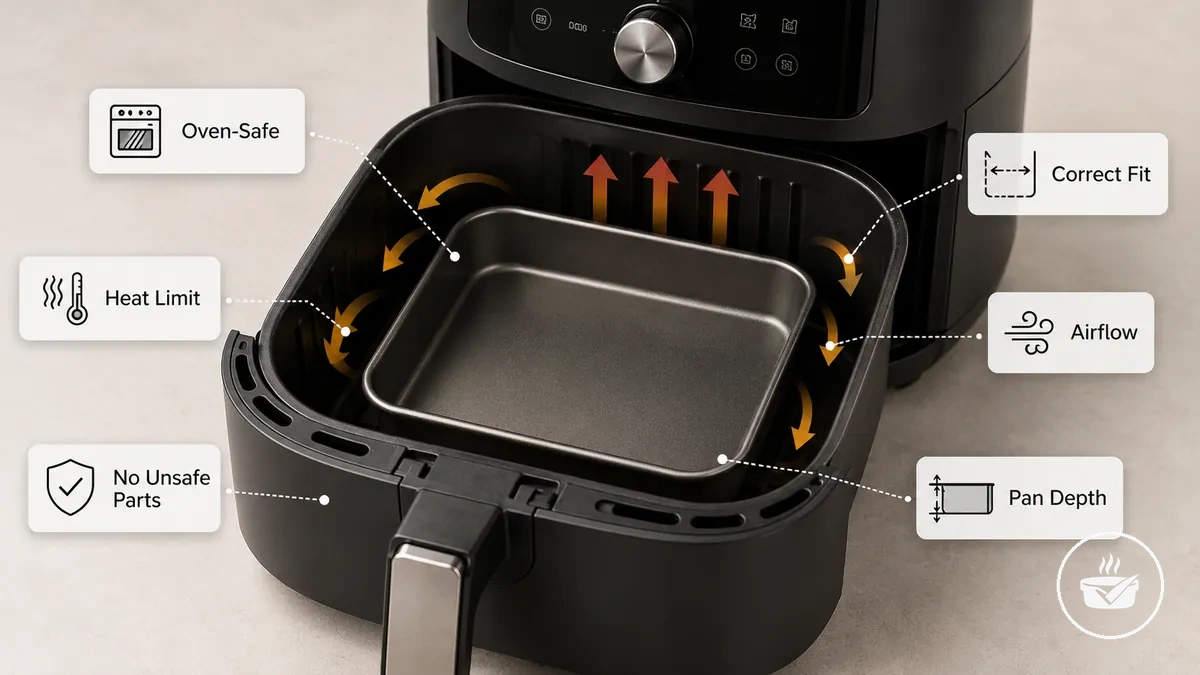
- Material: Confirm that the bakeware material is intended for oven use.
- Oven-safe label: Verify the manufacturer identifies the bakeware as oven-safe.
- Temperature guidance: Follow any stated heat limits when they are provided.
- Exposed parts: Check that handles, lids, coatings, or other attached components are suitable for the intended heat.
- Pan depth: Deep cake tins or baking dishes may reduce the space available for circulating air.
- Airflow clearance: Leave enough open space around the bakeware to support airflow during cooking.
Cake tins, baking dishes, and other regular pans may be compatible when they satisfy these conditions. For more detail about suitable bakeware categories and materials, see what bakeware can be used in an air fryer.
If a pan fits inside the basket but still limits airflow, compatibility remains the deciding factor. When another pan may be needed because these conditions cannot be met, see baking pan substitutes for alternative approaches.
Oven-safe pans, cake tins, and baking dishes
Oven-safe pans, cake tins, and baking dishes differ by shape, depth, and surface area, so compatibility depends on how each item fits inside the air fryer while leaving enough room for airflow. The image below separates these common bakeware types by their shape and fit rather than implying they are all equally suitable.
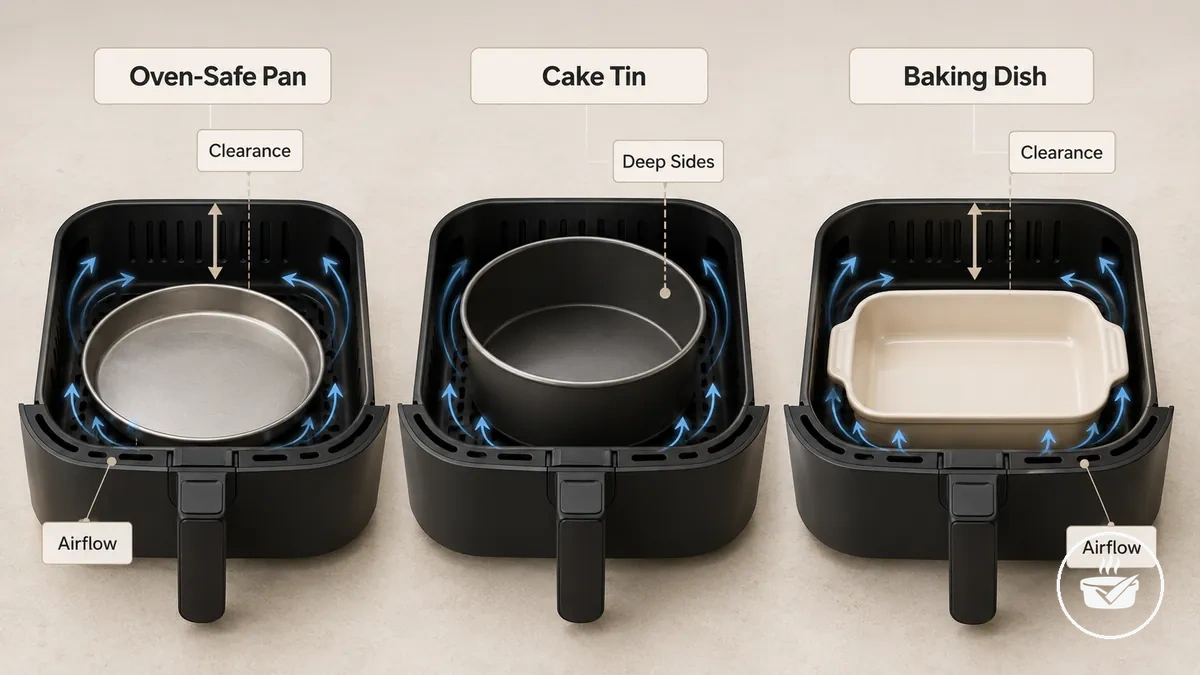
- Oven-safe pans: Shallow pans may be suitable when they fit comfortably inside the basket and leave open space around the edges for air circulation.
- Cake tins: Cake tins may be suitable when they are oven-safe and leave enough clearance, although deeper sides can reduce airflow around the food.
- Baking dishes: Baking dishes may work when their footprint and depth fit the air fryer without occupying most of the cooking space.
- Large or deep pans: A pan that fits physically may still limit airflow if its depth or wide surface area restricts circulation around the food.
Temperature ratings and sudden heat changes
Temperature rating and sudden heat change both need checking because an oven-safe label alone does not confirm that bakeware is suitable for every air fryer use. The image below highlights temperature-rating and thermal-change considerations that can affect compatibility for different materials.
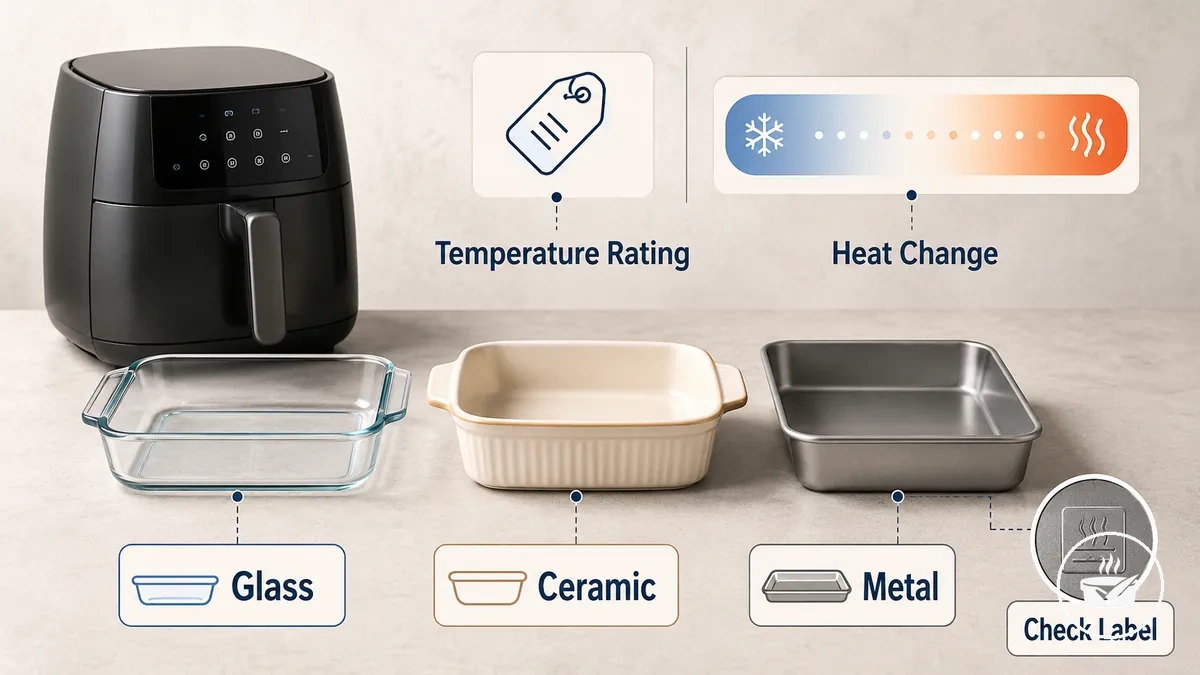
- Temperature rating: Check the manufacturer's temperature guidance rather than assuming every oven-safe item is suitable for all cooking conditions.
- Material: Heat tolerance can vary by material, so suitability depends on the bakeware and its intended use.
- Sudden heat change: Rapid temperature changes may increase the likelihood of heat-related damage in materials that are sensitive to thermal shock.
- Glass and ceramic: Glass and ceramic bakeware may require additional care because sudden temperature changes can increase the risk of cracking.
- Coatings and handled dishes: Coatings or attached handles may have different heat tolerances than the main body of the bakeware, so they should also be considered.
- Heat exposure: Unsuitable heat exposure may contribute to cracking, warping, or coating damage depending on the material and construction.
Fit and airflow differences between air fryer pans and regular pans
Fit and airflow determine whether an air fryer pan and a regular pan behave differently during cooking. A pan may fit inside the appliance but still reduce air circulation, so browning and cooking results can vary depending on side height, base design, available clearance, basket shape, and the style of air fryer.
Physical fit means the pan can be placed inside the appliance, while airflow fit refers to leaving enough open space for circulating hot air. Basket-style and oven-style air fryers may respond differently because their cooking spaces and airflow paths vary. For broader guidance across appliance designs, see basket and oven-style compatibility.
| Design factor | Regular pans | Air fryer pans |
|---|---|---|
| Footprint | May cover more of the cooking area, depending on pan size. | Often uses a footprint that leaves more surrounding space. |
| Side height | Higher sides may reduce airflow around the food. | Lower sides may allow more direct air circulation. |
| Base type | Solid bases may reduce airflow beneath the food. | Base design may better support air movement, depending on the pan. |
| Clearance | Physical fit does not always preserve airflow clearance. | May provide more clearance when matched to the appliance. |
| Basket shape | Performance may vary when the pan closely matches the basket shape but leaves little open space. | Shape may better follow the cooking area while preserving airflow, depending on the appliance. |
| Appliance style | Results depend on whether the pan is used in a basket-style or oven-style air fryer. | Design may better suit one appliance style, but suitability still depends on available space and airflow. |
Pan footprint, depth, and basket clearance
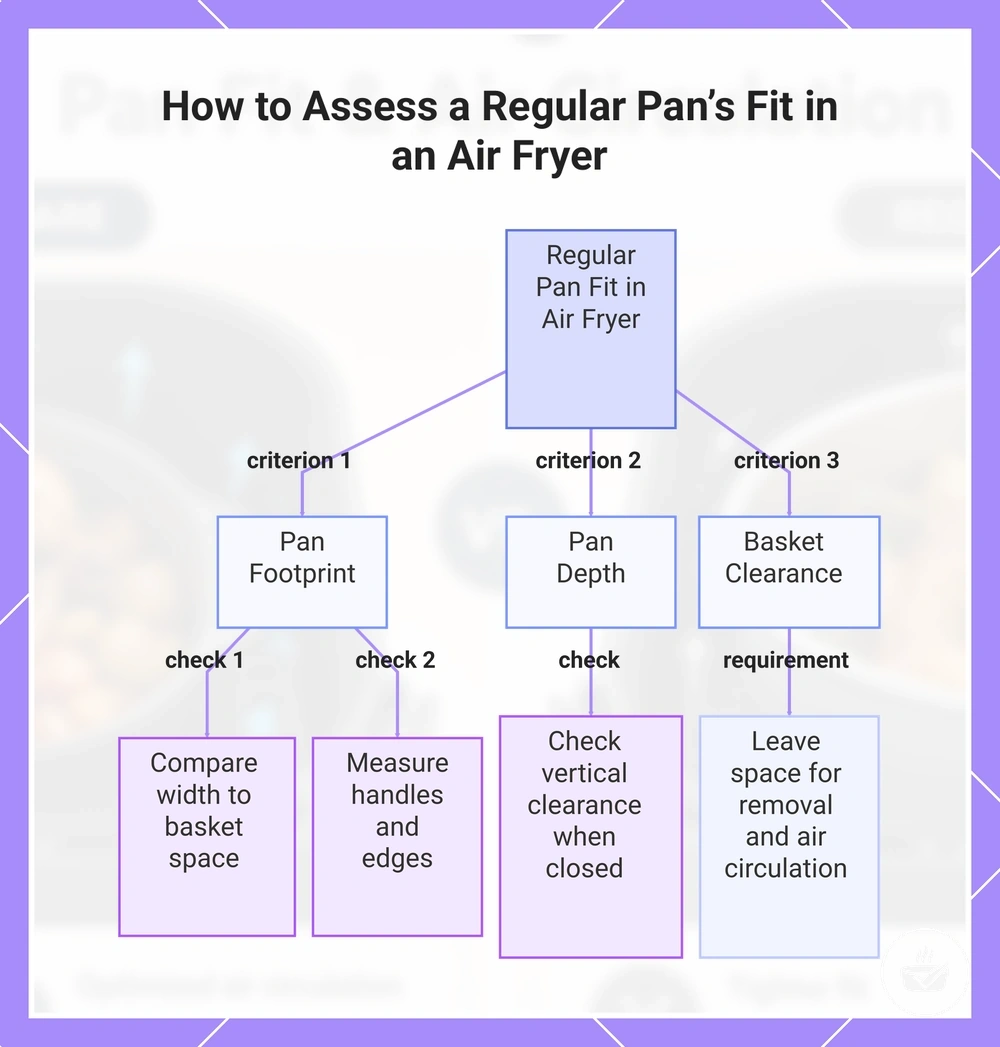
Pan footprint, depth, and basket clearance determine whether a regular pan is suitable for an air fryer basket or drawer. A pan may appear to fit, but handles, depth, or limited surrounding space can reduce removal clearance or leave too little room for air circulation.
Use the criteria below to assess air fryer bakeware fit before placing a regular pan inside the appliance.
- Pan footprint: Compare the pan width or diameter with the available basket or drawer space instead of relying on visual fit alone.
- Pan depth: Confirm that the pan depth leaves enough vertical clearance when the basket or drawer is closed.
- Basket clearance: Leave enough space around the pan for placement, easy removal, and air circulation.
- Handles and edges: Measure handles, rims, or flared edges as part of the overall footprint because they may affect usable clearance.
- Example: A pan may seem to fit inside the basket, but wide handles can prevent smooth basket movement or reduce the clearance needed for safe removal.
This chart shows the key criteria to check before placing a regular pan in an air fryer basket or drawer, including footprint, depth, and clearance.
Low sides, solid bases, and air circulation
Low sides, solid bases, and air circulation influence how much of the food surface is exposed to moving hot air. Pan shape may change browning, moisture, or crisping because side height, base design, and exposed surface interact differently across recipe types and appliance styles.
Low sides may allow more air to reach exposed food surfaces, while taller sides can retain more moisture around enclosed foods. A solid base may reduce air movement beneath the food, but it can still be suitable for enclosed baking where full underside exposure is less important.
| Shape attribute | Air movement | Possible cooking effect |
|---|---|---|
| Low sides | May increase surface exposure to circulating air. | Can support browning or crisping when the food relies on exposed surfaces. |
| Taller sides | May reduce direct airflow around the food. | Can retain more moisture, which may suit enclosed baking. |
| Solid base | May limit airflow beneath the food. | May still suit cakes, casseroles, or other enclosed baked foods. |
| Edge clearance | Allows air to move around the pan more freely. | May improve surface exposure when sufficient space surrounds the pan. |
Material and coating differences that affect suitability
Material and coating suitability depends on more than heat resistance alone. Check that the bakeware is identified as oven-safe or follows the manufacturer's guidance, then confirm that coatings, handles, lids, and loose parts are also suitable for the intended use. A material may tolerate heat while the overall bakeware is still unsuitable because of fit, airflow, or attached components.
Material affects how bakeware responds to heat, while coatings and attached parts can add separate suitability conditions. The comparison below separates material suitability from coating and component considerations.
| Item | Attribute | Condition to check | Decision outcome |
|---|---|---|---|
| Metal | Heat-tolerant material | Confirm it is oven-safe and appropriate for the intended use. | May be suitable when the complete bakeware also meets fit and component checks. |
| Glass | Heat-resistant material | Follow manufacturer guidance and avoid unsuitable heat exposure. | May be suitable when the bakeware and its use conditions are appropriate. |
| Ceramic | Rigid construction | Use only when identified as oven-safe for the intended application. | Suitability still depends on the complete bakeware, not only the material. |
| Silicone | Flexible material | Verify that it is intended for oven use. | May be suitable when it also fits the appliance and recipe. |
| Nonstick coating | Surface coating | Check that the coating remains suitable and undamaged. | Coating condition may influence whether continued use is appropriate. |
| Handles, lids, and loose parts | Attached components | Confirm each part is suitable for the intended heat exposure. | An unsuitable component may change the overall suitability of the bakeware. |
Metal, glass, ceramic, and silicone in air fryers
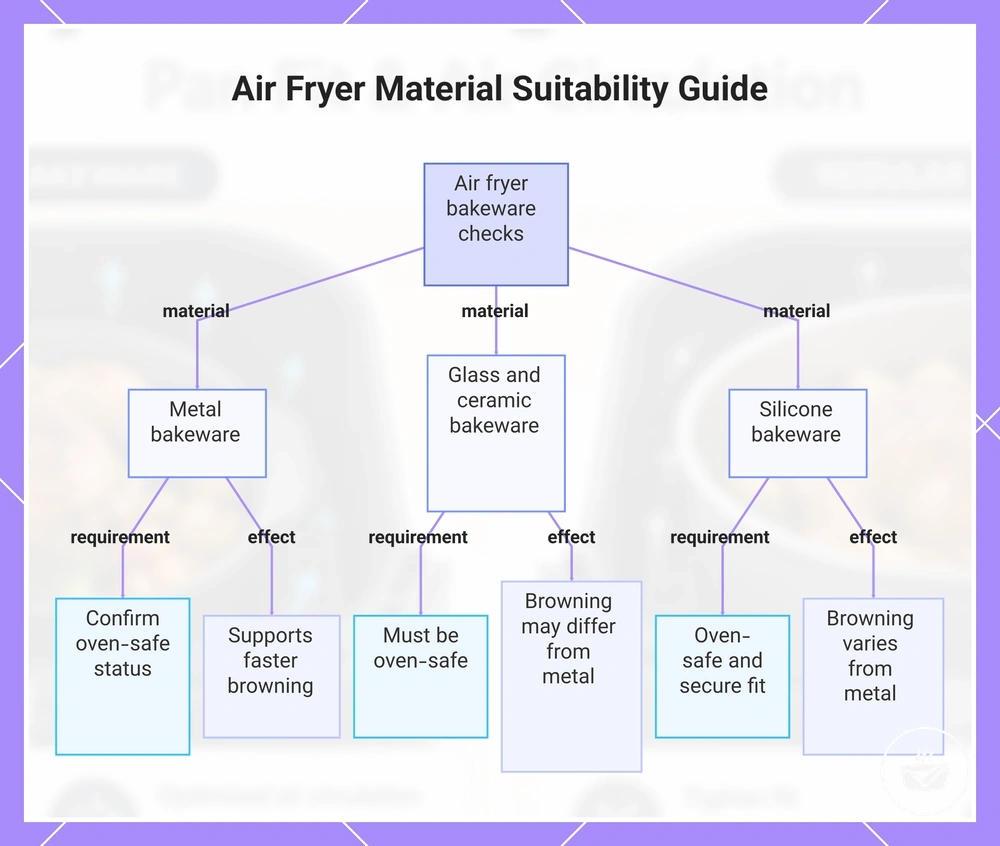
Metal, glass, ceramic, and silicone each require a different suitability check because they differ in heat transfer, heat retention, rigidity, and response to heat exposure. Oven-safe status should be confirmed first, while the final choice still depends on the recipe, pan fit, and any manufacturer guidance.
- Metal: Metal may transfer heat more quickly, which can support faster browning. Suitability still depends on the bakeware being oven-safe and appropriate for the intended use.
- Glass: Glass may retain heat longer than metal and can warm more gradually. Use it only when it is identified as oven-safe, and avoid unsuitable heat changes where manufacturer guidance advises caution.
- Ceramic: Ceramic is generally rigid and may retain heat well, but suitability depends on oven-safe status and following manufacturer guidance. Browning may differ from metal because heat transfer characteristics vary.
- Silicone: Silicone bakeware may provide flexible release, but it should be intended for oven use and fit securely inside the air fryer. Browning may vary because silicone does not conduct heat in the same way as metal.
This chart shows the key suitability checks and properties for metal, glass, ceramic, and silicone bakeware in air fryers.
Nonstick coatings, handles, lids, and loose parts
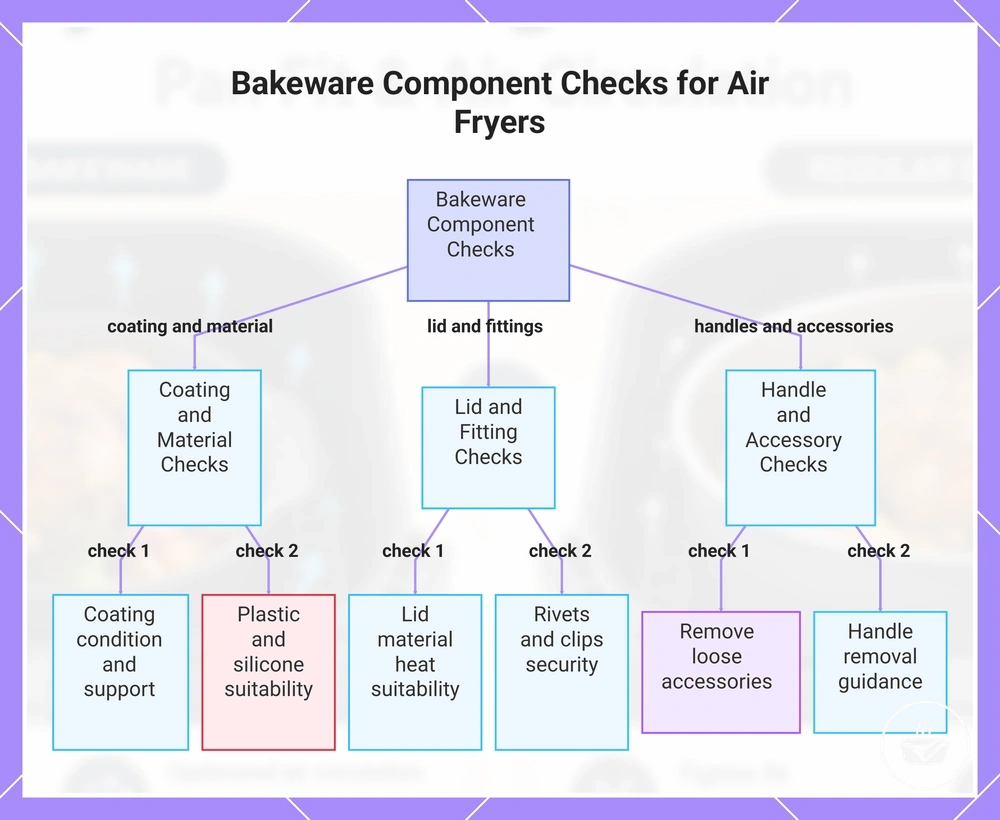
Nonstick coatings, handles, lids, and loose parts can affect the suitability of otherwise oven-safe bakeware because individual components may respond differently to heat or interfere with airflow. Check each component separately before using the bakeware in an air fryer.
- Nonstick coatings: Use bakeware only when the coating is in suitable condition and the manufacturer supports the intended heat exposure.
- Plastic or silicone parts: Avoid plastic parts when the manufacturer does not identify them as suitable for the intended heat. Silicone parts should also be supported for oven use.
- Lid material: Confirm that the lid is suitable for the intended heat exposure. A covered dish may also trap steam or reduce air circulation.
- Rivets and clips: Check fixed or removable fittings to ensure they remain secure and suitable for the intended cooking conditions.
- Loose accessories: Remove or secure loose pieces that are not intended for air fryer use because they may obstruct airflow or move during cooking.
- Removable handles: If handles can be detached, follow the manufacturer's guidance to determine whether they should be removed before cooking.
This chart shows the key component checks to ensure oven-safe bakeware is suitable for air fryer use.
Baking result differences from pan shape and heat circulation
Pan shape and heat circulation can influence baking results once safety and fit requirements are met. The outcome depends on pan design, appliance characteristics, and recipe type, so differences in browning, crispness, moisture, or cooking time should be viewed as conditional rather than universal.
Shallow pans with greater surface exposure may allow more direct airflow, while deeper pans can alter how heat circulates around the food. These design differences may affect baking results depending on how much of the food is exposed to moving hot air.
| Condition | Heat circulation effect | Possible baking result |
|---|---|---|
| Shallow pan with low sides | May expose more of the food surface to circulating air. | Can support greater browning or crispness for foods that rely on exposed airflow. |
| Deep pan with higher sides | May reduce direct airflow around the food. | Can retain more moisture, which may suit cake-style baking or other enclosed bakes. |
| Greater surface exposure | Allows more direct heat circulation across exposed areas. | May encourage a drier or more browned surface, depending on the recipe. |
| Material heat behavior | Heat transfer and heat retention vary between bakeware materials. | Browning, moisture retention, and cooking time may differ according to the material and recipe. |
| Restricted airflow path | Less air movement around the pan may change heat distribution. | Surface texture, moisture, or cooking time may vary depending on the appliance and baking task. |
Browning, crisping, and surface moisture
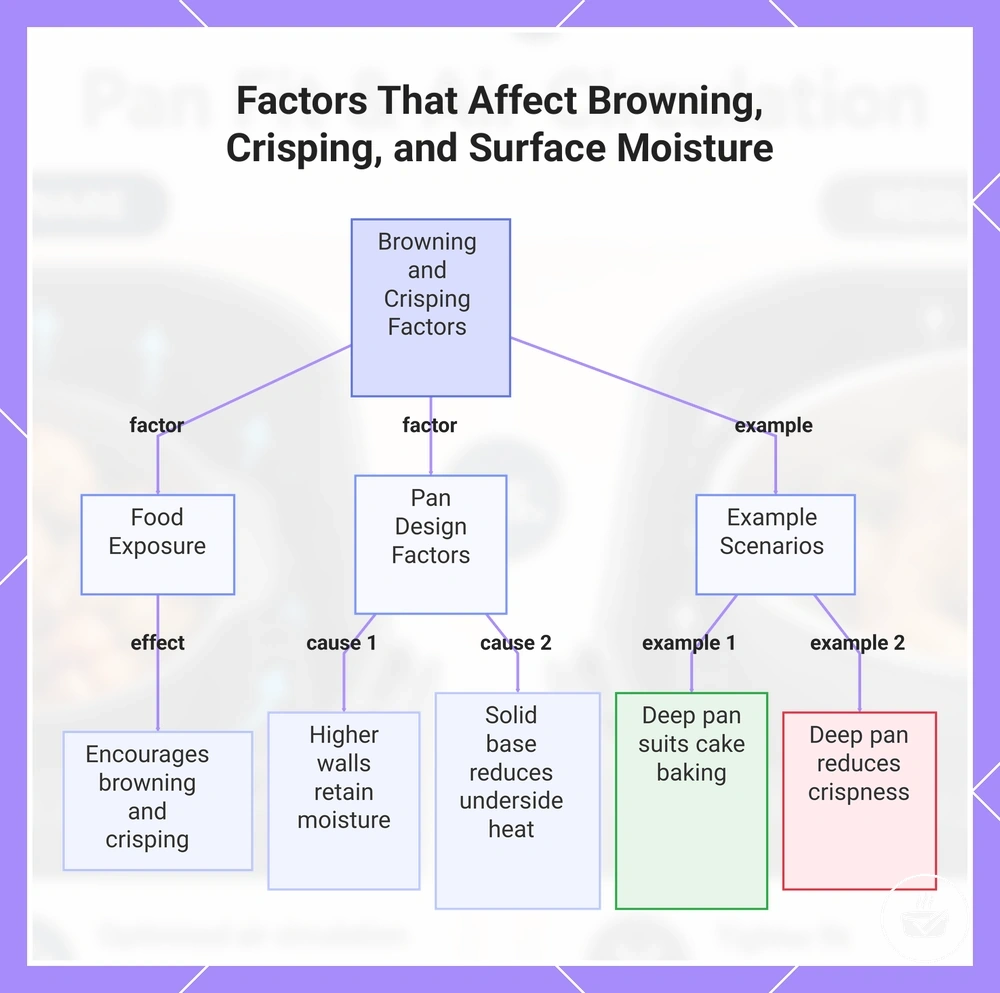
Browning, crisping, and surface moisture depend on how much of the food remains exposed to circulating heat and how the pan influences heat transfer. Pan depth, wall height, base design, and food type can all change surface texture, so the outcome varies with the cooking conditions rather than the pan alone.
Greater surface exposure may encourage more browning and crisping because more of the food is reached by circulating heat. Higher pan walls may retain more moisture around the food, which can reduce surface crispness when exposed airflow is important to the recipe.
A solid pan base may reduce heat reaching the underside of the food, which can also influence texture. For example, a deep solid pan may suit cake-style baking, while foods that depend on exposed surfaces for crisping may develop a less crisp exterior under the same cooking conditions.
This chart explains the key factors—food exposure and pan design—that determine browning, crisping, and surface moisture, with example outcomes.
Cooking speed and temperature adjustment needs
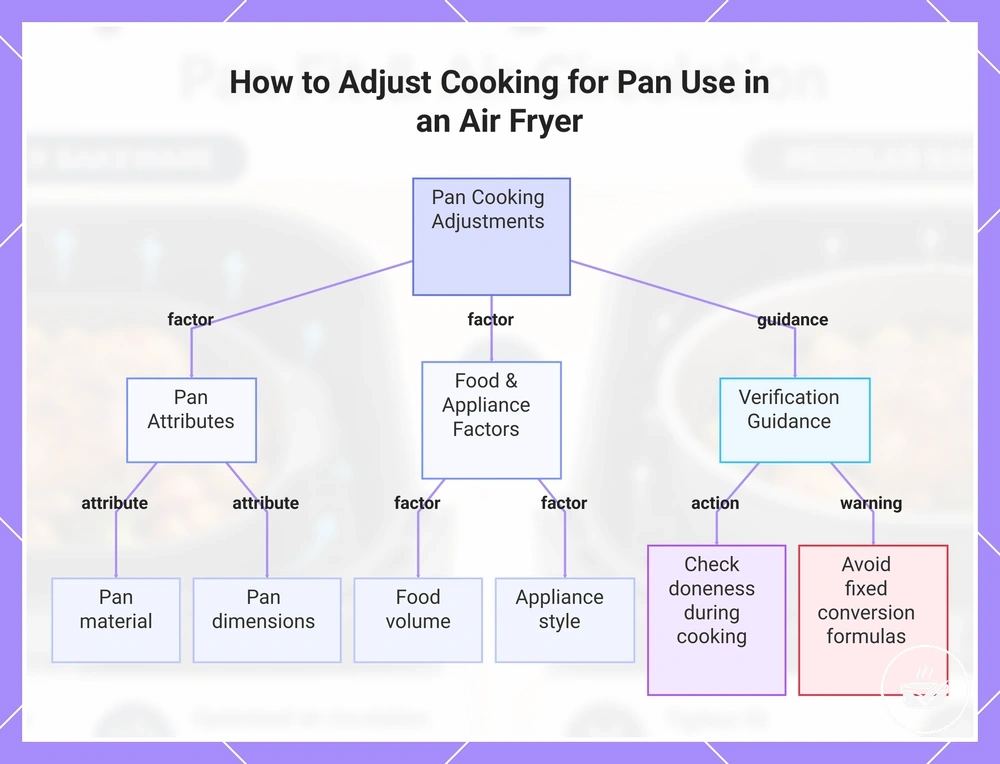
Cooking speed and temperature adjustment needs may change when a regular pan alters heat exposure and air circulation inside the air fryer. The appropriate adjustment depends on the pan, the food, the appliance style, and the manufacturer's guidance, so fixed conversion formulas should not be relied upon.
- Pan material: Different materials may transfer and retain heat differently, which can influence cooking speed and surface browning.
- Pan thickness: Thicker pans may heat more gradually than thinner pans, which can change cooking progress.
- Pan depth: Deeper pans may reduce heat exposure around the food, which can influence cooking time and surface results.
- Food volume: Larger or deeper portions may require different cooking times than smaller, evenly exposed portions.
- Appliance style: Basket-style and oven-style air fryers may distribute heat differently, so cooking adjustments depend on the appliance design.
Check food doneness during cooking instead of relying only on oven-style timing, and remain within the bakeware manufacturer's stated limits when they are available.
This chart shows the key factors that influence cooking adjustments when using a regular pan in an air fryer and the recommended verification steps.
When air fryer-specific bakeware is worth choosing
Air fryer-specific bakeware is worth choosing when it reduces practical friction compared with compatible regular bakeware. The value depends on baking frequency, basket size, pan shape, removal ease, cleaning needs, airflow, and expected result consistency.
The criteria below organize the choice by matching common usage situations with the potential advantages of air fryer-specific bakeware. Compatible regular bakeware may remain suitable when it already fits well and supports the desired cooking results.
Value also depends on consistency. If regular bakeware often limits basket clearance, is difficult to remove, or reduces usable cooking space, purpose-designed bakeware may provide a more convenient experience.
No single feature determines the better choice. Weigh fit, handling, cleaning, airflow, and baking frequency instead of relying on product type alone.
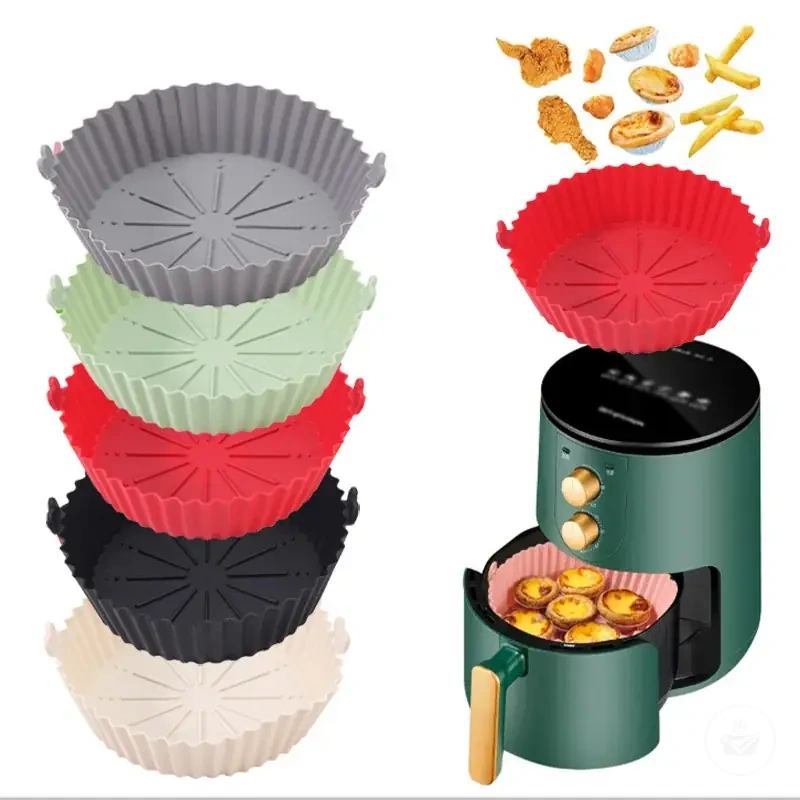
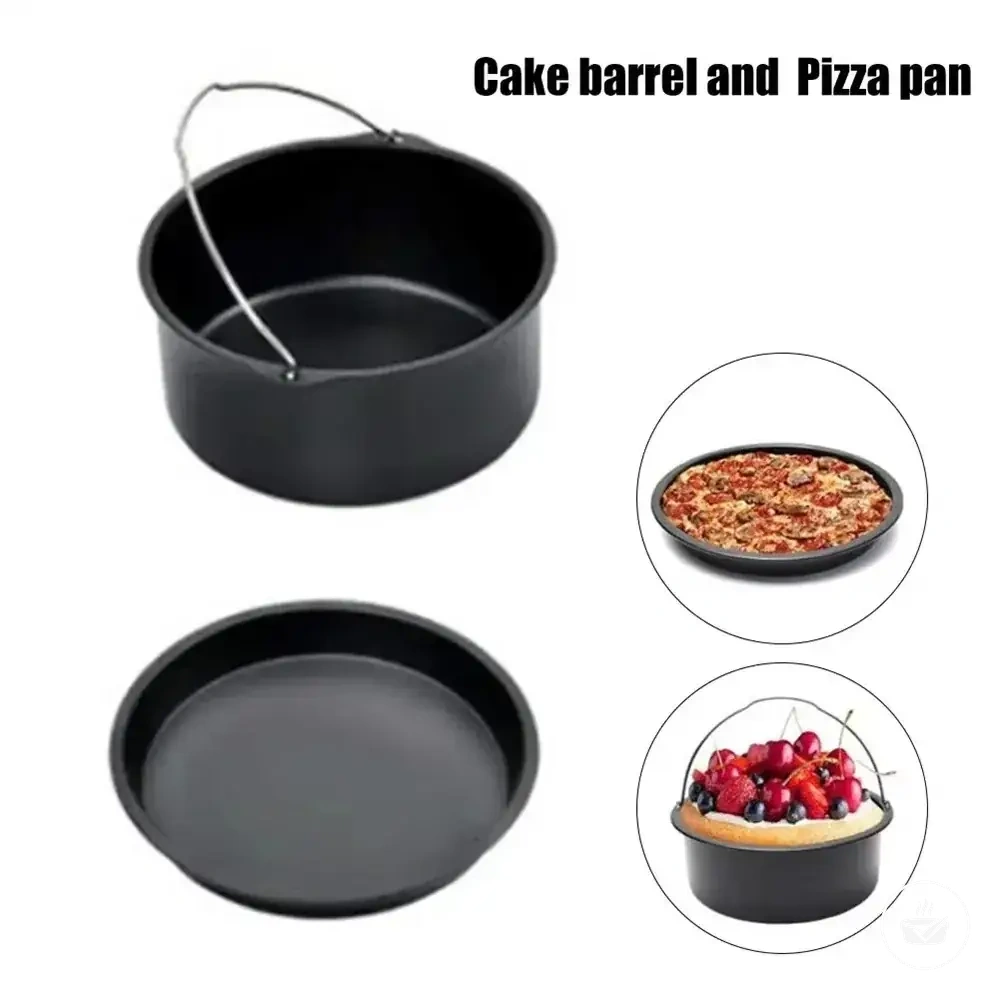
The products below are useful examples for comparing available options. Before buying, check that the compatibility criteria, key features, and product details match your needs.
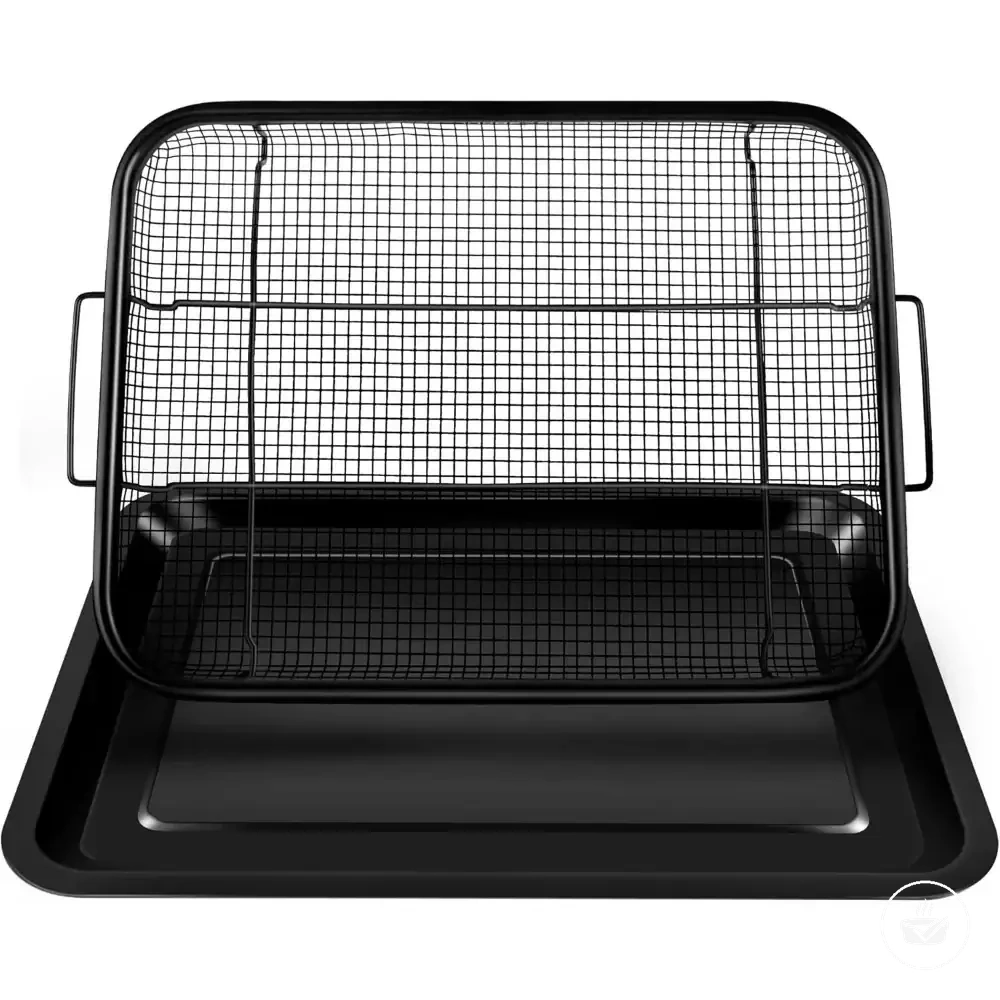
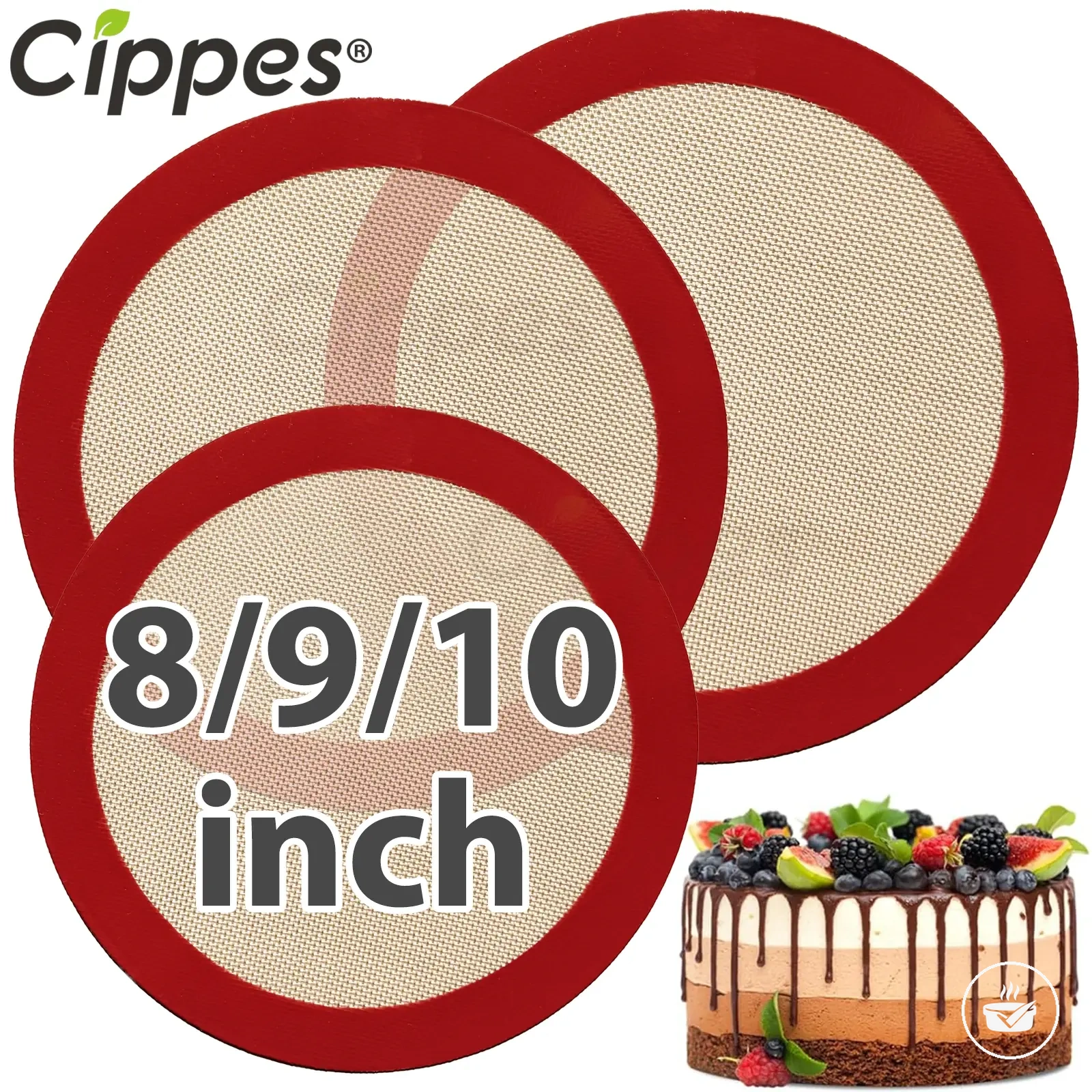
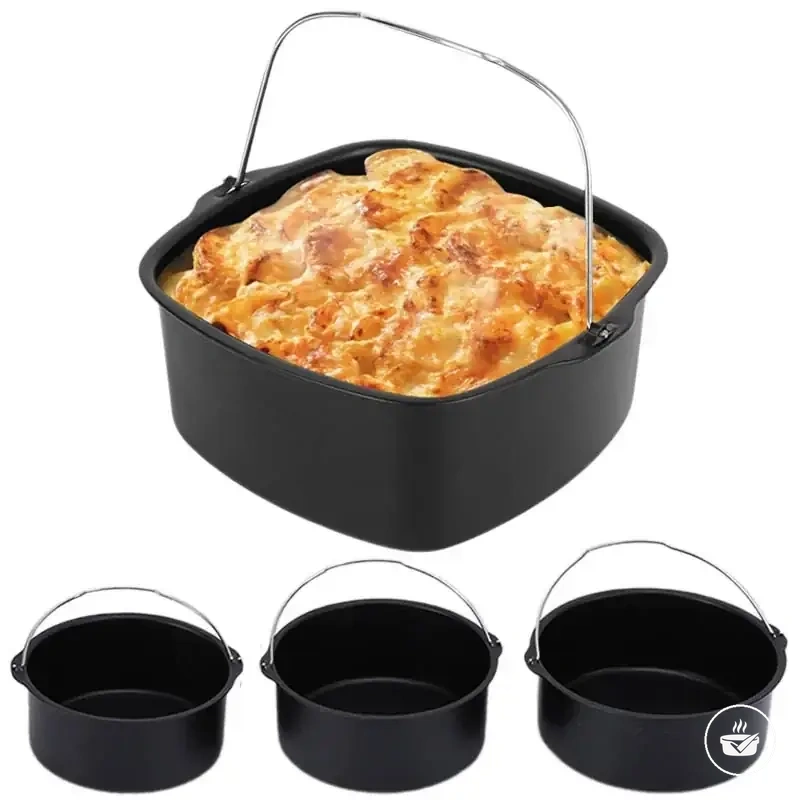
| Decision criterion | Air fryer-specific bakeware may add value when... | Compatible regular bakeware may remain suitable when... |
|---|---|---|
| Baking frequency | You bake often and want a setup that is easier to use repeatedly. | You bake occasionally and your current bakeware already performs adequately. |
| Basket size | The cooking space is limited and purpose-designed dimensions improve fit. | The existing pan leaves adequate clearance around the basket. |
| Pan shape | The shape better matches the cooking area and reduces wasted space. | The current pan already fits without limiting usable space. |
| Removal ease | Handling the pan is easier during placement and removal. | The current pan can already be removed comfortably. |
| Cleaning needs | You prefer bakeware that simplifies routine cleaning. | Your current bakeware is already easy to maintain. |
| Airflow performance | Improved clearance may better support heat circulation for your recipes. | Current bakeware already leaves sufficient space for airflow. |
| Result consistency | You want to reduce variation caused by fit or handling differences. | Your current setup already produces consistent results. |
Frequent baking, small baskets, and awkward regular pan shapes
Frequent baking, small baskets, and awkward regular pan shapes can make air fryer-specific bakeware worth considering when the same fit or handling problem keeps repeating. The value comes from reducing recurring friction, not from assuming a special pan is automatically better.
- Frequent baking: If regular pans are difficult to place, remove, or clean during repeated use, an air fryer-specific pan may reduce everyday friction.
- Compact drawer: If a regular pan leaves tight clearance in a smaller basket or drawer, a purpose-sized pan may be easier to position and remove.
- Awkward pan shape: If a round, square, or handled pan wastes space or sits poorly in the basket, a shape that better matches the cooking area may be worth considering.
- Handle clearance: If handles or rims repeatedly catch on the basket edge, a lower-profile pan may improve handling without guaranteeing better results.
- Removal difficulty: If lifting the pan out is consistently awkward after cooking, air fryer-specific bakeware may offer practical value through easier handling.
Occasional baking with already-compatible regular pans
An already-compatible regular pan may be enough for occasional baking when it is oven-safe, fits the air fryer properly, allows adequate airflow, and suits the intended recipe. Under those conditions, an air fryer-specific pan may provide only limited additional practical value.
| Existing regular pan condition | Cost-value outcome |
|---|---|
| Oven-safe for the intended use | May already meet occasional baking needs. |
| Fits with adequate basket or cavity clearance | May not require a purpose-designed replacement. |
| Allows sufficient airflow for the recipe | May continue to provide suitable baking performance. |
| Matches the recipe type and is easy to handle | May provide enough practical value for occasional use. |
If an alternative pan is considered, it should preserve the same oven-safe status, fit, and airflow characteristics rather than replacing an already-compatible pan without a practical reason.