
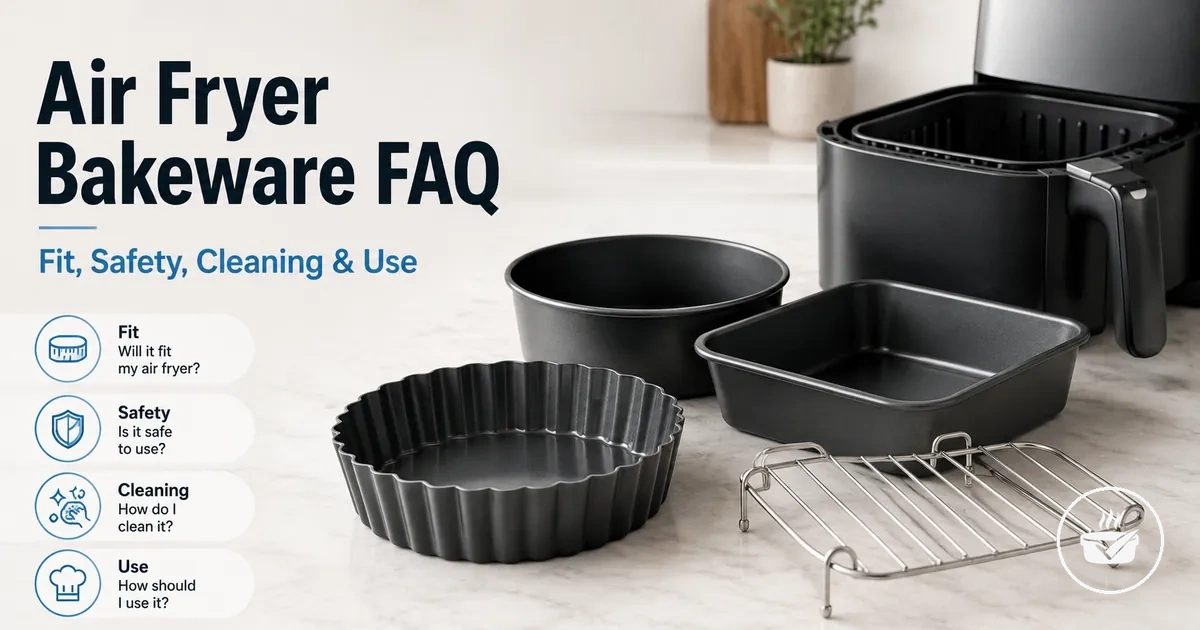
Air Fryer Bakeware Questions and Answers
Air fryer bakeware questions usually depend on the bakeware material, the usable size inside the air fryer, the air fryer type, the coating condition, and the cleaning method. A pan, dish, tray, or mould may be suitable when it is heat-safe, food-safe, correctly sized, and positioned so hot air can still move around the food.
This FAQ gives quick answers first, then qualifies them where fit, airflow, coating wear, material behavior, or cleaning care can change the result. For broader selection context, the air fryer bakeware hub explains how safe pans, materials, sizes, and sets fit into the wider decision process.
Use each answer as a condition-based check rather than a universal rule. Air fryer bakeware can work for baking, reheating, and holding batters or foods, but suitability still depends on the specific air fryer cavity, the pan shape, the surface condition, and the manufacturer guidance for both the appliance and the bakeware.
Air fryer bakeware safety questions
Air fryer bakeware is generally safe to use when the bakeware is intended for oven use, fits the cooking basket or oven without restricting airflow, and remains in good condition. Do not use containers that are not heat-safe or bakeware with visibly damaged coatings or surfaces, as these conditions can increase the risk of unsuitable or unsafe use.
Air fryer bakeware safety questions become easier to assess by checking the bakeware before cooking. The image below highlights the key safety conditions to verify, including heat suitability, surface condition, food-contact use, and adequate clearance for airflow.
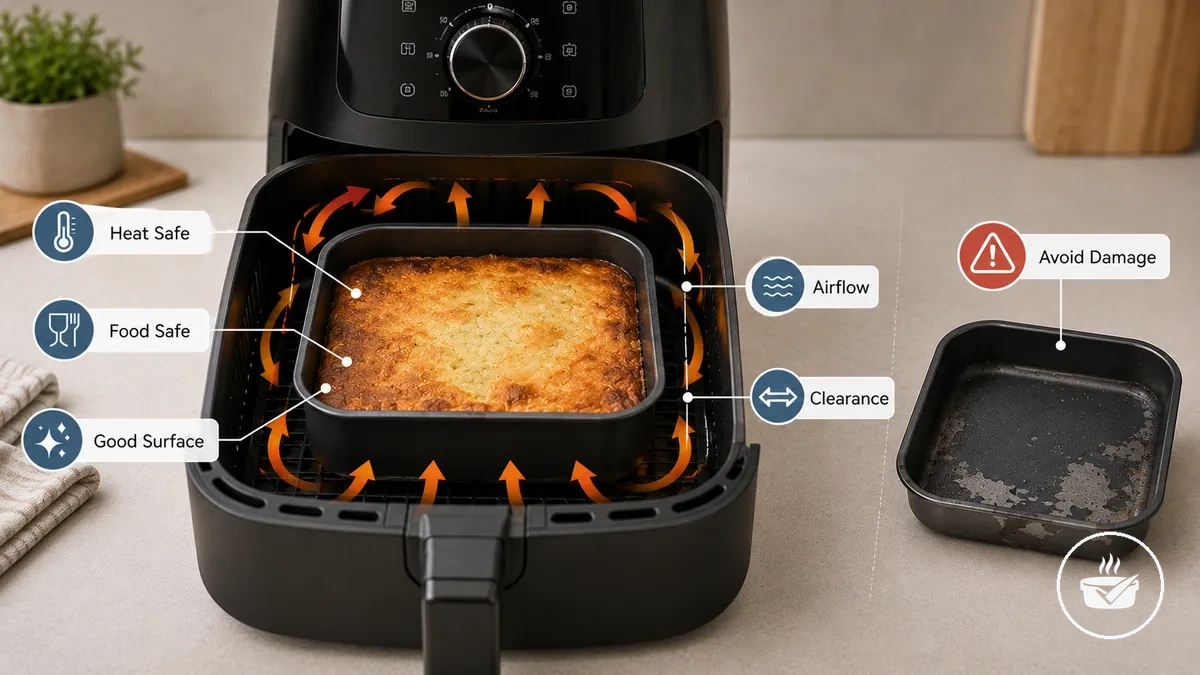
- Use bakeware that is intended for oven or high-heat cooking where applicable.
- Choose food-contact-safe bakeware with no visible cracks, peeling, or other surface damage.
- Leave enough clearance around the bakeware so hot air can circulate during cooking.
- Avoid containers that are not designed for heat exposure or that show warping, heavy wear, or damaged coatings.
Safe use can still depend on the bakeware design, the available space inside the air fryer, and any guidance supplied for both the appliance and the bakeware. For more detailed guidance on related safety questions, see the dedicated safety resource.
What kind of bakeware can go in an air fryer?
Air fryer bakeware may be used when it is heat-safe, food-safe, correctly sized for the cooking basket or oven, and does not block airflow. Whether a piece of bakeware is suitable still depends on its intended heat use, its condition, and how well it fits inside the appliance.
What kind of bakeware can go in an air fryer becomes easier to judge by checking the bakeware before cooking. The image below highlights the key conditions that help distinguish suitable bakeware from containers that should be avoided.
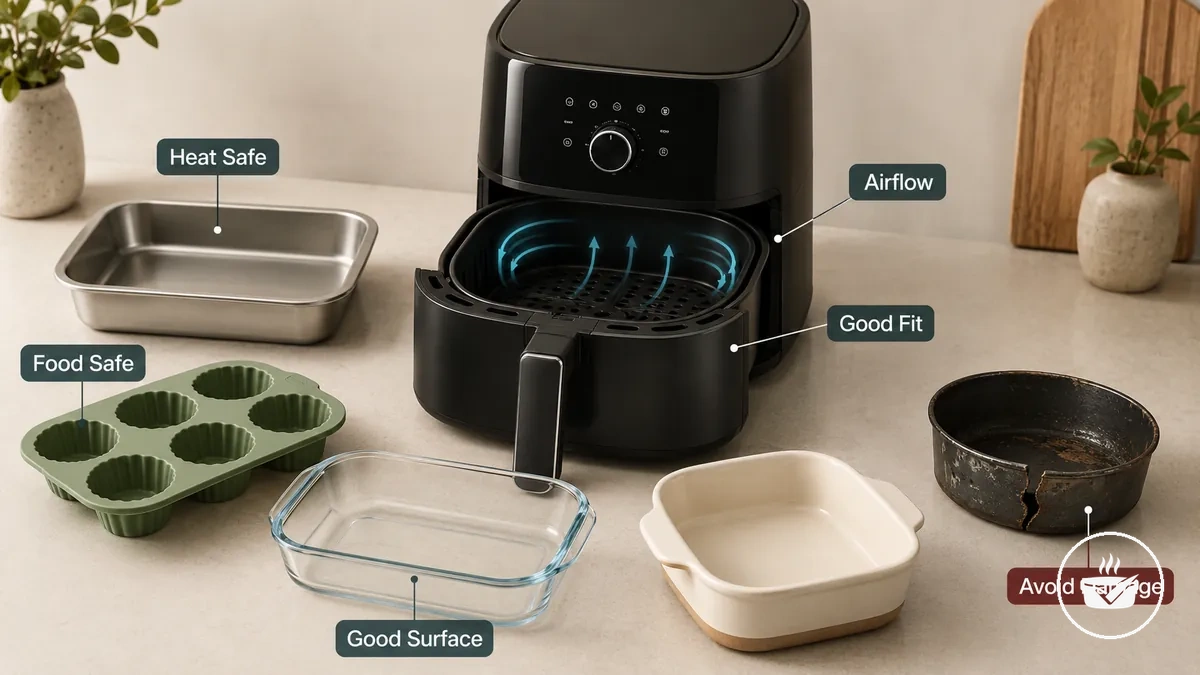
- Oven-safe metal, glass, ceramic, or silicone bakeware may be suitable when it fits properly and remains in good condition.
- Use bakeware that leaves enough space for hot air to circulate around the food.
- Avoid containers that are not heat-safe or that have damaged, cracked, warped, or peeling surfaces.
For a broader explanation of selection criteria, see what bakeware can go in an air fryer.
Does bakeware need to be oven-safe for air fryer use?
Oven-safe bakeware is usually the baseline for air fryer use, but oven-safe status alone does not confirm that a piece is suitable for every air fryer. Safe use also depends on proper fit, adequate airflow, the intended temperature range, and any guidance provided for both the bakeware and the appliance.
Does bakeware need to be oven-safe for air fryer use is easier to assess by checking the bakeware before cooking. The image below highlights the key conditions that help verify whether oven-safe bakeware is also suitable for air fryer use.
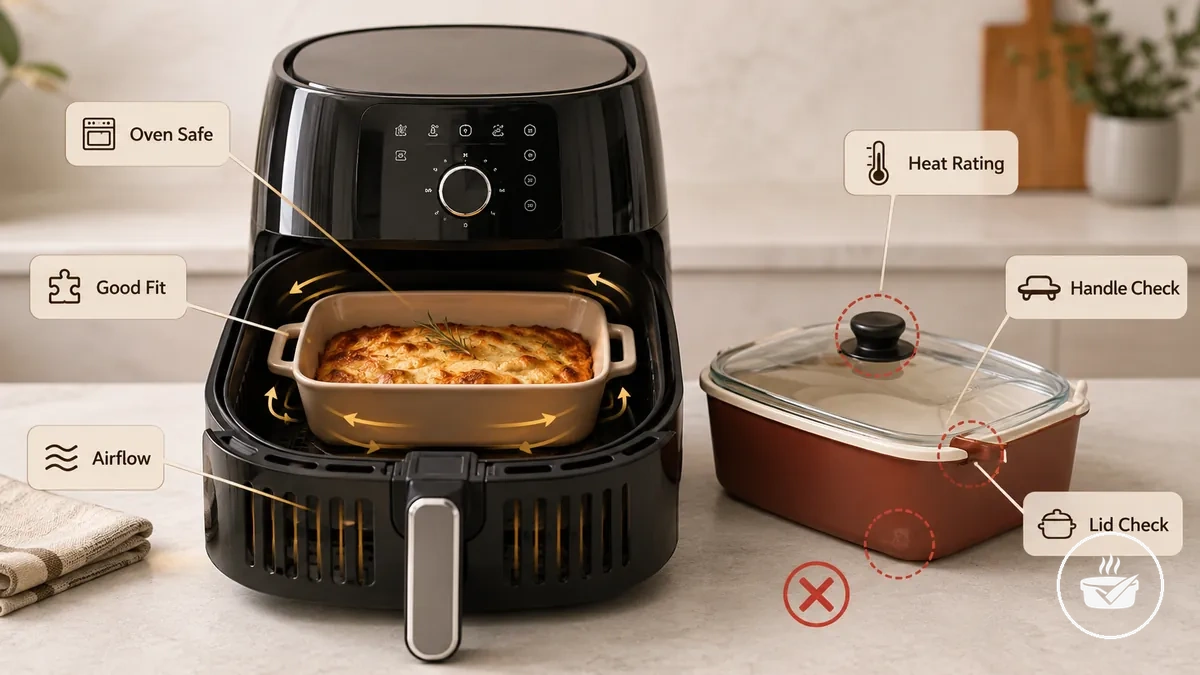
The checklist below helps verify whether oven-safe bakeware meets the main conditions for air fryer use.
- Confirm the bakeware is intended for oven use and suitable for the expected cooking temperature.
- Check that the bakeware fits inside the air fryer with enough clearance for hot air to circulate.
- Inspect handles, lids, coatings, and surfaces for any condition that could affect safe use.
- Follow the manufacturer's guidance for both the bakeware and the air fryer if their usage requirements differ.
What containers should not be used in an air fryer?
Plastic containers that are not heat-safe, damaged coated bakeware, loose paper, and poorly fitting containers should not be used in an air fryer. Air fryer heat and rapid airflow can increase the risk of melting, fumes, poor cooking performance, or, in some situations, a fire risk when unsuitable containers are used.
What containers should not be used in an air fryer is easier to assess by separating unsuitable containers from bakeware designed for high-heat cooking. The image below highlights the main container types that should be avoided or checked carefully before use.
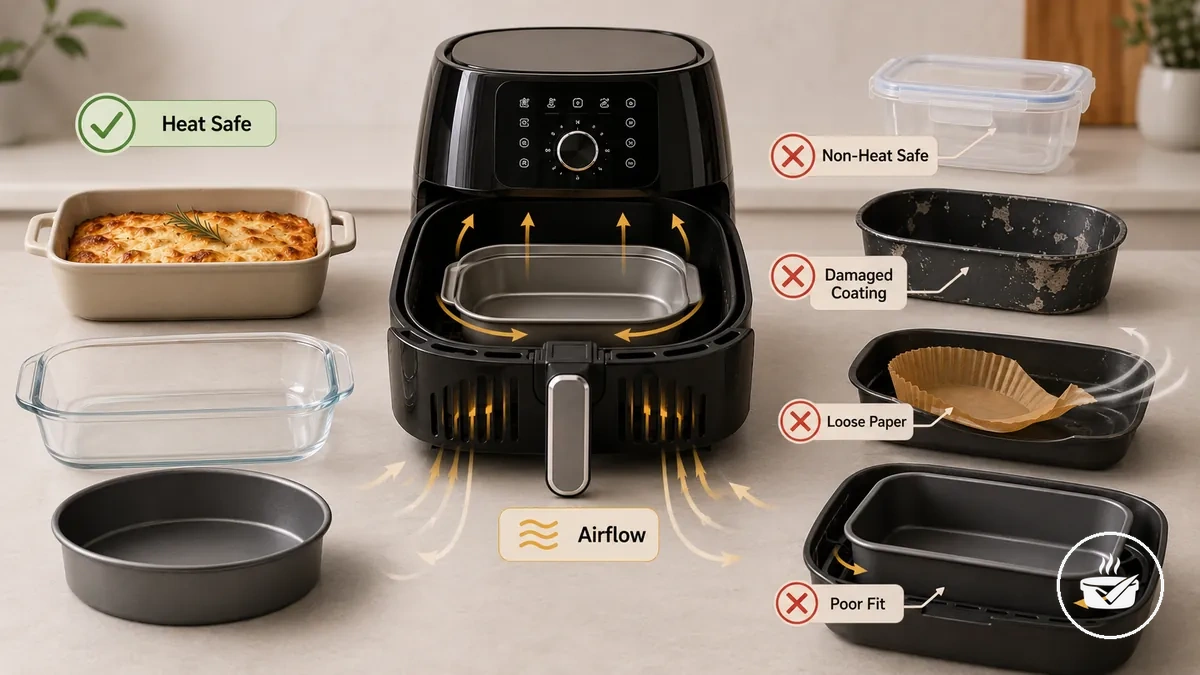
- Non-heat-safe plastic containers can melt or release fumes when exposed to air fryer heat.
- Damaged bakeware with cracked, peeling, or heavily worn coatings should not be used because the damaged surface can affect safe use.
- Loose paper or lightweight paper containers may become displaced if airflow lifts them toward the heating element.
- Poorly fitting containers that block airflow can reduce cooking performance and may not be suitable for safe use.
Any substitute container should still meet the same heat-safe, food-contact, and fit requirements before it is used in an air fryer.
Are nonstick coatings safe on air fryer bakeware?
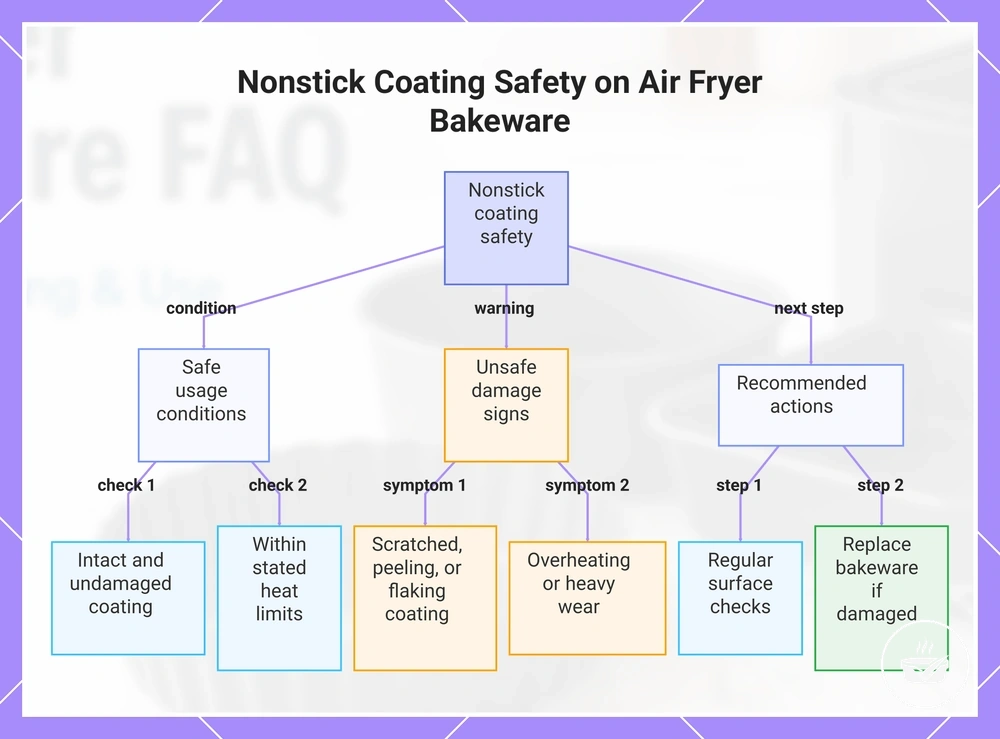
Nonstick coatings may be safe on air fryer bakeware when the coating is intact, intended for food contact, used within its stated heat limits, and shows no visible damage. If the coating becomes scratched, peeling, overheated, or heavily worn, its condition should be reassessed because damage can affect whether continued use remains appropriate.
- An intact nonstick coating that is used within its intended heat range may remain suitable for air fryer cooking.
- Scratched, peeling, or flaking coatings should not be treated as suitable because the damaged surface can affect food contact, cooking performance, and the decision to replace the bakeware.
- Using bakeware beyond its intended heat limit may affect the coating, so any available temperature guidance should be followed.
- Abrasive cleaning methods can wear the coating over time, making regular surface checks useful before reuse.
- If the nonstick surface shows visible damage, heavy wear, or food sticks because the coating has deteriorated, replacing the bakeware may be more appropriate than continued use.
This chart shows the conditions under which nonstick coatings remain safe for air fryer use and the signs that indicate replacement is needed.
Material-specific air fryer bakeware questions
Air fryer bakeware materials can behave differently because material affects heat response, rigidity, coating condition, weight, and cleaning needs. The right material depends on the cooking task, the air fryer space, and the condition of the bakeware rather than on one material being suitable for every use.
The comparison below summarizes common material characteristics. The following FAQ sections cover individual material questions in more detail without treating any material as universally better.
| Material | Heat Response | Structure | Coating | Cleaning Behavior | General Outcome |
|---|---|---|---|---|---|
| Metal | Often responds quickly to heat | Rigid | May be coated or uncoated | Depends on surface finish | Check coating condition when applicable |
| Silicone | May heat more gradually | Flexible | Usually no separate coating | Depends on residue and surface condition | Use when shape and support remain suitable |
| Glass | Can retain heat | Rigid | Usually uncoated | Depends on damage and residue | Avoid sudden temperature changes if guidance warns against them |
| Ceramic | Can retain heat | Rigid | May have a glazed surface | Depends on surface condition | Inspect for chips or cracks before use |
FAQ: Material-specific questions focus on how each bakeware material responds to air fryer conditions. The following sections explain material-specific considerations such as heat behaviour, coating condition, structure, and cleaning while keeping the focus on safe air fryer bakeware use.
Can silicone bakeware go in an air fryer?
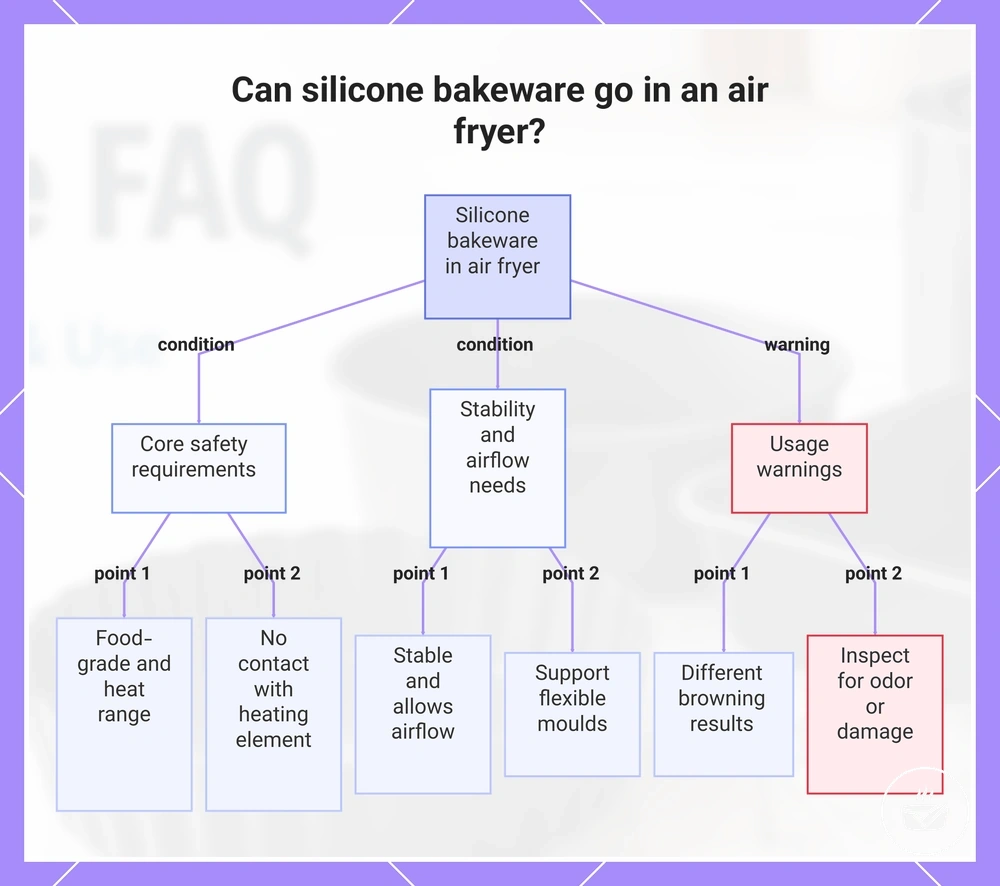
Silicone bakeware can usually go in an air fryer when it is food-grade, intended for the required heat range, and fits inside the cooking area without touching the heating elements. Safe use also depends on the bakeware remaining stable during cooking, allowing airflow, and following the manufacturer's temperature guidance.
- Use silicone bakeware only when it is intended for food contact and suitable for the expected cooking temperature.
- Choose silicone bakeware that fits securely, allows airflow, and does not contact the heating element.
- Flexible or flimsy silicone moulds may need additional support, especially when filled with batter or heavier mixtures, to reduce the chance of spills from overfilling.
- Silicone bakeware may brown food differently from rigid metal bakeware, so cooking results can vary by recipe and air fryer.
- If silicone develops persistent odours, visible damage, or signs of deterioration, inspect it before reuse and follow the manufacturer's guidance on continued use or replacement.
This chart shows the key conditions, stability needs, and warnings for using silicone bakeware safely in an air fryer.
Will silicone bakeware melt or release odours in an air fryer?
Suitable silicone bakeware should not usually melt when it is food-grade, used within its intended heat rating, and kept in good condition. Odours can occur during first use or result from residue, overheating, lower-quality silicone, or inadequate cleaning, so the cause should be checked before deciding whether the bakeware remains suitable.
A temporary odour during first use or after cooking strongly flavoured foods may not indicate damage. Persistent odours or visible changes in the silicone are stronger signs that the bakeware should be inspected.
- If silicone develops an odour, check for cooking residue, incomplete cleaning, overheating, or use beyond the manufacturer's temperature guidance.
- Food-grade silicone used within its intended heat range may continue to perform as expected, although behaviour can vary between products.
- If the silicone becomes warped, sticky, cracked, or continues to smell after thorough cleaning, discontinue use and consider replacing it because these changes may indicate material deterioration.
Can metal or aluminium pans go in an air fryer?
Metal or aluminium pans can usually be used in an air fryer when they are oven-safe, correctly sized, and positioned so they do not touch the heating element. Safe use also depends on the pan's coating, handle material, shape, and whether enough space remains for hot air to circulate.
Check the following points before using a metal or aluminium pan in an air fryer:
- Confirm the pan is intended for oven use and suitable for the expected cooking temperature.
- Choose a pan that fits securely, leaves enough space for airflow, and does not contact the heating element.
- Inspect coated surfaces for peeling, scratches, or other visible damage before use.
- Check that handles, grips, or other attached materials are suitable for the intended cooking conditions.
- Metal or aluminium pans may produce different browning results depending on their shape, thickness, and the air fryer design.
- Use caution with loose foil, lightweight foil pans, or pans with sharp edges, as they may shift under airflow or become unsuitable if not positioned securely.
Can glass or ceramic bakeware go in an air fryer?
Glass or ceramic bakeware can usually be used in an air fryer when it is oven-safe, suitable for the intended heat changes, and fits with enough clearance for airflow. Oven-safe labeling does not necessarily mean every dish tolerates rapid temperature changes equally, so the bakeware condition and intended use should be checked before cooking.
Before using glass or ceramic bakeware in an air fryer, check the following points:
- Confirm the dish is labelled for oven use and suitable for the expected cooking conditions.
- Leave enough clearance around the bakeware so hot air can circulate without the dish contacting the heating element.
- Avoid using glass or ceramic bakeware with visible cracks, chips, or other damage.
- Take care when transferring chilled bakeware into a preheated air fryer or exposing hot bakeware to sudden cooling, as rapid temperature changes may increase the risk of thermal shock.
- Check that handles, rims, or other protruding parts fit safely inside the cooking area.
- Thicker or heavier dishes may respond to heat differently, so cooking results can vary depending on the bakeware design and available airflow.
Air fryer bakeware size and fit questions
Air fryer bakeware fit depends on usable internal space as well as enough clearance for hot air to circulate. A piece of bakeware may fit inside the cooking cavity but still be unsuitable if its height, width, handles, or shape restrict airflow or come too close to the heating element.
Basket-style air fryers often provide less usable space than oven-style models, while oven-style air fryers may offer more flexibility through different rack positions. In either design, bakeware dimensions and clearance should be checked before cooking.
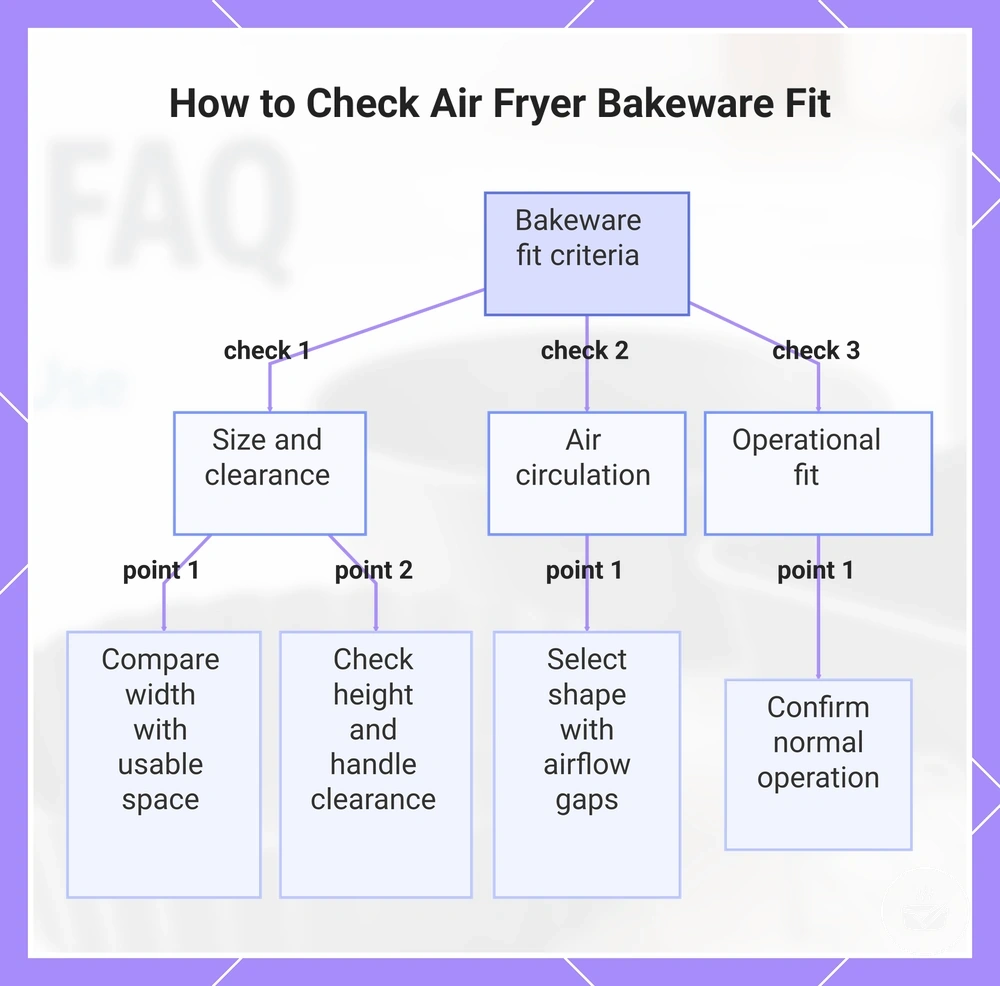
Use this checklist to assess bakeware fit:
- Compare the bakeware diameter or width with the usable internal cooking space rather than the appliance's external dimensions.
- Check that the bakeware height and any handles leave enough clearance from the heating element and allow easy insertion and removal.
- Choose a shape that leaves space around the bakeware so hot air can circulate effectively.
- Confirm that baskets, racks, trays, and doors can operate normally after the bakeware is in place.
- For more detailed fit questions, consider both physical dimensions and the airflow clearance needed for effective cooking.
This checklist shows the main criteria to assess whether a piece of bakeware fits properly inside an air fryer.
What size bakeware fits in an air fryer?
The right size bakeware is the largest piece that fits inside the usable cooking area while still leaving enough clearance for airflow and easy removal. Suitable bakeware size depends on the air fryer's usable width, depth, height, and handle clearance rather than on one universal pan size.
Compare the bakeware dimensions with the usable air fryer cavity before cooking, considering both the pan body and any handles, rims, or other protruding parts that may reduce available space.
Use this measurement checklist to help assess whether bakeware is likely to fit:
- Compare the bakeware width or diameter with the usable cooking area instead of the appliance's external dimensions.
- Check that the bakeware depth and height leave enough space for hot air to circulate and allow easy removal.
- Allow for handles, rims, or other protruding parts that may affect clearance or contact with internal components.
- Round, square, and rectangular pans may all be suitable when their overall dimensions match the available cooking space.
- Basket-style and oven-style air fryers can have different usable cavity shapes, so the most suitable bakeware size depends on the individual appliance.
How much space should bakeware leave inside the air fryer?
Bakeware should leave enough space around the sides, above the pan, and for safe removal so hot air can circulate effectively during cooking. The amount of clearance depends on the air fryer design, the bakeware dimensions, food expansion, and any manufacturer guidance, which should take priority over general recommendations.
- Side clearance: Leave space around the bakeware to support airflow, which can influence cooking consistency and browning.
- Top clearance: Ensure taller bakeware does not sit too close to the heating element, as available height varies between models.
- Handle clearance: Handles or extended rims should not interfere with the basket, rack, door, or other internal components.
- Food expansion: Allow additional room if food may rise or expand during cooking to reduce the chance of contact with the heating element.
- Removal clearance: Position bakeware so it can be inserted and removed without catching on the cooking cavity or surrounding parts.
If the manufacturer provides specific clearance guidance for the air fryer or bakeware, follow those instructions instead of general advice.
Can large baking pans like 9x13 fit in an air fryer?
Most basket-style air fryers cannot fit a 9x13 baking pan because the pan footprint is usually larger than the usable cooking cavity. Some oven-style air fryers may accommodate a similar rectangular tray when the internal dimensions leave enough clearance for airflow and safe removal, but a pan that fits physically is not always suitable for cooking.
The comparison below shows how large rectangular pans typically relate to different air fryer styles.
| Air fryer style | Large rectangular pan fit | Typical outcome |
|---|---|---|
| Basket-style | Usually unsuitable | The pan footprint often exceeds the usable cooking space. |
| Oven-style | May fit, depending on the internal cavity | Suitable only when enough clearance remains for airflow and safe handling. |
Even if a large tray fits inside the cooking cavity, it may still be unsuitable if it blocks airflow, which can affect cooking performance and browning.
Do basket and oven-style air fryers need different bakeware?
Basket-style and oven-style air fryers often need different bakeware because their cooking cavities, heights, rack layouts, and airflow paths differ. The most suitable bakeware depends on the air fryer design, the bakeware shape and height, and whether enough clearance remains for airflow and safe handling.
The comparison below shows how air fryer design can influence bakeware selection.
| Air fryer style | Design characteristics | Bakeware considerations |
|---|---|---|
| Basket-style | Usually has a compact cooking cavity with airflow around the basket. | Compact or shallower bakeware may be more suitable when it leaves enough space for airflow and fits the basket securely. |
| Oven-style | May provide multiple rack positions and a larger rectangular cooking cavity, depending on the model. | Rectangular or larger bakeware may be suitable when height, rack position, and airflow clearance remain appropriate. |
Even when bakeware matches the general air fryer style, fit and airflow should still be checked because suitability depends on the individual appliance, the bakeware dimensions, and the available clearance.
Air fryer bakeware airflow and use questions
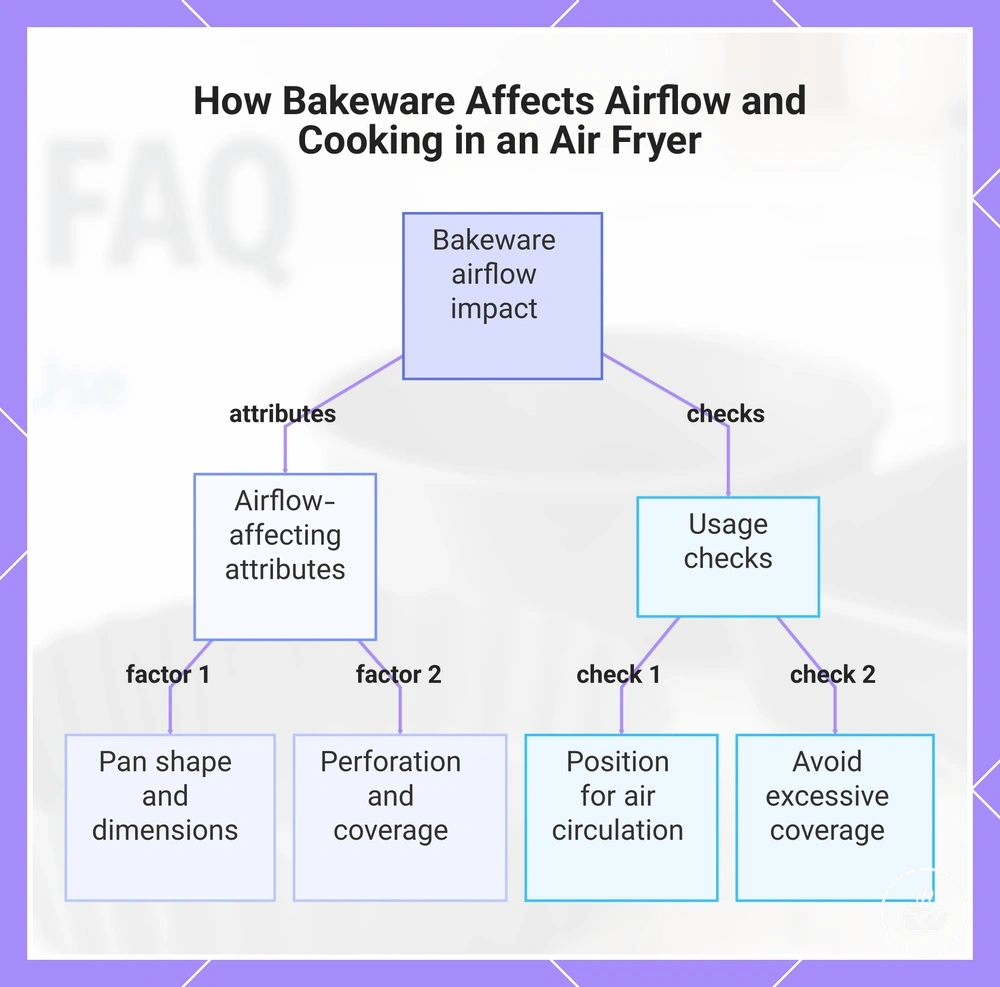
Bakeware can change how hot air moves around food, which may affect heat exposure, browning, crisping, and cooking time. The effect depends on the bakeware shape, depth, height, perforation, placement, and how much of the cooking area it covers.
Solid pans, deep dishes, and liners are not automatically unsuitable, but they can change airflow and cooking results. When airflow is more restricted, food may brown differently or require closer monitoring and timing adjustments.
Before using bakeware, check these airflow-related points:
- Position the bakeware so hot air can circulate around it instead of blocking most of the cooking cavity.
- Consider whether a deeper pan may reduce direct heat exposure to the food surface.
- Use perforated bakeware when appropriate if greater airflow around the food is desired.
- Avoid covering more of the basket or tray than necessary, as greater coverage can change browning and cooking consistency.
For more detailed usage questions, consider how bakeware placement and airflow can influence cooking results without assuming every recipe requires the same adjustments.
This chart shows the key factors that influence airflow when using bakeware in an air fryer and the essential checks to follow for consistent browning and cooking.
Does bakeware block air fryer airflow?
Bakeware can block air fryer airflow when it is too large, too deep, solid across the airflow path, or positioned without enough clearance. The effect depends on the bakeware placement, pan design, and air fryer model, so restricted airflow may change browning, crisping, or cooking time without automatically making the bakeware unsuitable.
- A large pan that covers most of the cooking area can reduce the space available for hot air to circulate around the food.
- A deeper dish may reduce direct airflow to the food surface, which can change browning, crisping, or require closer monitoring during cooking.
- Solid bakeware may restrict airflow more than perforated trays because fewer openings allow air to move through the cooking area.
- Shallow pans and raised racks often leave more of the airflow path open when they fit with adequate clearance.
- Perforated trays may allow more air to circulate around the food, while solid liners or pans can change cooking results depending on how much of the basket or tray they cover.
Should air fryer bakeware have holes or vents?
Air fryer bakeware does not need holes or vents for every baking task. Perforated bakeware may improve airflow for foods that benefit from additional browning or crisping, while solid bakeware may be more suitable when holding batters, liquids, or ingredients that could leak through openings.
The choice depends on the trade-off between increased airflow and the need to contain the food during cooking.
| Bakeware surface | Potential advantage | May be more suitable for |
|---|---|---|
| Perforated or vented | May allow greater airflow, which can support browning or crisping. | Vegetables, reheating foods, or similar items where additional airflow may improve results. |
| Solid | Can better contain batters, liquids, and smaller ingredients by reducing the chance of leakage. | Cakes, muffins, and other baked foods that require a continuous baking surface. |
Do solid pans, foil, or parchment change air fryer airflow?
Solid pans, foil, and parchment can reduce or redirect air fryer airflow depending on their size, placement, and how much of the cooking surface they cover. Their effect varies by air fryer design and cooking setup, so they do not all influence airflow in the same way.
Greater surface coverage generally changes air circulation more than smaller, well-positioned coverings, creating different trade-offs between airflow and food support.
| Covering material | Airflow effect | Typical consideration |
|---|---|---|
| Solid pan | May reduce airflow around the food when it covers a large area. | Can better contain foods that require a continuous cooking surface. |
| Foil | May redirect airflow depending on its coverage, weight, and placement. | Loose foil may move during cooking if it is not secured by food. |
| Parchment | May reduce airflow where it covers the basket or tray. | Loose parchment may shift during airflow if it is not held down. |
Loose paper or foil should not be used where airflow can lift it toward the heating element, because contact with high heat may create a safety risk.
Do temperature and timing change when bakeware is used?
Temperature and timing may change when bakeware is used because the bakeware material, food depth, and airflow can affect heat transfer. The amount of adjustment depends on the recipe, the air fryer design, and the type of bakeware, so there is no single conversion rule that applies to every cooking situation.
When bakeware changes heat transfer or airflow, monitor cooking progress and adjust only if needed.
- Metal bakeware may transfer heat differently from silicone, which can influence browning, moisture retention, and the time needed for food to reach the desired doneness.
- Deep pans or dense batters may require additional cooking time because heat can take longer to reach the centre.
- If food browns faster than expected, reducing the cooking temperature or checking progress more frequently may help, depending on the air fryer and bakeware.
- Rotate the bakeware only if the air fryer design or cooking results indicate that more even heat exposure may be beneficial.
- Check doneness directly rather than relying only on cooking time, because bakeware material, depth, and airflow can all influence the final result.
What common mistakes should be avoided when baking with air fryer bakeware?
The main mistakes are using unsuitable bakeware materials, choosing bakeware that fits poorly, blocking airflow, overfilling pans, and using harsh cleaning methods. Most avoidable problems result from mismatches between bakeware, available cooking space, heat exposure, airflow, or ongoing maintenance.
Use this checklist to reduce common baking mistakes:
- Using unsuitable materials: Choose bakeware that is intended for the expected cooking conditions to reduce the risk of poor performance or material damage.
- Poor fit: Bakeware that is too large or too tall may restrict airflow or fit poorly inside the cooking area.
- Blocked airflow: Covering too much of the basket or tray may affect browning or cooking consistency.
- Overfilled pans: Filling bakeware too deeply may increase cooking time or result in less even doneness.
- Harsh cleaning: Abrasive cleaning methods may shorten the usable life of some bakeware materials, so following the manufacturer's care guidance where available can help preserve their condition.
Air fryer bakeware cleaning questions
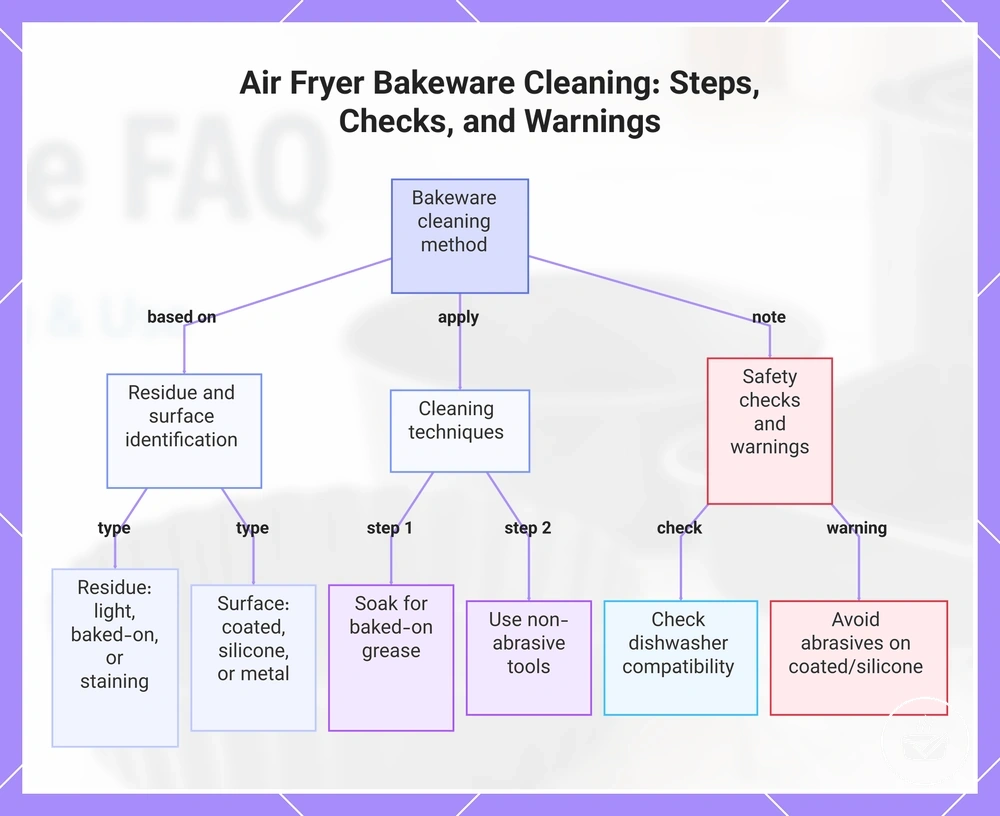
Air fryer bakeware stays in better condition when the cleaning method matches the bakeware material, surface coating, and type of residue. Gentle cleaning helps protect coatings, silicone surfaces, and metal finishes, while abrasive cleaning can damage sensitive surfaces and reduce long-term usability.
Before choosing a cleaning method, identify whether the residue is light food residue, baked-on grease, or stubborn staining, and consider whether the bakeware has a coated, silicone, or uncoated metal surface.
- Soak bakeware with baked-on grease when appropriate before scrubbing to help loosen residue.
- Use non-abrasive sponges or soft brushes on coated and silicone bakeware to reduce the risk of surface damage.
- Dry metal bakeware thoroughly after washing because lingering moisture may affect the surface finish over time.
- Check whether dishwasher cleaning is recommended for the specific bakeware material and coating rather than assuming every item is dishwasher safe.
- Avoid abrasive cleaners and metal scouring tools on coated or silicone surfaces because they can damage protective finishes.
For more detailed cleaning questions, consider maintenance methods that match the bakeware material, residue type, and surface condition.
Can baked-on grease be removed? Baked-on grease may become easier to remove after soaking, although the most suitable cleaning method depends on the bakeware material and surface finish.
Is dishwasher cleaning suitable? Dishwasher use depends on the manufacturer's guidance and the bakeware material. Coated bakeware may require gentler cleaning if recommended by the manufacturer.
Should abrasive cleaners be used? Abrasive cleaners and harsh scouring tools should be avoided on coated or other sensitive bakeware surfaces because they can damage the finish.
This chart shows the main factors to consider when cleaning air fryer bakeware, including residue and surface identification, gentle cleaning techniques, and important safety checks.
How should air fryer bakeware be cleaned?
Most air fryer bakeware should be allowed to cool, soaked if needed, washed with mild detergent, rinsed thoroughly, and dried completely before storage. The most suitable cleaning method depends on the bakeware material, surface coating, and the amount of residue, so gentle cleaning tools are generally preferred for sensitive surfaces.
When a cleaning sequence is helpful, follow these steps:
- Allow the bakeware to cool before washing.
- Soak the bakeware if residue does not release easily.
- Wash with warm water, mild detergent, and a soft sponge or brush.
- Rinse thoroughly to remove detergent and loosened residue.
- Dry the bakeware completely before storing or using it again.
Silicone bakeware is typically cleaned with soft washing tools to help protect the surface. Nonstick metal bakeware benefits from gentle cleaning that may reduce unnecessary coating wear. Stainless steel may tolerate firmer cleaning when appropriate, while glass and ceramic are usually cleaned with non-abrasive tools to help protect their surfaces.
How do you remove baked-on grease from air fryer bakeware?
Baked-on grease is usually easier to remove after it has been softened with warm water and mild detergent before gentle scrubbing. The most suitable method depends on the bakeware material and surface coating, so abrasive scraping should be avoided on coated surfaces because it can damage the finish.
When baked-on residue needs extra attention, this sequence can help:
- Soak the bakeware in warm water with mild detergent to help soften the grease.
- Loosen the residue with a soft sponge or non-abrasive brush that matches the surface material.
- Wipe away the softened grease without using sharp or abrasive tools on coated or other sensitive surfaces.
- Rinse thoroughly to remove detergent and remaining residue.
- Dry the bakeware completely before storing or using it again.
Repeated grease buildup may require more than one gentle cleaning cycle rather than more aggressive scrubbing. If odours or discolouration remain after cleaning, the result may depend on the bakeware material, surface condition, and how long the residue has been present.
Can air fryer bakeware go in the dishwasher?
Dishwasher use depends on the manufacturer's care label, the bakeware material, the surface coating, and your long-term maintenance preference. A dishwasher-safe label may indicate that dishwasher cleaning is suitable, but it does not always mean it is the best choice for preserving nonstick or decorative surfaces over time.
- Dishwasher-safe label: Follow the manufacturer's care instructions before placing bakeware in the dishwasher.
- Top-rack placement: If dishwasher cleaning is recommended, top-rack placement may be preferred for certain bakeware.
- Coating wear: Nonstick or decorative finishes may show gradual wear with repeated dishwasher use, even when labelled dishwasher safe.
- Material differences: Silicone, metal, glass, and ceramic bakeware may each have different dishwasher recommendations depending on the product and its finish.
- Drying: Allow bakeware to dry completely before storing it to help reduce retained moisture.
What cleaners can damage air fryer bakeware?
Abrasive pads, harsh degreasers, bleach-like chemicals, metal tools, and unsuitable dishwasher cycles can damage some air fryer bakeware, depending on the material and surface coating. Sensitive finishes are more likely to be affected, so cleaning products and tools should be matched to the bakeware rather than used interchangeably.
- Abrasive pads: Can scratch nonstick and other coated surfaces, leading to coating wear on sensitive finishes.
- Harsh degreasers: May affect certain coatings or surface finishes when they are not recommended for that bakeware.
- Bleach-like chemicals: May contribute to dulling, odour retention, or corrosion on some materials, depending on the surface.
- Metal tools: Can scrape coated surfaces and damage finishes that rely on a protective coating.
- Unsuitable dishwasher cycles: High-intensity cycles may increase wear on some coatings or decorative finishes over time, even if the bakeware is labelled dishwasher safe.
If the manufacturer provides specific care instructions for a bakeware item, those instructions should take priority over general cleaning guidance.