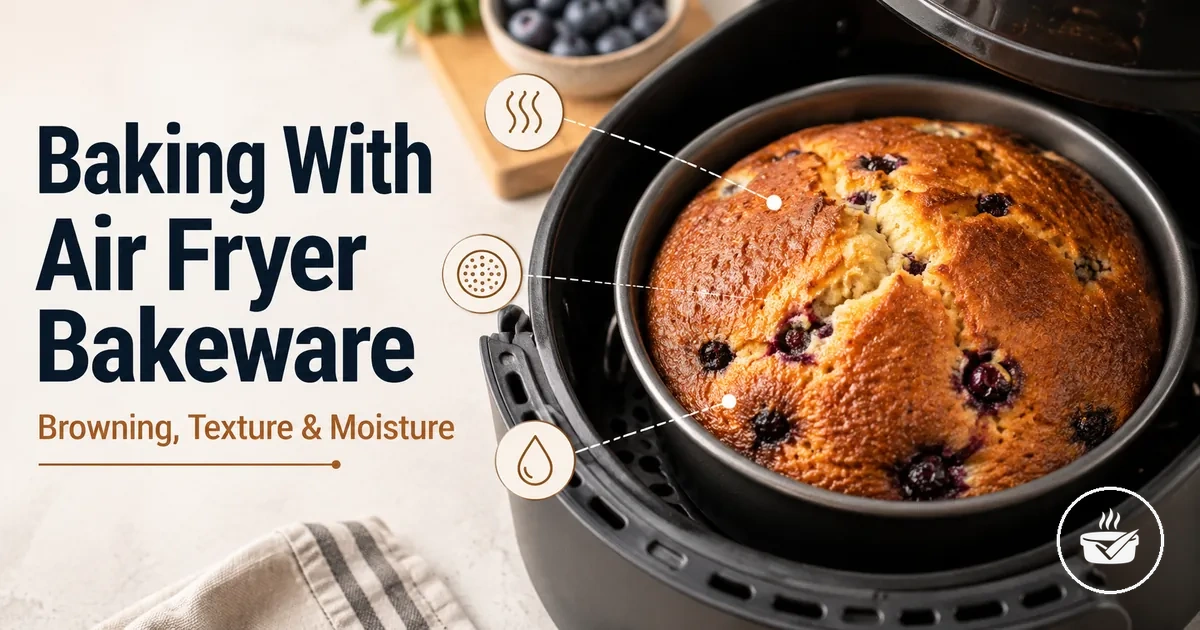
Baking Results with Air Fryer Bakeware
Air fryer bakeware can produce good baking results, but browning, texture, and moisture are conditional because the pan changes airflow and pan exposure. Cakes, brownies, muffins, and other small-batch bakes may bake well in an air fryer, although the final result is often different from conventional oven baking. Outcomes vary by air fryer model, bakeware shape, batter depth, and recipe moisture.
Air fryer bakeware baking results depend on airflow, pan exposure, material, fit, heat setting, and batter type. These conditions influence how heat reaches the food, how much surface is exposed to circulating air, and how quickly the centre sets. Changes in any of these factors can affect browning, texture, and moisture without producing the same baking outcome every time.
A shallow muffin cup may expose more batter to circulating air, while a deeper cake pan may slow the centre set or retain more moisture. Brownies may develop firmer edges before the middle is fully set, and small cakes may brown on top before the centre finishes baking. These examples show that air fryer bakeware results are shaped by baking conditions rather than fixed expectations.
How bakeware changes air fryer baking outcomes
Bakeware changes air fryer baking outcomes by altering airflow, heat contact, surface exposure, and moisture escape. A pan changes how circulating air reaches the batter, so baking results can differ even when the same recipe and heat setting are used. The image below illustrates how airflow and heat contact can shift around bakeware.
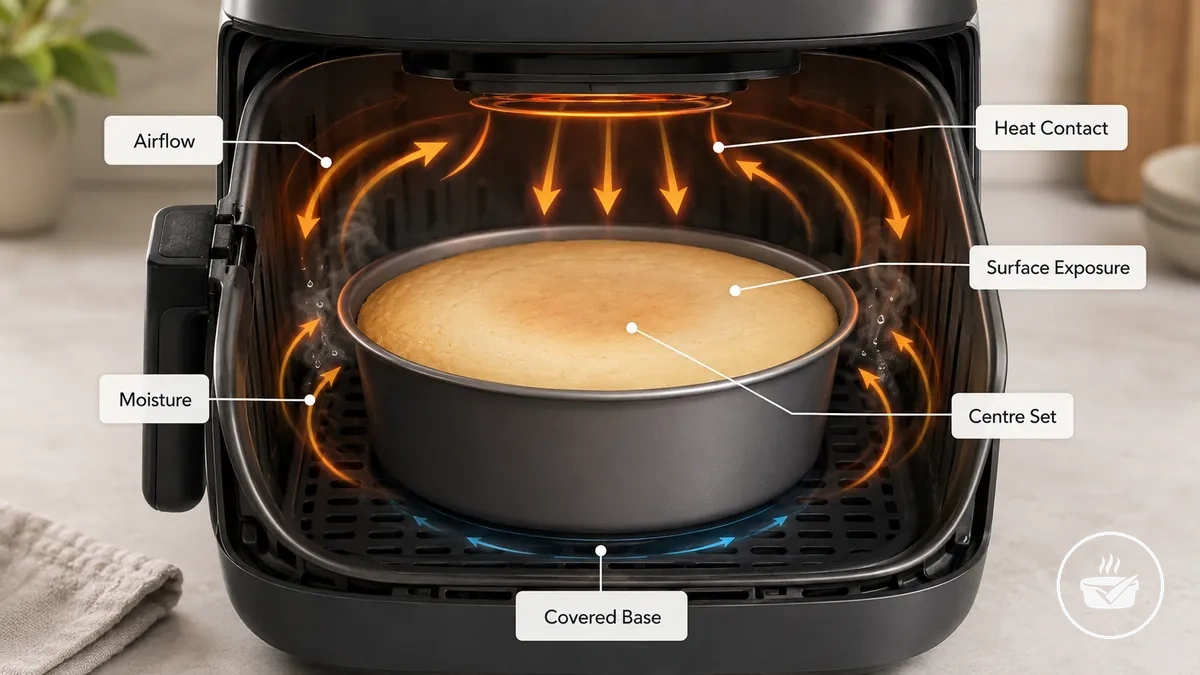
Pan coverage can restrict circulation beneath and around the bakeware, while exposed surfaces continue to receive moving hot air. A covered base may reduce bottom airflow, which can contribute to a softer bottom or a slower centre set. Greater surface exposure can encourage more browning, but the degree of change may vary with pan fit, batter depth, and the appliance's airflow pattern.
How bakeware changes air fryer baking outcomes is easier to understand by matching each bakeware condition with the baking factor it changes. The table below organises the most common condition-to-result relationships.
| Bakeware condition | Changed baking factor | Likely result |
|---|---|---|
| Covered base | Reduced bottom airflow | Softer bottom or slower centre setting |
| Greater pan coverage | Less air circulation | More gradual browning in covered areas |
| More exposed surface area | Increased heat contact | May show faster surface browning |
| Deeper batter | Longer heat path to the centre | Centre may set more slowly |
A pan that performs well in one air fryer may produce different baking outcomes in another because results depend on air fryer model, pan shape, batter depth, recipe moisture, and overall circulation. For broader context on these related factors, see the air fryer bakeware guide. This boundary helps explain why bakeware changes should be understood as conditional mechanisms rather than one fixed rule.
Air fryer bakeware results compared with oven baking expectations
Air fryer bakeware can produce oven-like bakes for small portions, but it does not always match conventional oven browning, rise, or moisture retention. Differences in heat distribution, fan speed, and cavity size can change how a bake develops, so expectations should focus on similar rather than identical results. The comparison below explains where those differences are most noticeable.
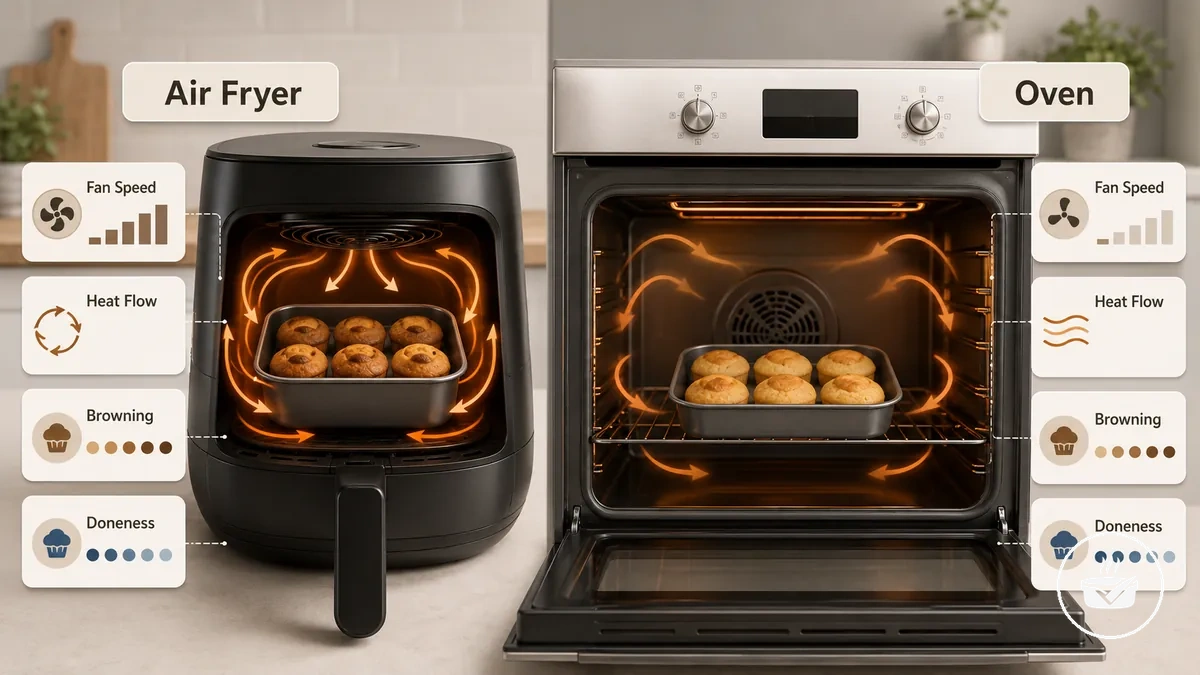
Air fryer bakeware results differ from oven expectations because each appliance delivers heat in a different way. Air fryers use fan-driven circulation within a compact cavity, while conventional ovens generally provide a larger baking space with gentler heat movement. Pan clearance, fan speed, cavity size, heat distribution, and preheating behaviour can influence browning, texture, rise, moisture, and doneness, although the outcome still depends on the recipe and bakeware.
The comparison below organises the main baking differences between air fryer bakeware and conventional oven expectations. It is intended to set realistic expectations rather than provide fixed conversion rules.
| Baking context | Heat behaviour | Likely result difference | Best expectation |
|---|---|---|---|
| Air fryer bakeware | Fan-driven heat, compact cavity, quick preheating | May brown exposed surfaces sooner | Expect oven-like results for many small bakes with possible variation |
| Conventional oven | Broader heat distribution, larger cavity | Often more even baking across larger pans | Better suited to larger baking volumes |
| Deep batter | Longer heat path to the centre | Centre may finish after the surface | Check overall doneness before judging the bake |
| Limited pan clearance | Reduced air circulation around the pan | Surface and centre may bake at different rates | Allow for appliance and pan variation |
Small cakes, brownies, muffins, and breads often highlight the expectation gap because fan speed, cavity size, and pan clearance can affect how they rise, brown, and retain moisture. A realistic comparison is to expect similar baking goals with condition-dependent differences rather than assuming an air fryer will behave exactly like a conventional oven.
Browning and doneness patterns with air fryer bakeware
Browning and doneness can develop separately when air fryer bakeware changes top heat exposure, base contact, and heat penetration. Surface colour may appear finished while the centre still needs more baking, so colour alone should not be treated as proof that the bake is cooked through. The image below highlights why surface and centre cues should be assessed together.
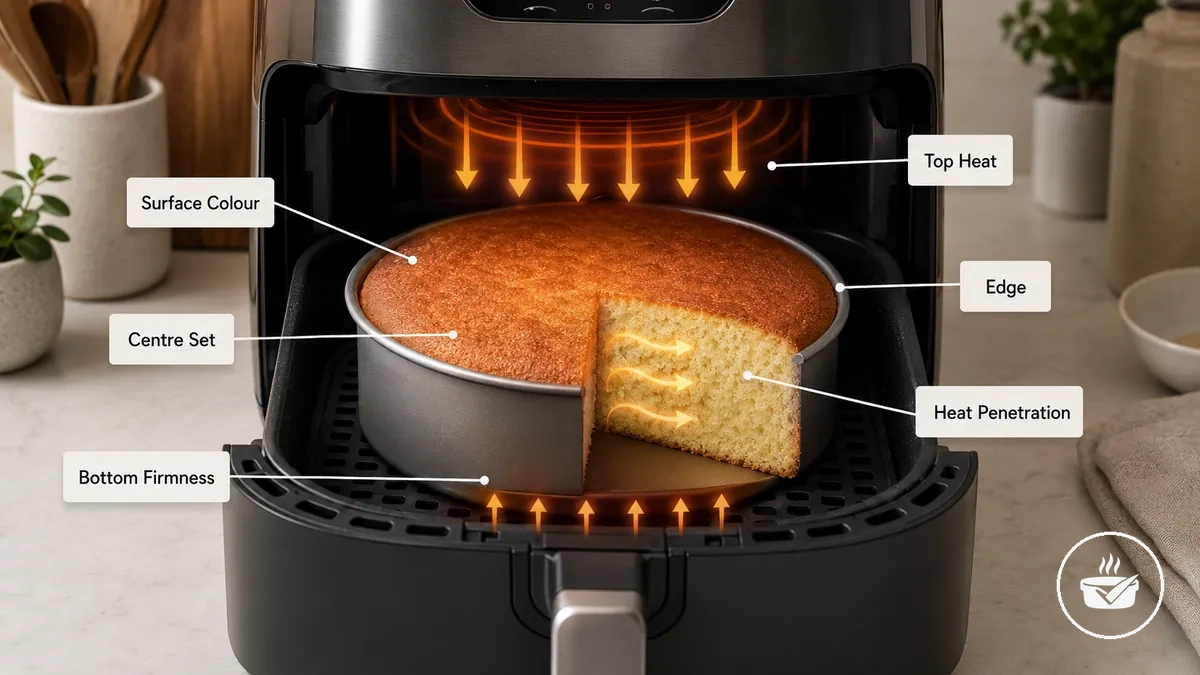
A browned top may develop before the inside is fully set when pan depth, batter thickness, top heat, or heat penetration affect how the bake cooks. For example, a cake can show good surface colour while the centre remains soft. Bottom firmness, edge behaviour, and centre set provide additional inspection cues because baking conditions may influence how evenly heat reaches the interior.
Checking browning and doneness together provides a more reliable assessment than judging colour alone. Use the checklist below to interpret the most useful visual and physical cues before deciding that the bake is finished.
- Surface colour: Even browning can indicate progress, but it does not necessarily confirm the centre is cooked through.
- Centre set: A soft or unset centre may indicate that additional baking is still needed despite a well-browned surface.
- Bottom firmness: A firmer base can suggest that heat has reached the lower layers more effectively than a soft bottom.
- Edge behaviour: Edges that set before the centre may indicate slower heat penetration through deeper batter.
- Rotation: If colour develops unevenly, rotating the bake may help identify whether heat exposure is contributing to uneven browning.
When browning and doneness do not match, compare the surface, centre, edges, and base before deciding whether baking is complete. This establishes the relationship between visible colour and internal set without moving into the detailed corrective guidance covered in later sections.
Top browning before the centre sets
When top browning happens before the centre sets, surface heat is usually outpacing heat penetration into the batter. A browned top may look finished while the middle remains soft, so the centre should still be checked before deciding that baking is complete. The image below highlights how surface colour and centre set can develop at different rates.
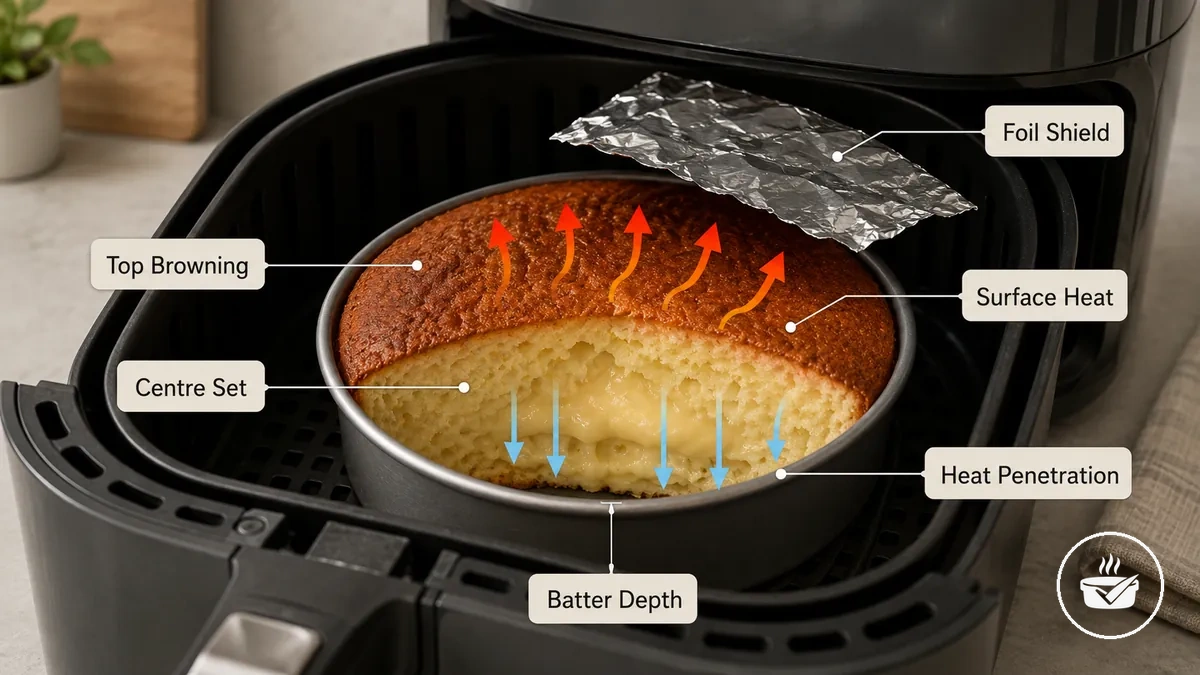
Use these local checks to identify why top browning may occur before the centre sets:
- Top heat exposure: Strong surface heat may brown the top faster than heat reaches the centre.
- Dark or thin pan: A dark pan or thin pan may change how quickly the surface browns compared with the interior.
- Batter depth: Deeper batter may require more heat penetration before the soft middle becomes fully set.
- High temperature: Higher cooking temperatures may increase surface browning before the centre finishes baking.
- Loose foil shielding: If the top is browning much faster than the centre, loose foil shielding may help reduce direct surface heat while baking continues. Continue checking the centre rather than relying on surface colour alone.
These checks isolate the local cause of top browning before the centre sets without assuming that one adjustment suits every bake. The appropriate response depends on the baking conditions, batter depth, pan characteristics, and heat exposure.
Uneven colour from hot spots and restricted airflow
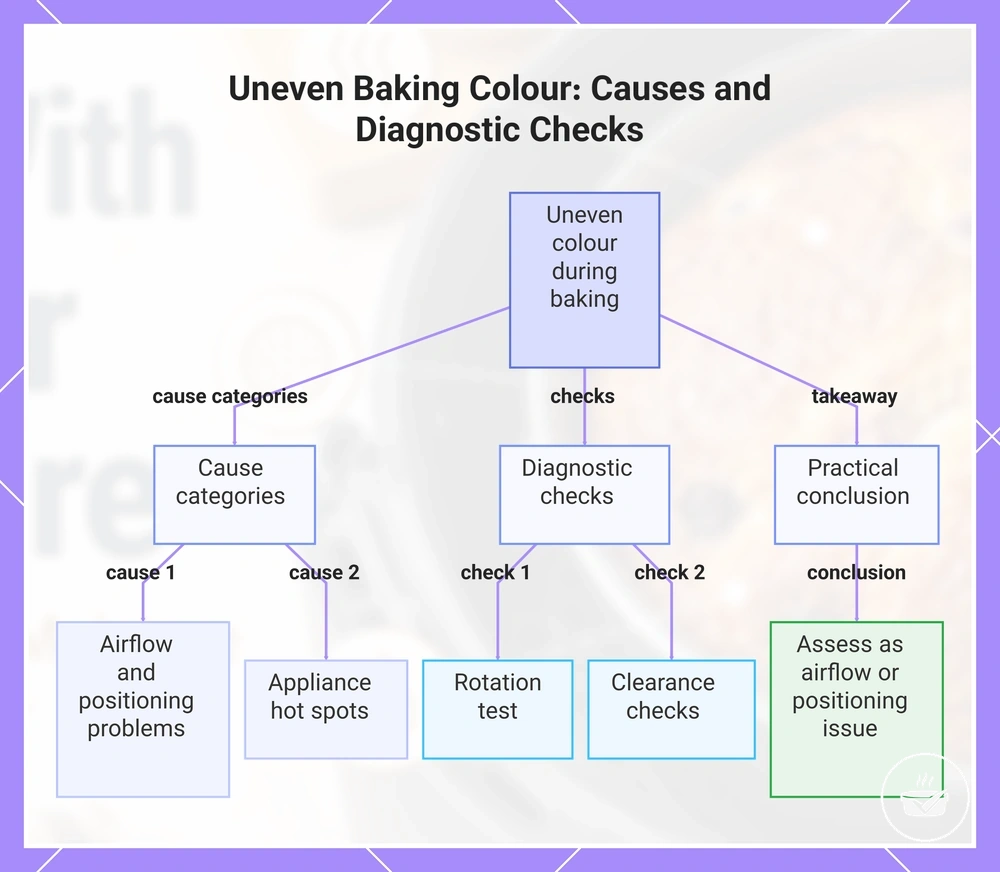
When uneven colour develops during baking, the cause is often hot spots, restricted airflow, uneven pan placement, or a bakeware shape that shields part of the food from circulating heat. One area may brown faster than another because heat reaches exposed surfaces differently, so uneven colour is usually best assessed as an airflow or positioning issue rather than an appliance problem.
Use these checks to separate hot spots from pan placement and airflow restrictions:
- Rotation: If one side repeatedly browns faster, rotating the bake may help identify whether local hot spots are affecting the result.
- Basket clearance: Limited clearance around the pan may restrict air circulation and contribute to uneven colour.
- Pan height: A taller pan may change how circulating heat reaches the exposed surface and side walls.
- Side gaps: Narrow gaps between the bakeware and the basket can reduce side airflow around the food.
- Exposed surface: A bakeware shape that blocks circulation around part of the batter may leave shielded areas less evenly browned than exposed sections.
These checks help distinguish appliance hot spots from airflow and pan-position conditions without expanding into appliance repair or broader baking adjustments. For practical guidance on maintaining better air circulation, see using bakeware without blocking airflow.
This chart shows the likely causes of uneven colour during baking and the key checks to separate hot spots from airflow or positioning issues.
Texture and moisture results in small-batch bakes
Texture and moisture results in small-batch bakes are influenced by evaporation, edge exposure, heat intensity, and the amount of batter covered by the bakeware. These factors affect how quickly the surface dries, how the crumb develops, and how the centre sets, while the final outcome still depends on batter moisture, pan coverage, and batter depth.
Cakes, brownies, muffins, and quick breads can develop different texture and moisture characteristics because each bake exposes a different amount of surface area to circulating heat. Muffin cups may encourage quicker surface drying through greater top exposure, while a deeper cake pan may slow centre setting. Brownies can develop crisp edges while retaining a softer centre, and quick breads may show different crumb and moisture characteristics depending on heat intensity and pan shape.
Small-batch bakes often display different texture and moisture cues even under similar cooking conditions. The table below summarises how common bake types relate to texture cues, moisture cues, and the conditions that may contribute to those results.
| Bake type | Texture cue | Moisture cue | Likely condition |
|---|---|---|---|
| Cakes | Soft crumb | Centre may retain more moisture | Deeper batter may slow centre setting |
| Brownies | Crisp edges | Softer centre | Greater edge exposure to heat |
| Muffins | Firmer tops | Surface may dry more quickly | Exposed tops increase evaporation |
| Quick breads | Variable crumb | Moisture depends on pan depth | Heat intensity and covered surface area influence the result |
Crisp edges do not necessarily indicate a dry interior, and a moist centre does not always mean the bake is fully set. Texture and moisture cues are most useful when interpreted together because evaporation, edge exposure, heat intensity, and batter depth can produce different results across small-batch bakes without following one universal pattern.
Crisp edges, soft centres, and dry surfaces
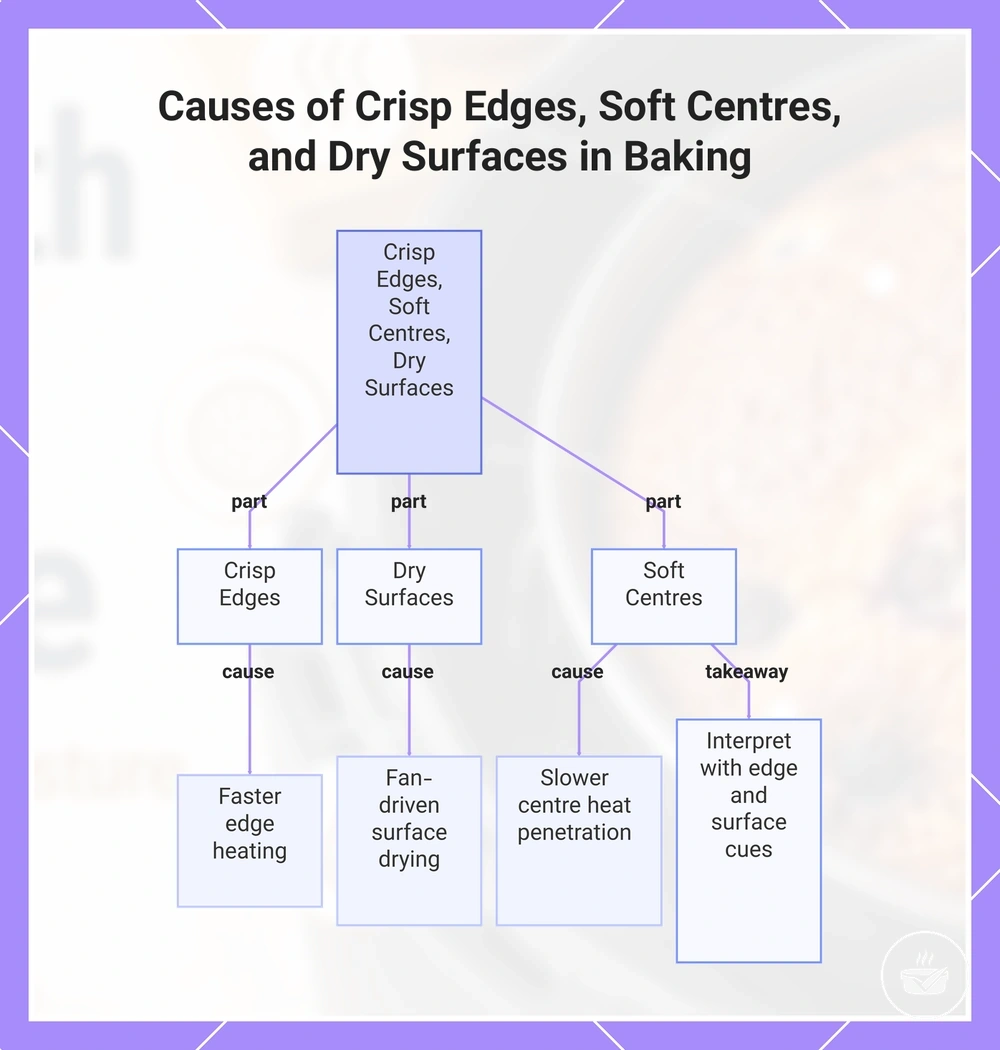
Crisp edges, soft centres, and dry surfaces can develop together because edge heating, fan-driven surface drying, and slower centre heat penetration do not occur at the same rate. Heat reaches exposed edges more quickly than the middle, while the centre may remain softer until heat penetrates deeper into the batter. Pan material, batter depth, and resting time can all influence how these texture cues appear.
These local texture cues are easier to interpret when each area of the bake is considered separately:
- Crisp edges: Faster edge heating may create a firmer, crisp rim before the centre fully sets.
- Dry surfaces: Fan drying can increase evaporation on exposed areas, so the surface may dry more quickly than the interior.
- Soft centres: Slower centre penetration through deeper batter may leave a moist centre while baking continues or during resting time. A soft centre should be interpreted alongside edge and surface cues because pan material and batter depth can change the overall texture.
This chart shows the differential heating and drying causes behind crisp edges, dry surfaces, and soft centres, and explains how to interpret a soft centre alongside other texture cues.
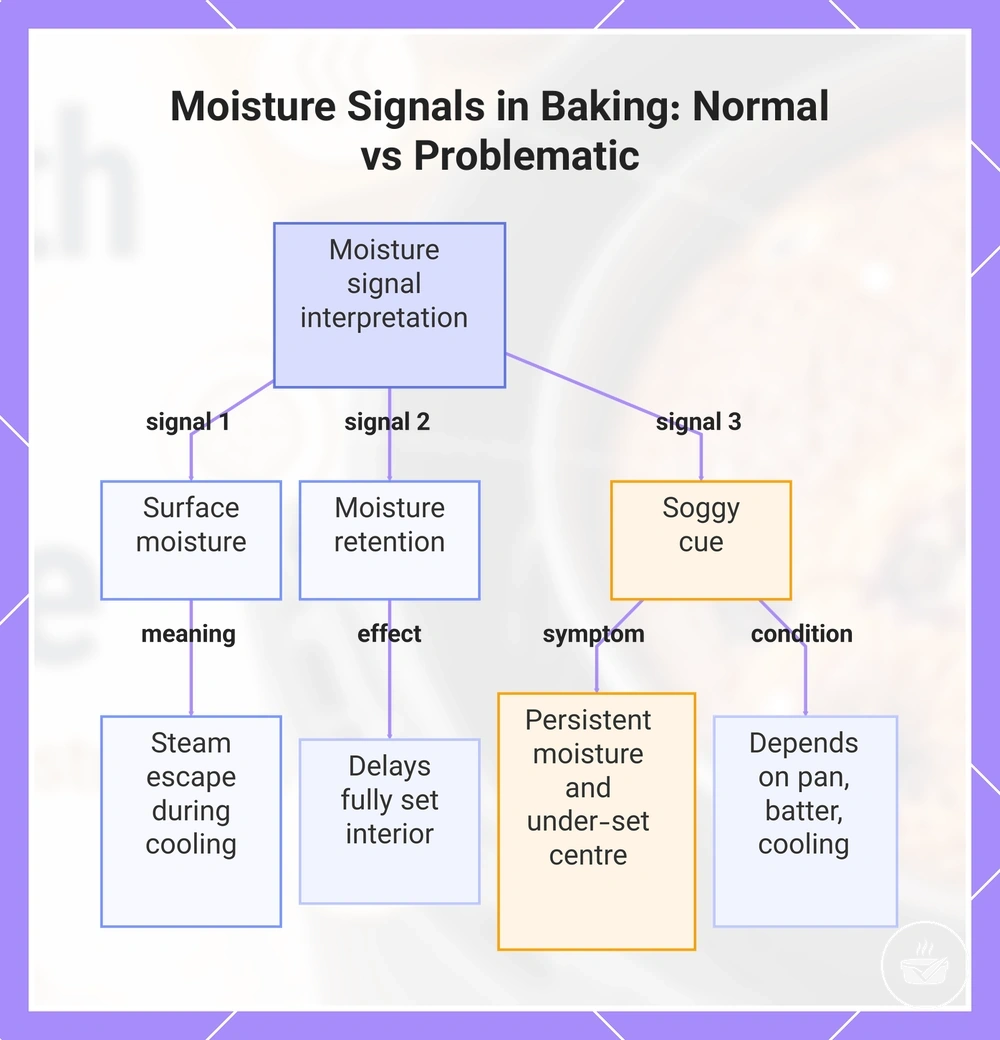
Steam, condensation, and moisture retention cues
Steam, condensation, and moisture retention are signals that reflect the balance between evaporation, pan coverage, and batter moisture rather than direct proof of a baking problem. Steam and condensation can occur with moisture-rich batter or covered surfaces, while retained moisture may continue to change during cooling. Condensation should be interpreted as a signal rather than a conclusion.
The following moisture signals help distinguish normal moisture retention from conditions that may need closer attention:
- Surface moisture: Light condensation during cooling may simply indicate that steam is escaping as the bake cools.
- Moisture retention: Covered surfaces, silicone bakeware, deep pans, and dense batters may retain moisture for longer, which can delay the perception of a fully set interior.
- Soggy cue: Persistent surface moisture together with an under-set centre may indicate limited evaporation, although the result still depends on pan coverage, batter moisture, and cooling time.
This chart shows the three main moisture signals in baking and how to interpret whether they indicate normal cooling or conditions that may need closer attention.
Bakeware variables that shape baking performance
Bakeware variables shape baking performance by changing how heat reaches the batter, how air moves around the pan, and how moisture leaves the surface. Before changing pans, heat settings, or expectations, evaluate material, colour, depth, fit, exposed surface area, and heat setting as connected result drivers.
Material and colour influence heat response because pans can absorb, transfer, or release heat differently. A darker pan may encourage faster surface browning, while a lighter or more flexible material may produce a different heat pattern. The useful question is not which material is best, but how the material and colour trade off browning speed, moisture retention, and centre setting for the bake.
Depth, fit, and exposed surface area affect performance when batter thickness and air circulation change together. A deeper pan may slow centre setting because heat has farther to travel through the batter. A tighter fit or covered surface may reduce exposed area and airflow, while more exposed surface can change browning and moisture loss.
The criteria below organise bakeware variables with EAV logic so each part is judged by its attribute, condition, and likely effect. Use the table to compare trade-offs before adjusting heat or time.
| Entity/part | Attribute/criterion | Value/condition | Effect/risk/decision |
|---|---|---|---|
| Pan material | Heat response | Conducts or retains heat differently | May change browning speed and centre setting |
| Pan colour | Surface heat | Darker or lighter finish | Can influence surface browning and drying |
| Pan depth | Batter thickness | Shallow or deep fill | May affect centre-setting time and moisture retention |
| Pan fit | Airflow clearance | Tight or open space around the pan | Can change circulation, browning, and evenness |
| Exposed surface | Moisture loss | More or less batter surface exposed | May increase surface drying or alter texture |
| Heat setting | Heat intensity | Higher or lower cooking heat | Guides cautious adjustment when browning or centre setting changes |
The strongest variable depends on the bake, so performance should be judged by the trade-off between material, colour, depth, fit, exposed surface, and heat setting rather than one isolated feature. Product examples are most useful only after these criteria are clear because the same pan can behave differently by batter depth, fit, and heat response.
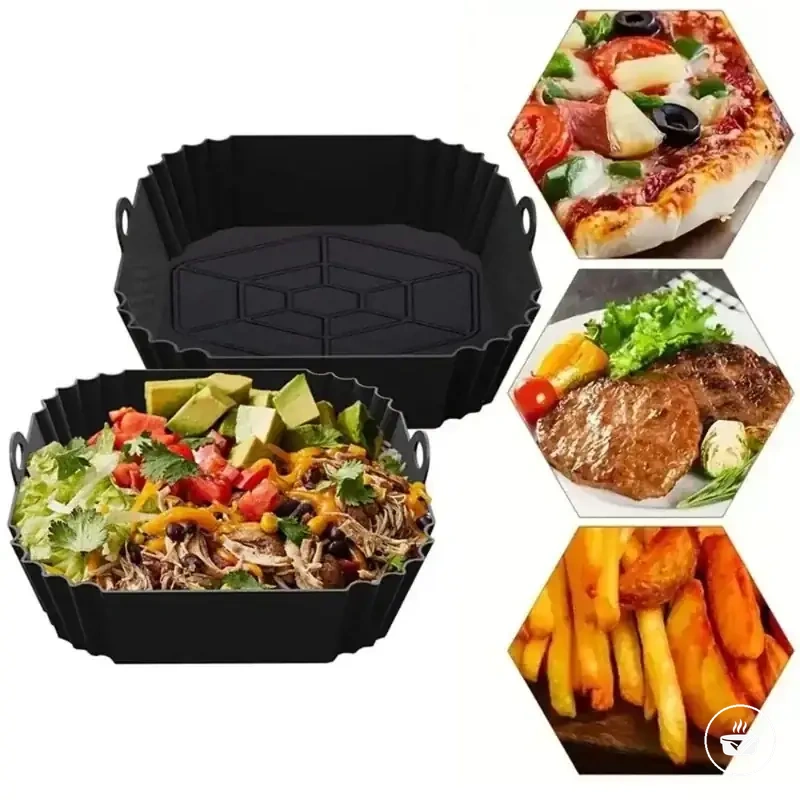
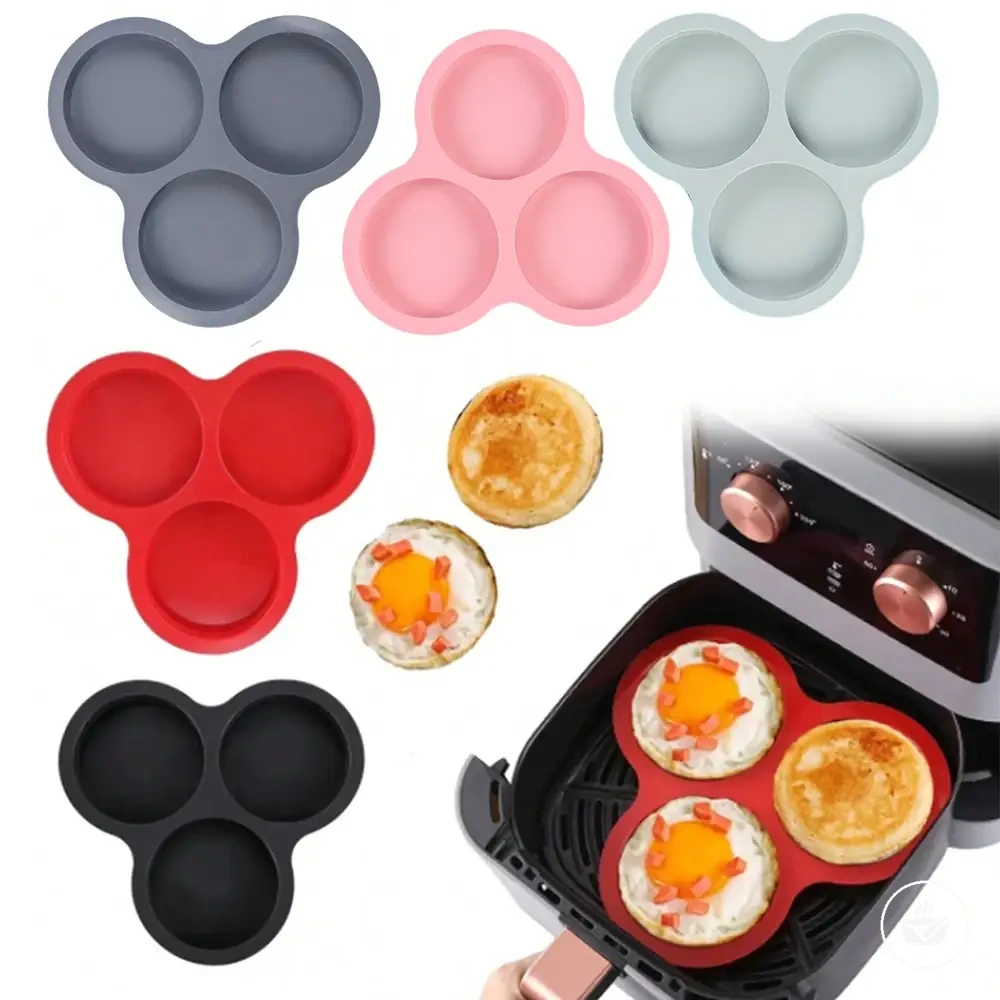
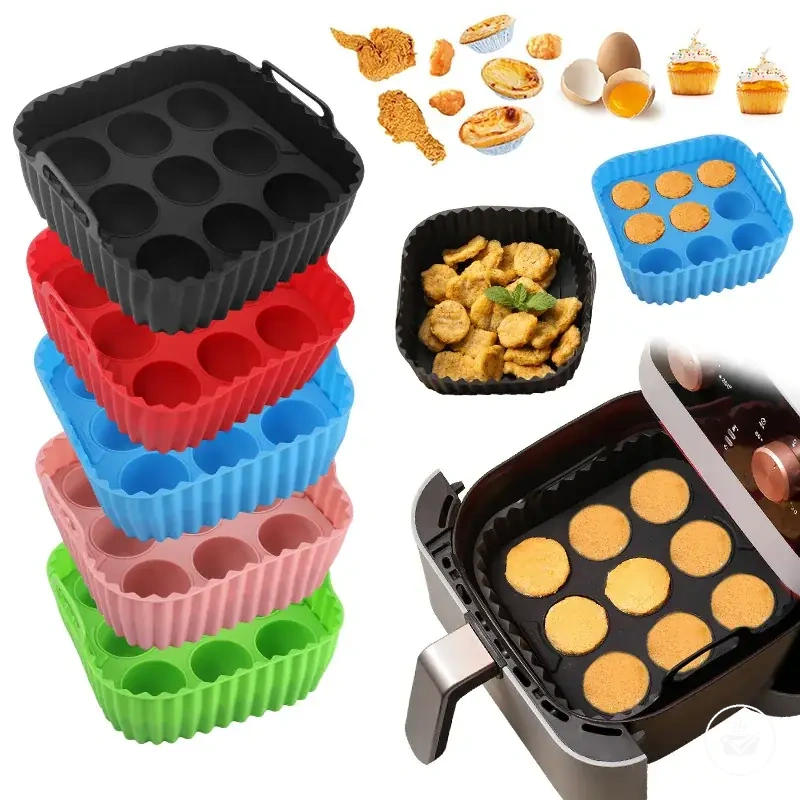
Here are product examples that may make comparison easier. Before buying, always review the compatibility criteria, essential features, and product details.
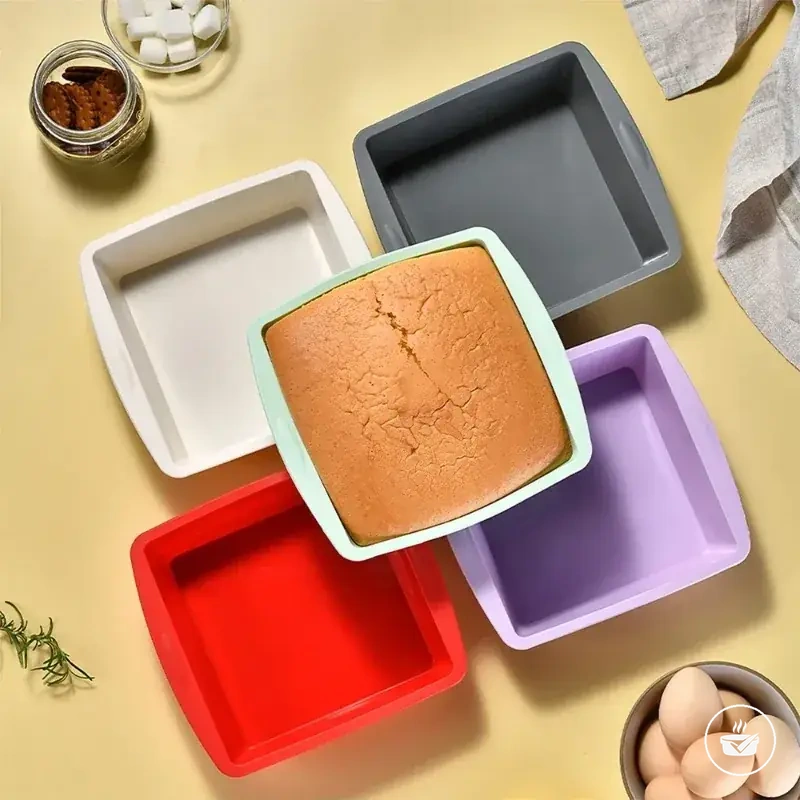
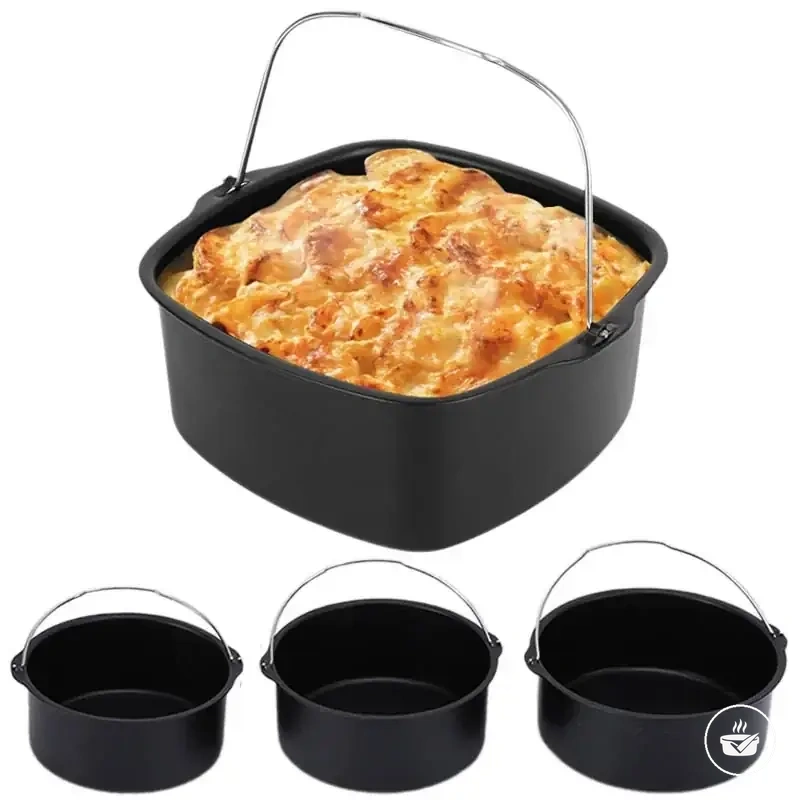
Material heat behaviour and pan colour
Material heat behaviour and pan colour affect how bakeware transfers heat, how quickly surfaces brown, and how edges or centres retain moisture. Metal, silicone, nonstick surfaces, darker pans, and lighter pans can each change heat response, but the result still depends on pan thickness, coating, size, and batter depth.
Material heat behaviour and pan colour are easiest to compare by separating the heat response from the likely baking-result effect. The table below keeps the comparison local to performance rather than ranking materials.
| Material or colour | Heat behaviour | Likely baking-result effect |
|---|---|---|
| Metal | Transfers heat efficiently | May increase browning speed and edge firmness |
| Silicone | Often gives a gentler heat response | May retain more moisture or soften edge texture |
| Nonstick coating | Changes surface contact and release | Can influence browning and surface texture depending on coating and pan thickness |
| Dark surfaces | May absorb heat more strongly | Can speed browning or make edges firmer when other conditions support it |
| Light surfaces | May produce a milder surface heat response | Can slow visible browning compared with darker surfaces in some bakes |
| Heat retention | Holds heat after exposure | May continue affecting centre set and moisture after heating changes |
A darker pan may make browning more noticeable, while silicone or lighter surfaces may shift moisture and edge texture in a different direction. For the broader material context behind these local performance cues, compare bakeware material differences without treating any material as universally better.
Pan depth, fit, and exposed surface area
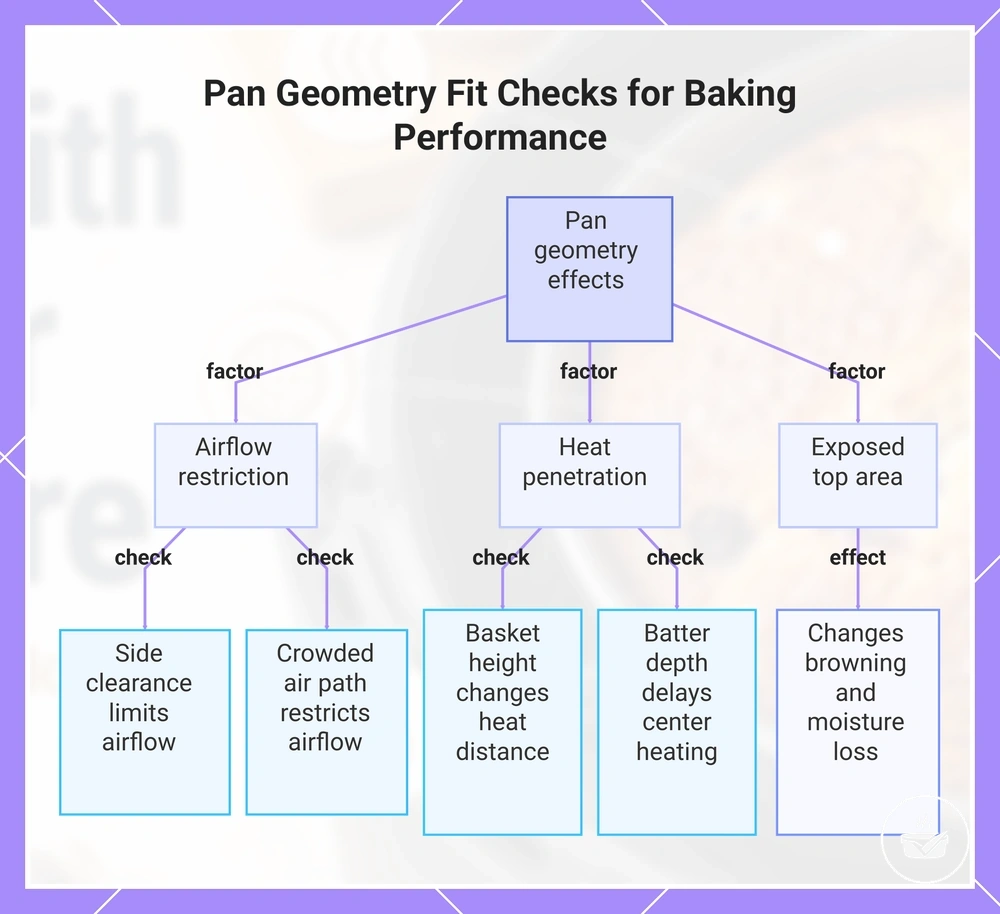
Pan depth, fit, and exposed surface area influence baking results by changing airflow access, heat penetration, and the balance between a browned surface and a softer interior. The effect depends on basket shape, pan diameter, pan height, and batter depth rather than an exact size or fit.
Use the following fit checks to relate pan shape to baking performance instead of general sizing:
- Side clearance: Limited clearance around the pan may reduce airflow access and change how evenly the surface browns.
- Basket height: A taller pan may change the distance between the batter and circulating heat, which can influence heat penetration.
- Batter depth: Deeper batter may require more time for heat to reach the centre, even when the top is already browning.
- Exposed top area: Greater surface exposure can change browning and moisture loss, although the overall result still depends on pan shape and the recipe.
- Crowded air path: A pan that crowds the basket may restrict airflow, which can affect the balance between surface browning, centre setting, and a softer interior.
This chart shows the key pan geometry factors that influence baking results, including airflow, heat penetration, and surface browning.
Heat setting, time, and preheating effects
Heat setting, time, preheating, and bake setting influence baking results by changing how browning, centre set, and moisture cues develop after bakeware variables are understood. These adjustments should respond to the observed bake rather than follow a universal conversion formula or exact timing rule.
Use the following adjustment checks to refine baking results based on what the bake is showing:
- Lower heat: If browning develops before the centre sets, lowering the temperature may slow surface browning while allowing heat to reach the middle more gradually.
- Check earlier: If moisture appears to be leaving the surface quickly, begin checking the bake sooner instead of relying on a fixed cooking time.
- Preheating: Preheating may provide a more consistent starting bake setting, but its value should still be judged by browning, centre set, and moisture cues.
- Rotation: If one side browns faster than another, rotating the bake may help compensate for uneven heat exposure.
- Resting: Allowing the bake to rest can help the centre continue setting before making a final judgement about doneness.
Delayed browning, rapid surface colour, soft centres, or dry edges are signals for cautious adjustment rather than fixed formulas. For broader guidance beyond these local result cues, see temperature and timing adjustments.
Baking-result checks before changing pans or settings
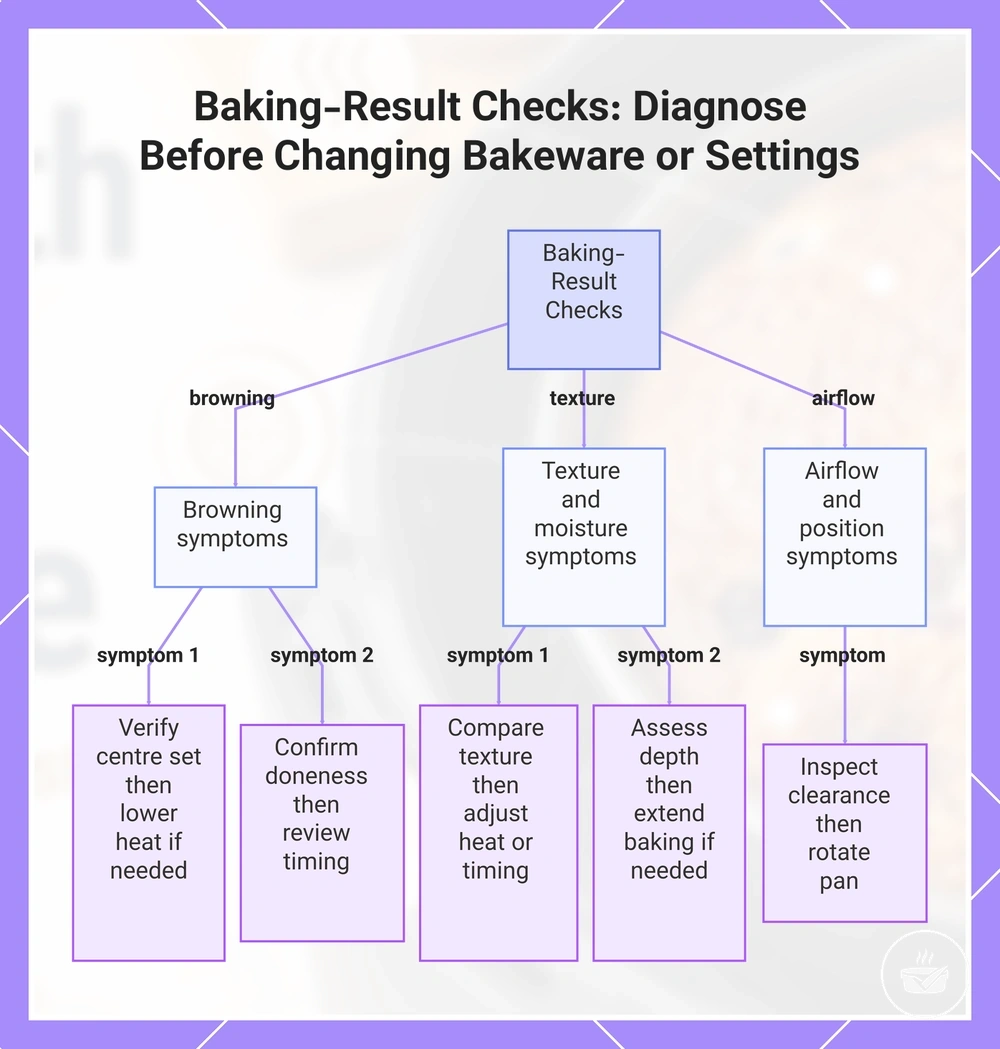
When baking results are not as expected, confirm the actual symptom before changing bakeware, heat, or timing. Baking-result checks separate browning, doneness, texture, moisture, and airflow causes so that each adjustment responds to the observed result rather than an assumption.
If the top browns before the centre sets, the likely condition may be stronger surface heat or slower heat penetration. Verify the centre set before lowering the temperature because the same symptom can arise from different conditions. If the centre is nearly set but colour remains uneven, rotation or repositioning may be a more appropriate next check than changing the heat setting.
If texture, moisture, or airflow appear to be the main concern, inspect those result cues separately before changing bakeware. Dry surfaces may indicate greater moisture loss, while a soft centre may reflect batter depth or incomplete doneness. Uneven colour may suggest restricted airflow or pan position, so confirm the likely condition before deciding to use different bakeware.
Use this diagnostic sequence to guide the next action:
- Symptom: Browned top. Likely condition: Faster surface browning. Next check: Verify centre set. Next action: Consider lowering the heat setting only if the centre remains under-set.
- Symptom: Pale surface. Likely condition: Delayed browning. Next check: Confirm overall doneness. Next action: Review timing before changing bakeware.
- Symptom: Dry surface. Likely condition: Greater moisture loss. Next check: Compare the surface with the centre texture. Next action: Adjust heat or timing if the result supports it.
- Symptom: Uneven colour. Likely condition: Airflow restriction or pan position. Next check: Inspect basket clearance. Next action: Rotate or reposition the pan when appropriate.
- Symptom: Soft centre. Likely condition: Slower heat penetration. Next check: Assess batter depth and doneness. Next action: Extend baking only when the centre still requires additional cooking.
These baking-result checks organise symptoms into a practical decision sequence without replacing broader troubleshooting. If repeated adjustments still do not explain the result, continue with troubleshooting poor browning for more focused diagnostic guidance.
This chart shows how to identify the actual symptom and apply the correct check and action before adjusting bakeware, heat, or timing.