
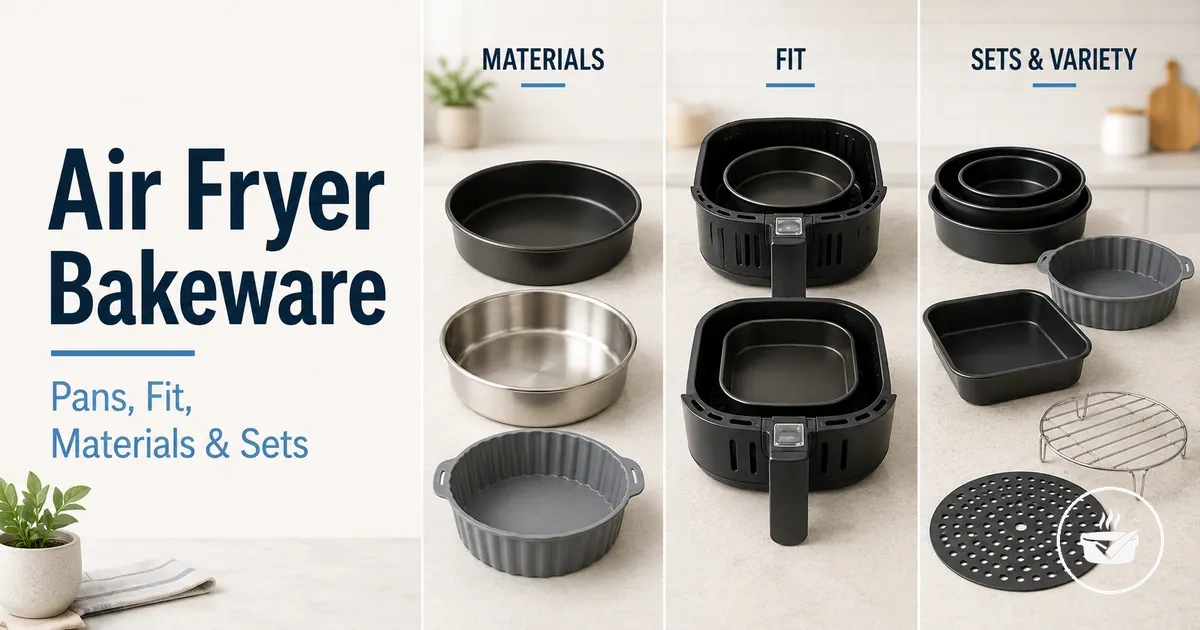
Air Fryer Bakeware for Safe, Compatible Baking
Air fryer bakeware refers to oven-safe pans, trays, moulds, cups, dishes, and other baking accessories used inside an air fryer when they suit the appliance and the food being baked. Safe baking depends on more than an oven-safe label, because the bakeware also needs to fit the basket or tray, tolerate the cooking heat, and preserve airflow around the food.
A pan, tray, set, liner, or regular baking dish may appear suitable but still not match a particular air fryer. Compatibility depends on factors such as basket size, available clearance, material, coating condition, and manufacturer limits, so air fryer bakeware should be evaluated by these criteria rather than assumed to fit every appliance.
The right choice starts with matching the bakeware to the baking task. Check the fit, material, heat rating, food-contact surface, and available airflow before considering any baking accessory, as these criteria provide a better decision framework than product type alone.
Product examples later in this guide are provided for illustration and should be considered alongside compatibility and baking requirements.
What Counts as Air Fryer Bakeware
Air fryer bakeware is oven-safe baking pieces used inside an air fryer when they fit the basket or cooking drawer and do not interfere with airflow. It includes baking pieces that hold or shape food during baking, and their suitability depends on both fit and airflow rather than an oven-safe label alone.
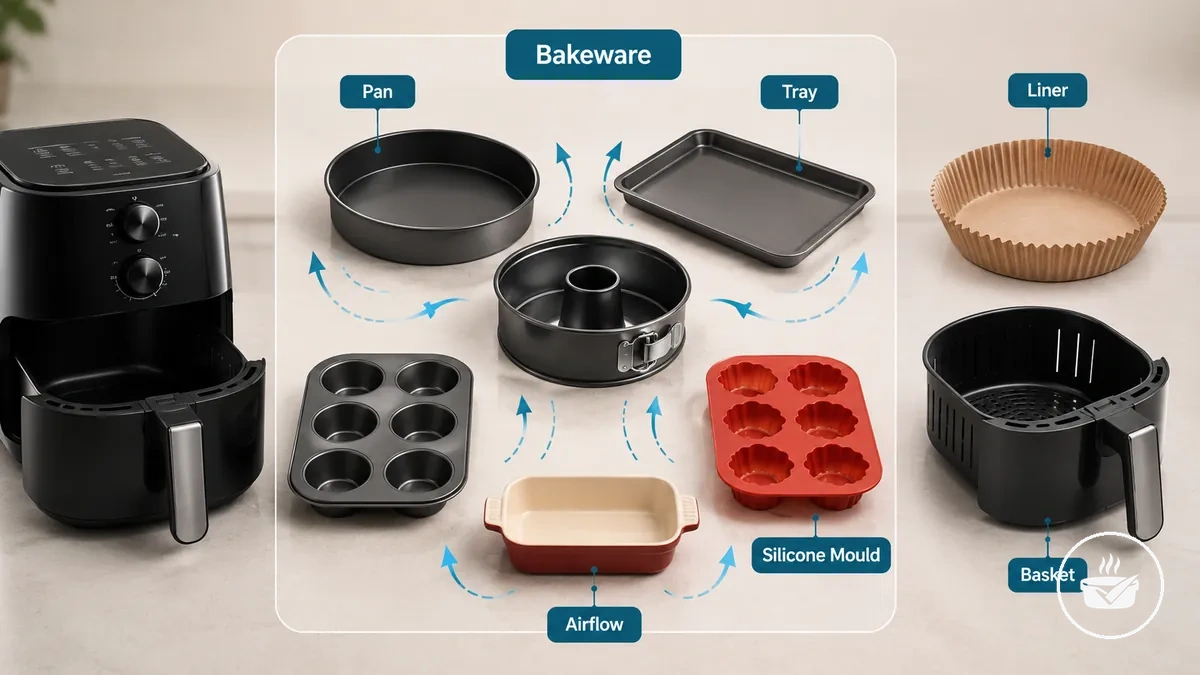
Air fryer bakeware commonly includes a pan, tray, cake barrel, muffin cup, silicone mould, cake pan, and small baking dish. The list below separates true bakeware from adjacent accessories that are often confused with it.
- Included as bakeware: pan, tray, cake barrel, muffin cup, silicone mould, cake pan, and small baking dish.
- Adjacent but different: liner, basket, and the air fryer appliance, which support cooking but are not baking pieces.
A regular oven-safe baking piece may still be unsuitable if it does not fit properly or restricts airflow inside the basket. For a broader explanation of compatibility, see what bakeware can be used in an air fryer.
Common Air Fryer Bakeware Types and Accessories
Air fryer bakeware types and accessories are best chosen by the baking task they support rather than by appearance alone. A pan, tray, cake barrel, loaf pan, muffin cups, moulds, racks, or an accessory set may each suit different recipes, while their usefulness still depends on available space, fit, airflow, and cleaning needs.
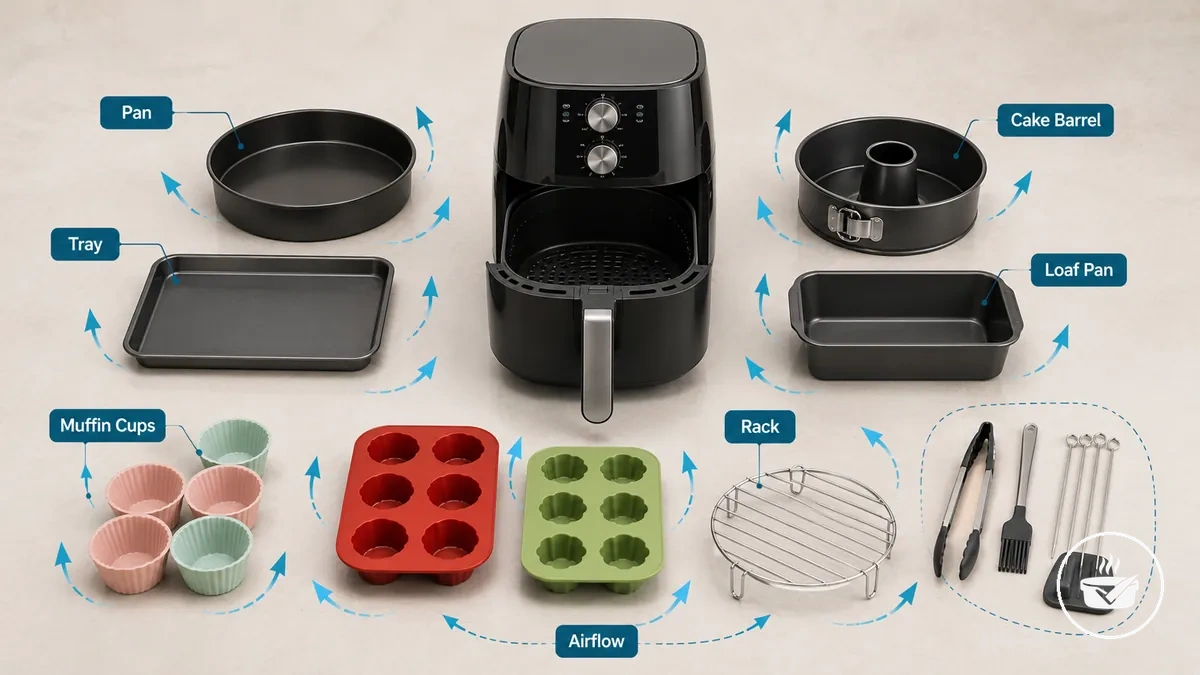
The table below organizes common air fryer bakeware types and accessories by their main use, fit or airflow considerations, and situations where they may be unnecessary. It helps distinguish the role of each type without treating every accessory as essential.
| Type or accessory | Main use | Fit or airflow note | When it may be unnecessary |
|---|---|---|---|
| Pan | General baking and roasting | Should fit without restricting airflow | When a tray already suits the recipe |
| Tray | Flat baking and reheating | Lower rim height may help preserve airflow | For recipes that need deeper bakeware |
| Cake barrel | Cakes and similar baked desserts | Needs clearance for air circulation | When baking cakes is not planned |
| Loaf pan | Loaf breads and similar recipes | Footprint should suit the basket | For smaller portions that fit another pan |
| Muffin cups | Individual cakes and baked portions | Spacing may help maintain airflow | When a single baking pan is more practical |
| Moulds | Shaped baking portions | Design may influence usable space | When shape is not important |
| Racks | Raise food or add another cooking level | May change available airflow and footprint | When one cooking layer is sufficient |
| Accessory set | Provides multiple baking accessories | May include duplicate pieces that need storage | When only a few bakeware types are used regularly |
The most useful pattern is to match the bakeware type to the recipe before comparing materials or dimensions. A larger accessory is not necessarily more useful, and additional pieces may add little value if they duplicate another pan, tray, or mould or reduce available airflow.
For a more detailed breakdown of categories and their roles, see air fryer bakeware types.
Pans, Trays, Cake Barrels, and Muffin Cups
When the baking task changes, the shape and depth of the bakeware often change as well. Pans, trays, cake barrels, and muffin cups each handle batter, containment, and airflow differently, so they are suited to different baking tasks rather than being interchangeable.
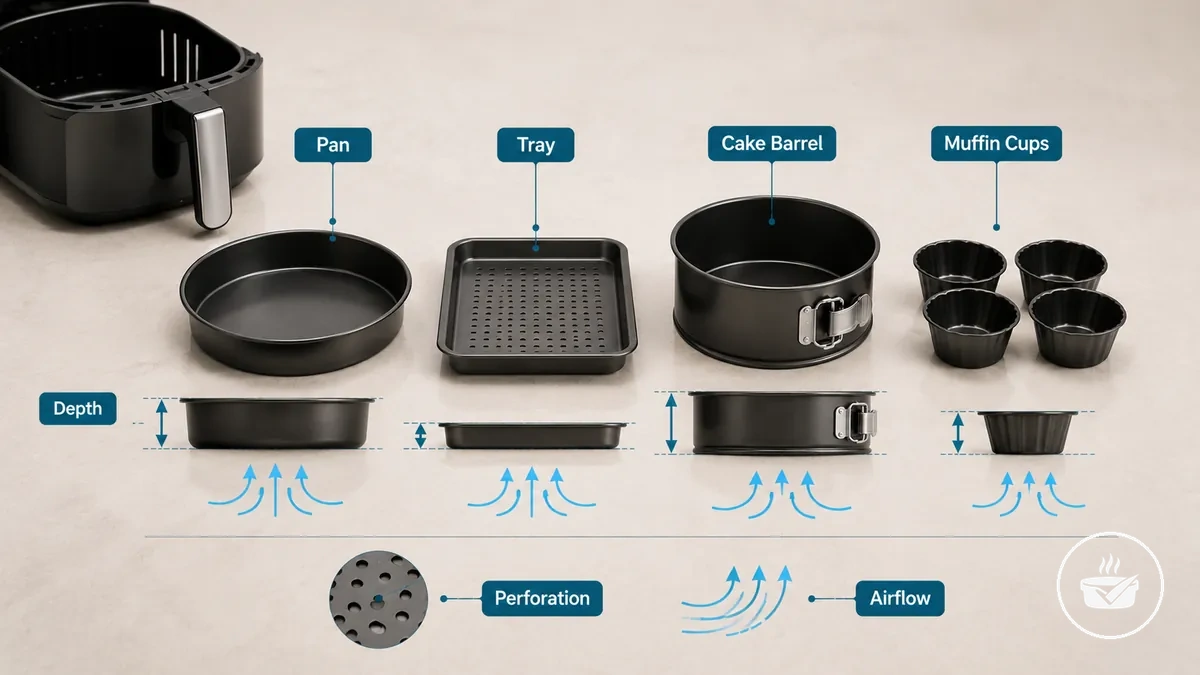
The table below compares the four pieces by shape, depth, and intended baking use while highlighting possible fit or airflow considerations.
| Piece | Shape or depth | Strongest use | Fit or airflow caution |
|---|---|---|---|
| Pan | Medium depth for batter containment | General baking and cake pan recipes | Should fit without reducing airflow around the sides |
| Tray | Shallow profile, sometimes with perforation | Foods that benefit from crisping | A larger baking tray or raised rim may reduce airflow |
| Cake barrel | Greater depth and height for thicker batter | Taller cakes and similar bakes | Needs enough clearance for airflow around the bakeware |
| Muffin cups | Individual portions, often silicone cups or a muffin mould | Portioned batter such as muffins or cupcakes | Leaving space between cups may help airflow and cleaning |
Each piece is designed around a different balance of shape, depth, containment, and airflow. The most suitable option depends on the recipe and available space, and a deeper baking piece may not always be the better fit.
Bakeware Sets Versus Single Pieces
A bakeware set is worthwhile only when the included useful pieces fit your air fryer and match how you bake, while a single piece is often the simpler choice for one specific need or replacement. The decision depends on useful pieces, fit risk, storage, and overall value rather than the number of accessories included.
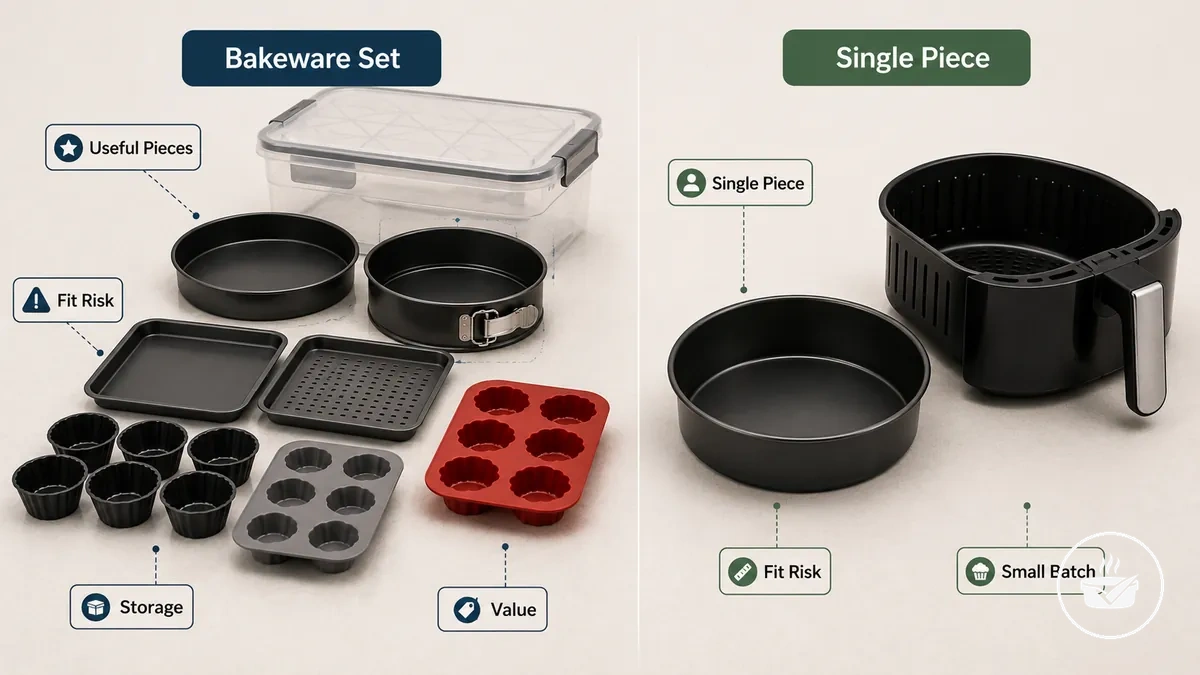
The comparison below shows when each option may be the better choice by focusing on utility, duplicate pieces, fit, and storage.
| Set makes sense when | Single piece makes sense when |
|---|---|
| Most useful pieces are likely to be used regularly. | You need one individual pan or replacement piece. |
| The accessory set suits the basket size with manageable fit risk. | You want to avoid duplicate pieces that may remain unused. |
| You prepare different recipes, including small-batch baking. | You mainly repeat the same baking task. |
| You have enough storage for the additional accessories. | You prefer less storage and fewer accessories. |
First-time buyers may benefit from a bakeware set when most included pieces are likely to be useful, while replacing one worn item often makes a single piece the more practical choice. Compare duplicate pieces, storage requirements, fit risk, and value per useful item before deciding. For a broader comparison, see air fryer bakeware sets.
Air Fryer Bakeware Materials and Heat Behaviour
Air fryer bakeware material influences heat transfer, browning, flexibility, weight, durability, and cleaning, so the most suitable choice depends on the baking task rather than on one material being universally better. Metal, silicone, glass, and ceramic each behave differently during baking and may produce different results under different conditions.
The table below compares common bakeware materials by heat behaviour, strongest-fit use, and the main consideration for maintenance or handling. Material characteristics can influence baking results, but the outcome still depends on the recipe, bakeware shape, and how the piece is used.
| Material | Heat behaviour | Strongest-fit use | Main caution |
|---|---|---|---|
| Metal | Typically transfers heat efficiently and may encourage browning. | General baking and recipes that benefit from a firmer exterior. | Coating condition can affect durability and cleaning. |
| Silicone | Provides flexibility with different heat transfer than metal. | Silicone moulds and recipes where easier release is preferred. | Its flexibility may require extra support when moving filled bakeware. |
| Glass | Retains heat and allows food to remain visible during baking. | Baking dishes where monitoring the contents is useful. | Greater weight and care around thermal shock may be needed. |
| Ceramic | Often retains heat for longer during baking. | Dishes that benefit from steadier heat retention. | May be heavier and can chip if handled roughly. |
The main trade-offs come from how each material balances heat transfer, browning, flexibility, weight, durability, and cleaning. Metal may support stronger browning, silicone can simplify release, while glass and ceramic may retain heat differently and require additional care because of their weight or handling characteristics.
Material is only one part of choosing suitable bakeware, and the most appropriate option depends on the recipe, bakeware design, and intended use. For a more detailed comparison, see air fryer bakeware materials.
Metal, Silicone, Glass, and Ceramic Tradeoffs
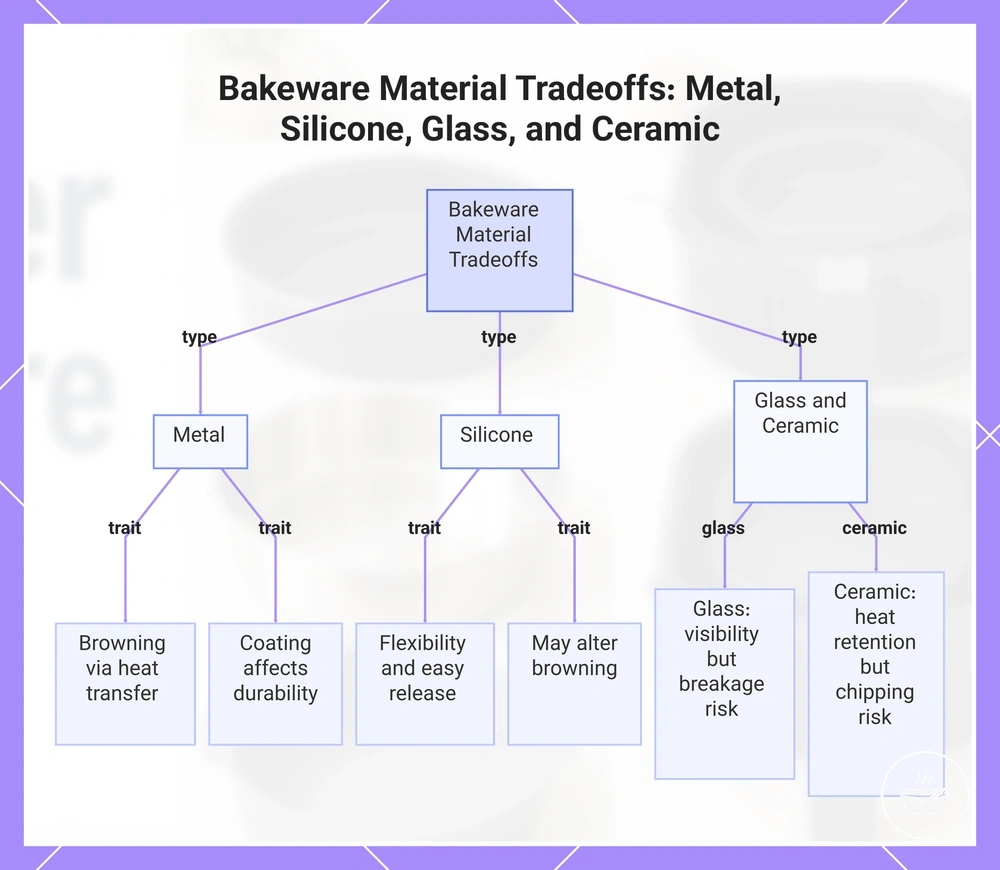
Metal, silicone, glass, and ceramic each involve a tradeoff rather than offering a universal winner. The most suitable material depends on how heat response, browning, flexibility, rigidity, coating, breakage risk, and cleaning align with the recipe and bakeware design.
The strongest comparison comes from matching each material to its intended use instead of expecting identical performance. Browning, heat response, durability, and cleaning can vary with material, thickness, coating, food type, and appliance configuration, so each option should be chosen according to the baking task.
- Metal: May encourage browning through efficient heat transfer, but coating condition can influence durability and cleaning. Often suits recipes that benefit from a firmer exterior.
- Silicone: Provides flexibility and easier release, but may produce different browning than rigid materials. A silicone mould can suit recipes where easy removal is important.
- Glass: Offers rigidity and good visibility during baking, but greater weight and breakage risk from thermal shock may require more careful handling. Often suits baking dishes where monitoring the contents is helpful.
- Ceramic: May retain heat well and provides a rigid baking surface, but chipping and heavier weight can affect handling and cleaning. It may suit recipes that benefit from steadier heat retention.
This chart compares the key tradeoffs of each bakeware material to help match material choice to recipe needs.
Size, Fit, and Air Fryer Compatibility
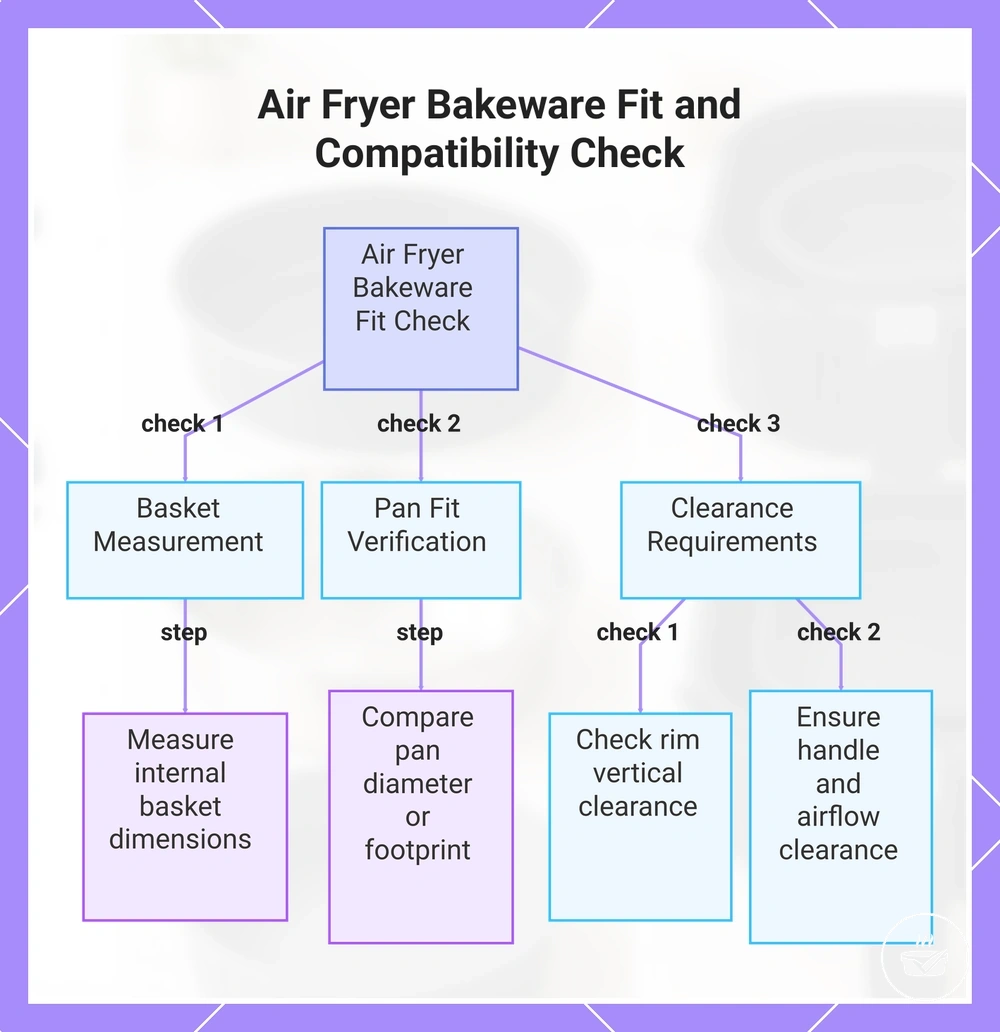
Size, fit, and compatibility depend on the air fryer's internal space and available airflow, not only on the stated pan size. A bakeware piece may be oven-safe but still unsuitable if its basket shape, internal dimensions, clearance, or footprint prevent proper placement or restrict air circulation.
Use the mini-checklist below to verify both physical fit and airflow compatibility before using or selecting bakeware. Reviewing each point together helps reduce the risk of choosing a piece that measures correctly but performs poorly because of limited clearance.
- Confirm the air fryer type and whether it uses a basket or tray configuration.
- Measure the internal dimensions of the basket or drawer basket instead of relying on external appliance size.
- Compare the pan diameter or footprint with the available basket space.
- Check the rim height to ensure sufficient vertical clearance.
- Allow adequate handle clearance so handles do not contact the basket walls or interfere with placement.
- Leave enough surrounding space to maintain airflow around the bakeware during cooking.
Measure the basket space first, then compare those measurements with the bakeware footprint, rim height, and handle clearance. For example, a pan may be oven-safe yet still fail the physical fit check if its handles or overall footprint exceed the available basket space or leave too little room for airflow. For more detailed guidance, see air fryer bakeware size and fit.
This chart shows the key checks to verify if a bakeware piece fits and works properly in an air fryer.
Basket Shape, Pan Diameter, and Clearance
When a pan appears small enough but still does not fit, the issue is usually a measurement problem rather than the material itself. In a compact air fryer, basket shape, pan diameter, and available clearance should be checked together because the usable footprint may differ from the visible opening.
Use the checklist below to verify basket shape, pan diameter, and clearance before placing bakeware inside the air fryer. A common fit failure occurs when the pan body fits but the rim height or handles reduce the available top clearance or obstruct the basket.
- Match the basket shape to the pan footprint, whether round, square, or rectangular.
- Compare the pan diameter with the inner basket instead of the appliance's external dimensions.
- Check corner fit, as a round pan may leave unused corners while a square pan may use basket space differently.
- Confirm the rim height leaves enough top clearance after the basket is closed.
- Make sure handles do not contact the basket walls or reduce usable clearance.
- Leave enough surrounding space to help maintain airflow around the bakeware.
Drawer Baskets, Oven-Style Trays, and Racks
Compatibility depends on the appliance configuration because a drawer basket, an oven-style tray, and rack placement provide different support and airflow conditions. Bakeware that suits one configuration may not suit another if the support surface, heating element position, or fan exposure changes.
The comparison below highlights how drawer baskets and oven-style trays differ in the way they support bakeware. Fit should be checked within the intended configuration rather than assuming a tray or rack position transfers between appliance types.
| Configuration | Compatibility effect |
|---|---|
| Drawer basket | Uses a support floor beneath the bakeware, so the footprint, stability, and surrounding airflow should be checked together. |
| Oven-style tray with rails | Relies on tray slots or rails for support, so rack position, fan exposure, and heating element location may influence stability, clearance, and airflow. |
| Rack placement | Changing the rack position may alter fan exposure and the distance from the heating element, so bakeware fit and stability should be confirmed after repositioning. |
Safety Checks Before Using Air Fryer Bakeware
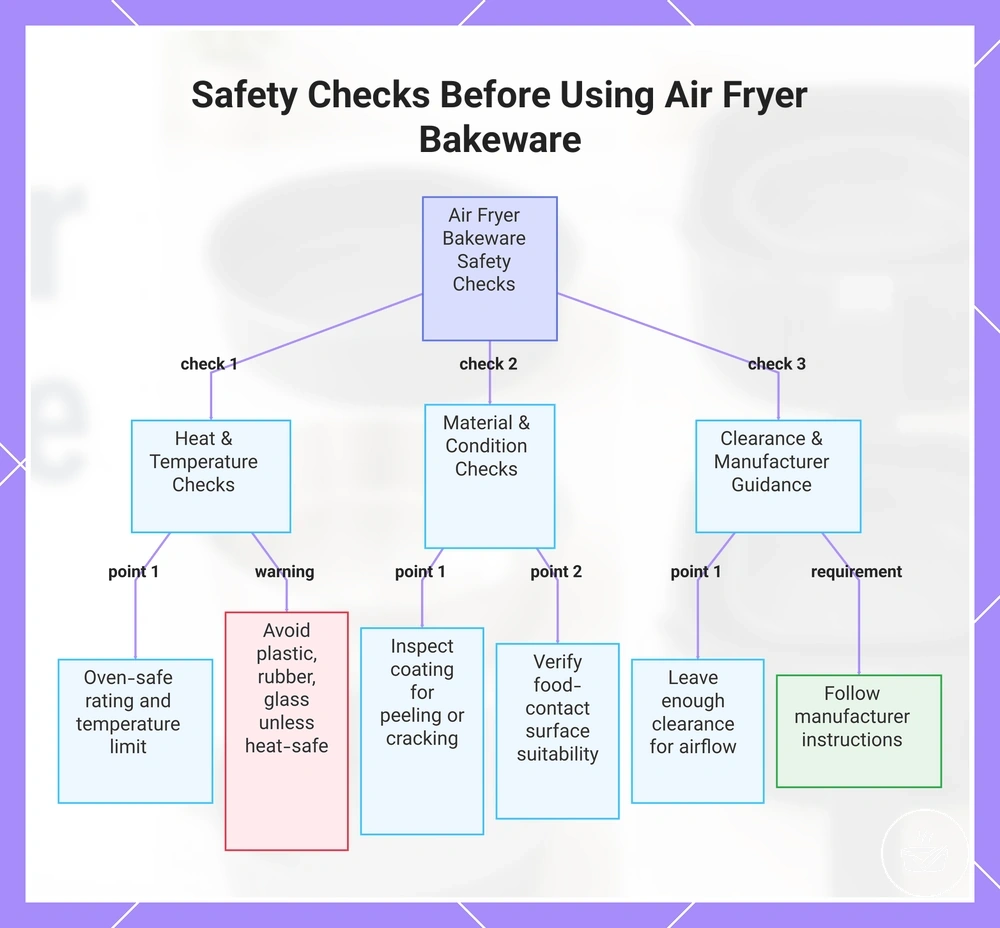
Safety checks before using air fryer bakeware usually begin with heat-safe construction, food-contact suitability, sound condition, and enough clearance for airflow. Safe use can still depend on the oven-safe rating, temperature limit, and the manufacturer instructions provided for both the bakeware and the appliance.
The checklist below organizes the main heat, surface, condition, and airflow checks before bakeware is placed in an air fryer. Reviewing these points together can help identify pieces that may be unsuitable because of their condition, materials, or stated limits.
- Check the oven-safe rating or broil-safe rating when one is provided.
- Confirm the temperature limit or heat rating suits the intended cooking temperature.
- Inspect the coating for peeling, cracking, or significant wear before food-contact use.
- Verify that the food-contact surface is intended for cooking.
- Avoid bakeware with exposed plastic parts or rubber parts unless the manufacturer instructions indicate they are suitable for the intended heat.
- Handle glass carefully because glass thermal shock may occur with sudden temperature changes.
- Leave enough clearance to reduce overcrowding and support airflow around the bakeware.
- Follow the relevant manufacturer instructions whenever use conditions or limits are specified.
Condition checks become more important when bakeware has damaged coatings, unknown materials, or unclear heat ratings. If the oven-safe rating, temperature limit, or food-contact status cannot be confirmed, avoiding that piece until its suitability is known is usually the more cautious decision.
This chart shows the key checks to perform on bakeware before use in an air fryer, grouped by heat rating, material condition, and clearance requirements.
Oven-Safe Ratings, Coatings, and Food Contact
Oven-safe ratings, coating condition, and food-contact surfaces should be checked before using bakeware in an air fryer. The oven-safe rating, temperature limit, and surface condition help determine whether a piece is suitable for use, while damaged surfaces or unclear markings may require additional caution.
When labels are missing or the surface shows visible wear, it is usually safer to verify the bakeware before use. If the oven-safe rating, coating, or food-contact suitability cannot be confirmed, avoiding that piece until its intended use is clear is typically the more cautious decision.
The checks below focus on label and surface verification.
- Oven-safe rating: Check the oven-safe rating or heat rating label and compare it with the stated temperature limit.
- Coating and food contact: Inspect the coating and nonstick condition for peeling, deep scratches, or other damage that may affect the food-contact surface.
- Silicone quality: Examine silicone quality for signs of deterioration and follow any stated heat limit where provided.
- Glass or ceramic: Inspect glass and ceramic bakeware for chips or cracks, as sudden temperature changes may increase thermal shock risk.
- Exposed parts: Use caution if exposed parts are not intended for food contact or appear unsuitable for the expected heat.
Using Bakeware Without Blocking Airflow
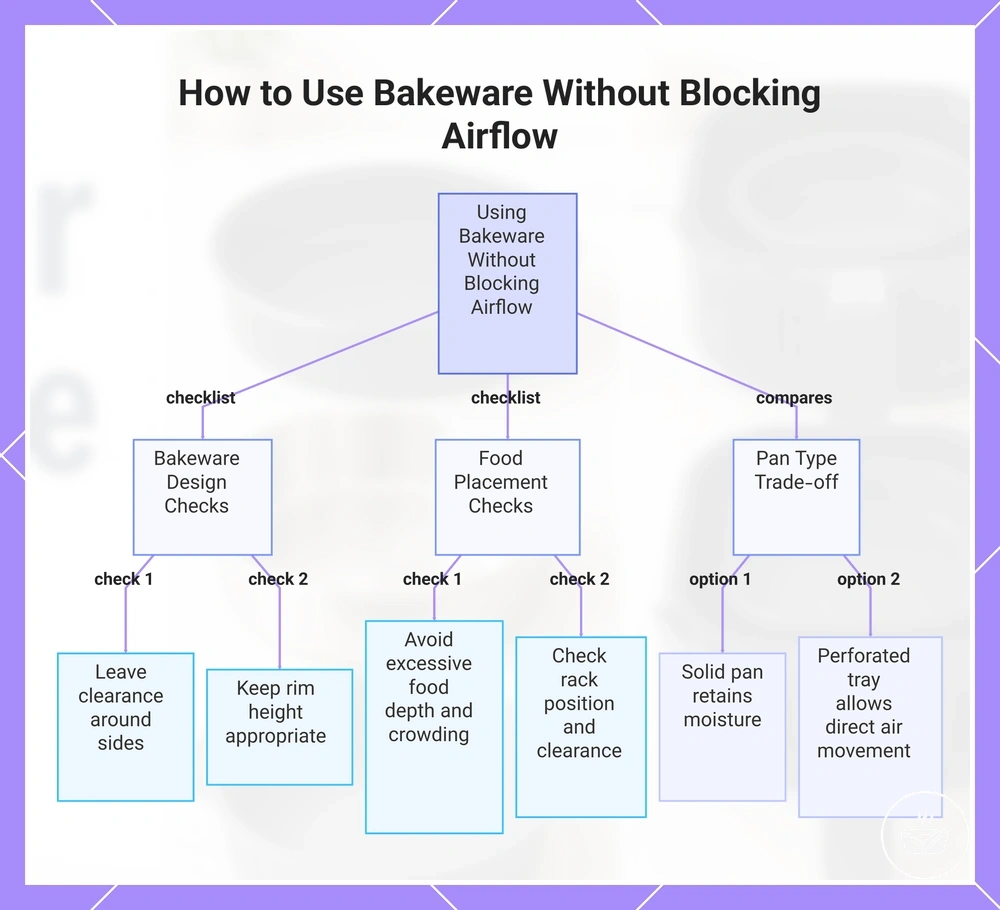
Using bakeware without blocking airflow starts with leaving enough space for air movement around the food. Bakeware can reduce or redirect airflow, which may influence browning, cooking evenness, and moisture depending on its footprint, shape, and placement.
The checklist below highlights the main airflow conditions to check before cooking. It focuses on bakeware attributes that can influence heat circulation rather than recipe-specific settings.
- Choose a bakeware footprint that leaves clearance around the sides to support airflow.
- Consider whether a perforated tray or a solid pan better matches the desired balance between heat circulation and moisture.
- Keep rim height appropriate for the food so air movement can continue across the surface.
- Avoid excessive food depth and basket crowding, as both may contribute to less even browning.
- Check rack position and available clearance because fan exposure and airflow may vary with placement.
A solid pan may redirect airflow and retain more moisture, while a perforated tray can allow more direct air movement around the food. The most suitable choice depends on the bakeware footprint and the intended result rather than one design being universally better. For more detailed guidance, see how to use air fryer bakeware.
This checklist covers the key bakeware and placement conditions to maintain airflow in an air fryer.
How to Choose Air Fryer Bakeware by Baking Need
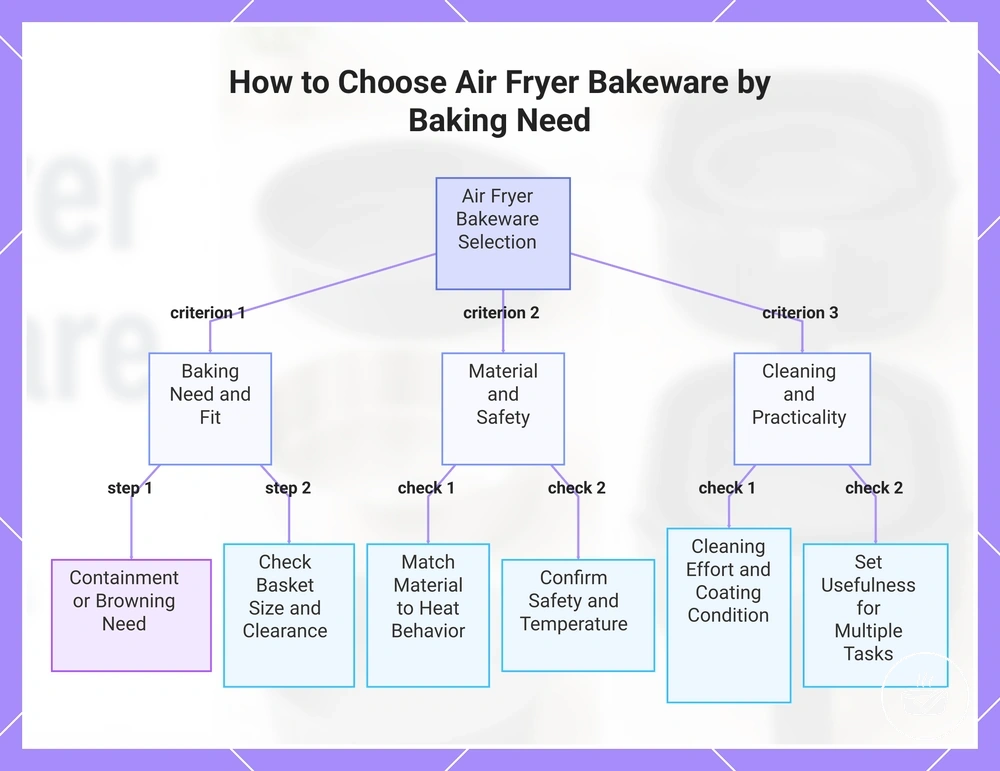
Choose air fryer bakeware by matching the baking need to the recipe, the air fryer, and the bakeware instead of expecting one piece to suit every task. The most suitable choice depends on fit, material, safety, cleaning, and whether the recipe requires better containment or increased browning.
The decision checklist below helps match the baking task to the most relevant criteria. It keeps the selection focused on practical use rather than product ranking.
- Start with the baking need and identify whether the recipe requires batter or liquid containment or a flatter baking surface.
- Confirm the fit by checking basket size and available clearance before choosing a suitable piece.
- Match the material to the expected heat behaviour, recognising that results may vary with the appliance and recipe.
- Check safety by confirming the bakeware is suitable for the intended use and temperature.
- Consider the expected cleaning effort, including coating condition and ongoing maintenance needs.
- Evaluate set usefulness only if multiple baking tasks are expected; otherwise, a single suitable piece may be sufficient.
A recipe that needs reliable containment may suit a deeper baking piece, while a recipe where stronger browning is preferred may benefit from a flatter design that supports airflow. If easier cleanup is the priority, the tradeoff may involve different material behaviour or maintenance expectations. The most suitable choice depends on the baking task, appliance size, and the balance between performance and convenience rather than a one-size-fits-all solution.
This decision chart shows how to select air fryer bakeware by evaluating the baking task, fit, material, safety, and cleaning effort.
Cakes, Muffins, Bread, Sauces, and Roasting Needs
Cakes, muffins, bread, sauced foods, roasting, and crisping each benefit from different bakeware characteristics. Matching the food type to the required level of containment or airflow helps identify a suitable piece, while recognising that the final choice still depends on the recipe, appliance, and available clearance.
The grouped guide below maps common baking needs to suitable piece types and their likely limitations. The main tradeoff is usually between stronger containment for batter or sauces and greater airflow for browning and crisping.
- Cakes: Liquid batter may suit a deeper pan or cake barrel because it provides better containment. The limitation is that greater depth can reduce airflow around the bakeware.
- Muffins: Muffin cups may be a suitable piece for portioned batter and easier release. The limitation is that spacing between cups should still allow airflow.
- Bread: A loaf pan may suit recipes that benefit from additional height. The limitation is that the pan should fit within the available basket clearance.
- Sauces: A deeper baking dish may help contain sauces or other liquids and reduce spill risk. The tradeoff is that it may allow less direct airflow and require more cleaning.
- Roasting and crisping: A shallow tray may be a suitable piece when dry roasting or crisping benefits from greater airflow. The limitation is reduced containment for liquids or loose batter.
Set Value, Durability, and Cleaning Expectations
Set value depends on how many useful pieces you are likely to use, how well the bakeware supports long-term use, and how much effort cleaning requires. A larger set does not necessarily provide better cost-value if duplicate accessories remain unused or replacement becomes more practical than keeping every piece.
Use the checklist below after confirming fit and material suitability. It focuses on value through durability, cleanup, storage, and long-term use rather than the number of accessories included.
- Count useful pieces instead of total pieces, as regularly used accessories usually provide greater long-term value.
- Consider durability by checking overall condition and whether coating wear could increase the need for replacement.
- Review dishwasher claims together with expected hand-cleaning effort and maintenance.
- Check whether the pieces support efficient storage through nesting or compact organisation.
- Look for duplicate accessories that may add bulk without improving everyday use.
- Compare a set with a single piece when only one accessory is likely to be used or replaced.
Cleaning-related tradeoffs can influence long-term value because frequent maintenance, coating condition, and replacement needs may change how practical a bakeware set remains over time. A dishwasher claim alone does not determine overall convenience if hand-cleaning is still needed for certain pieces. For more guidance, see cleaning air fryer bakeware.
Duplicate accessories, storage space, and replacement likelihood also affect cost-value. A compact set with pieces that are all used regularly may offer more practical value than a larger collection containing items that remain unused.
If most pieces match your baking habits and remain practical to maintain, a set may offer stronger long-term value. If only one or two accessories meet your regular needs, a single piece may be the more suitable decision.
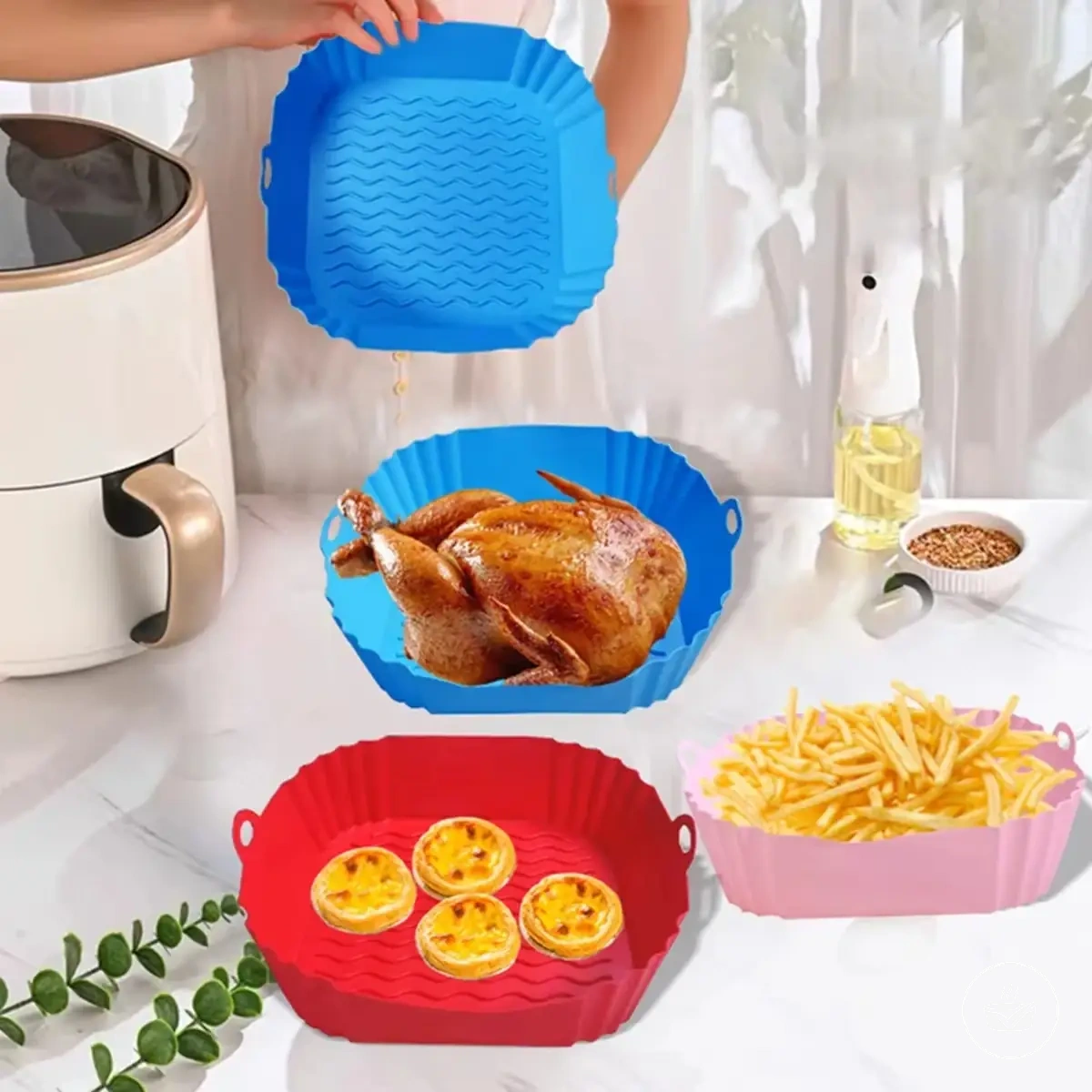
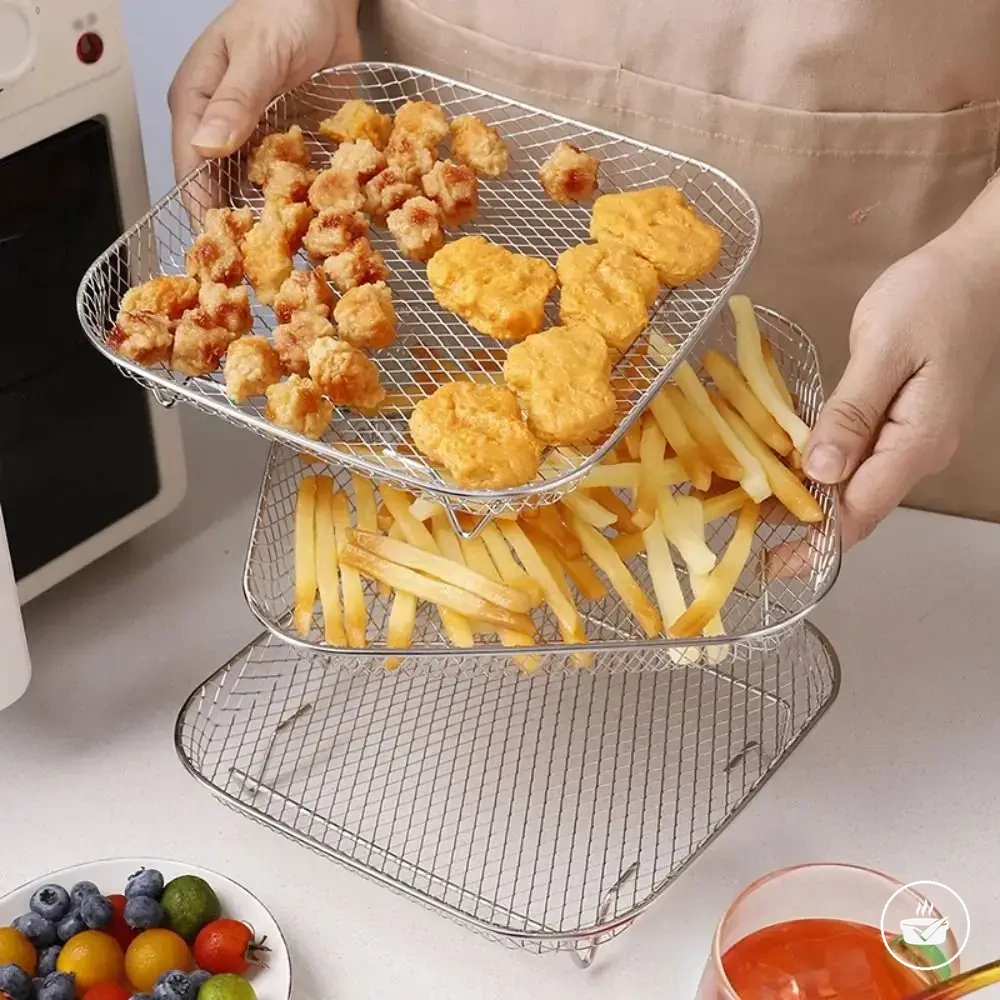
The products below are useful examples for comparing available options. Before buying, check that the compatibility criteria, key features, and product details match your needs.
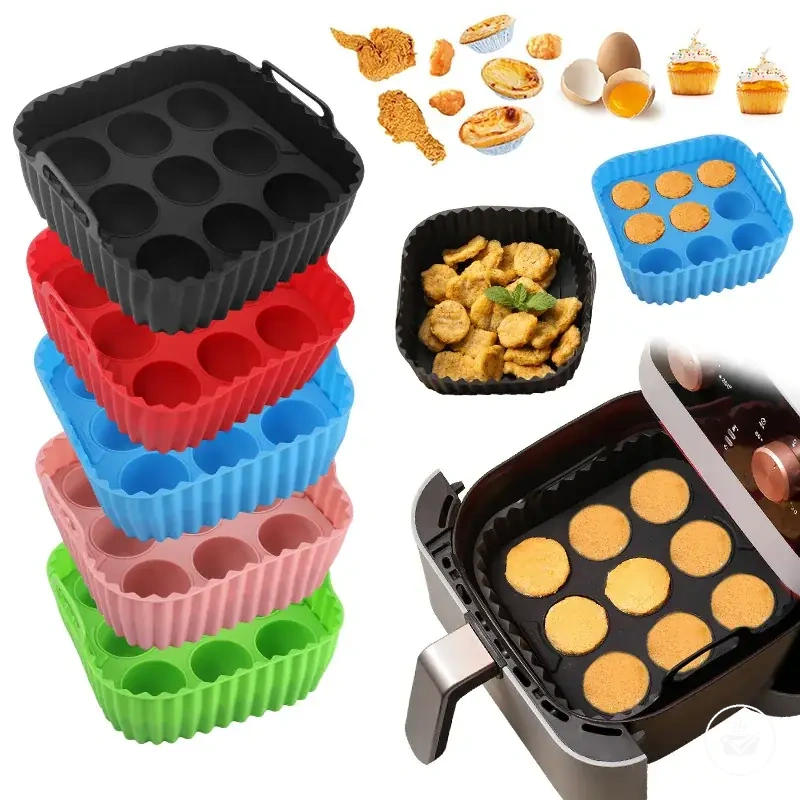
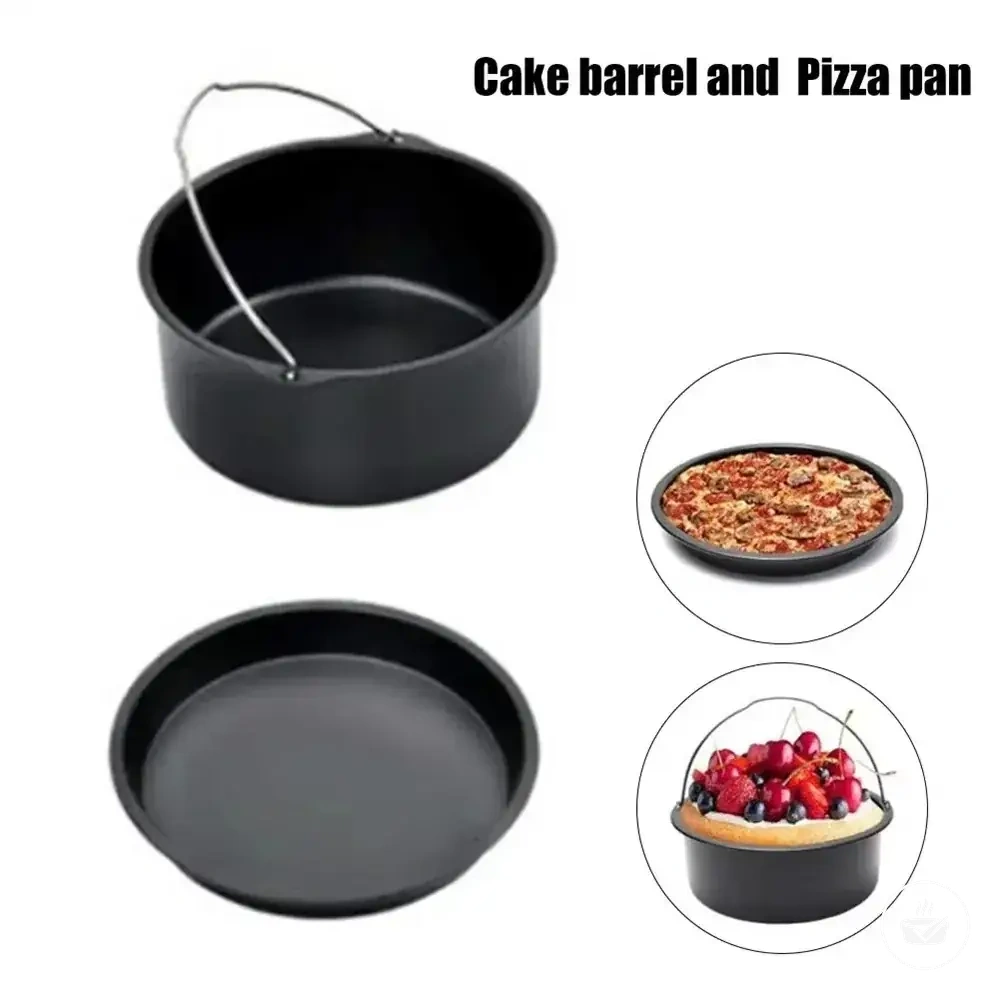
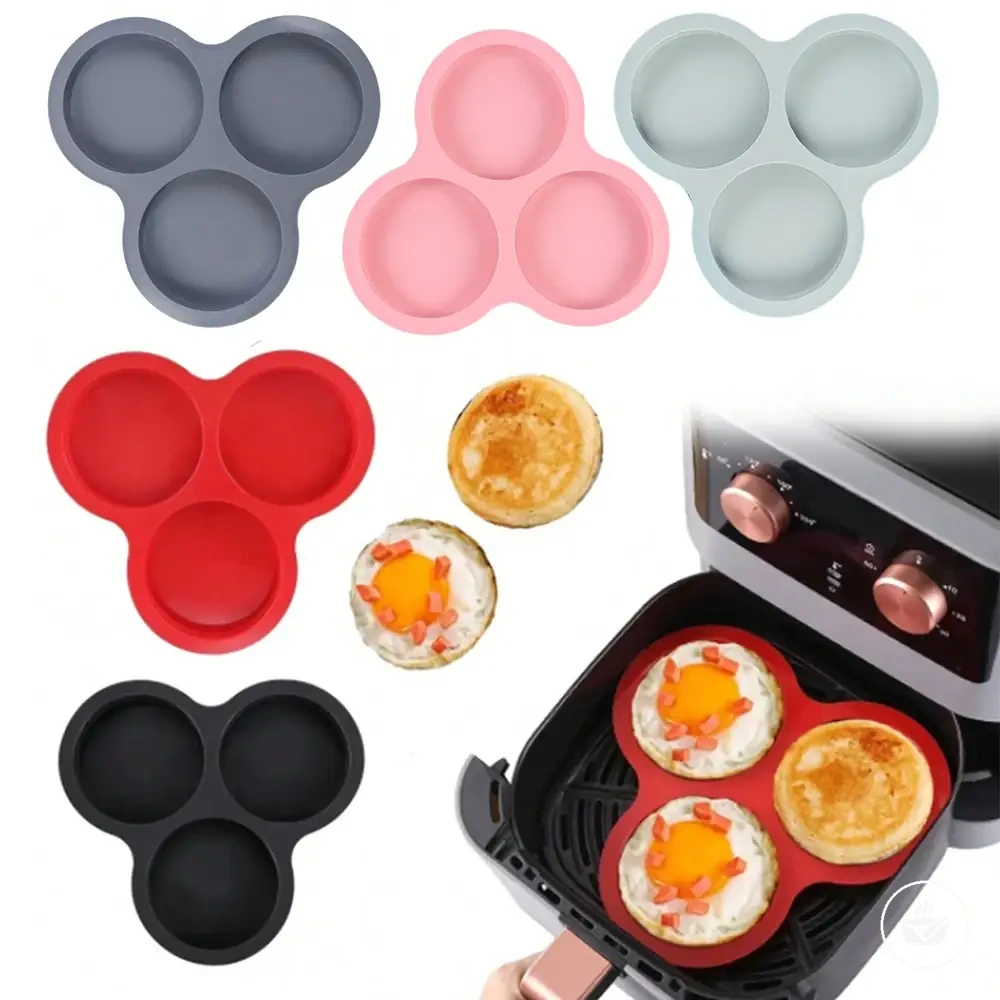
Bakeware, Liners, and Oven-Safe Pans Compared
Bakeware, liners, and oven-safe pans serve different roles because they affect containment, cleanup, airflow, reuse, and the baking result in different ways. Bakeware usually shapes and contains the food, liners mainly support cleanup, and oven-safe pans still need fit and heat-safe checks before use.
The table below compares each option by its main benefit, main limitation, and strongest-use condition. It keeps the comparison focused on adjacent choices rather than treating liners or regular pans as direct replacements for purpose-fit air fryer bakeware.
| Option | Main benefit | Main limitation | Strongest-use condition |
|---|---|---|---|
| Air fryer bakeware | Supports containment, shaping, reuse, and a more controlled baking result. | May reduce airflow if the footprint, rim height, or placement is poorly matched. | When the food needs structure, batter containment, or a reusable baking piece. |
| Parchment or silicone liners | Can make cleanup easier and help reduce residue on the basket surface. | May affect airflow if the liner blocks vents, lifts, folds, or covers too much surface area. | When cleanup support is the main need and the liner is used within appliance and material limits. |
| Oven-safe pans | May work as regular bakeware when the pan is heat-safe and physically suitable. | Still needs a fit check, heat rating check, clearance check, and airflow check. | When the pan fits the air fryer space and its material and temperature limit suit the intended use. |
Bakeware changes containment and baking behaviour because the piece can hold batter, support shape, and influence how air moves around the food. Liners mainly support cleanup, so they should not be treated as a full substitute for bakeware when the recipe needs structure, depth, or repeatable containment.
For a more focused comparison of air fryer bakeware vs liners, the key distinction is whether the user needs a cooking surface aid or an actual baking vessel. A liner may help with cleanup, while bakeware or a suitable oven-safe pan can change the baking result by changing depth, contact, and airflow.
Oven-safe pans need extra caution because oven-safe does not automatically mean compatible with an air fryer. A regular pan should still pass a fit check, have a suitable heat-safe rating, leave clearance for airflow, and avoid parts that are not intended for the cooking conditions.
Choose bakeware when containment and baking structure matter, use liners when cleanup is the main goal, and consider oven-safe pans only when fit, heat rating, and airflow conditions are confirmed. The decision should follow the cooking need rather than assuming any adjacent option works the same way.
The products below are useful examples for comparing available options. Before buying, check that the compatibility criteria, key features, and product details match your needs.